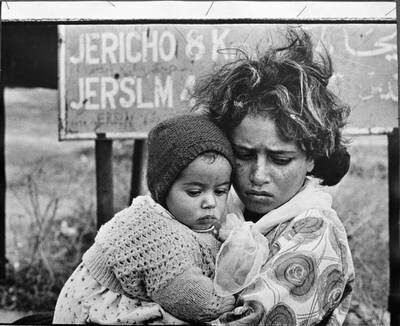
Palestinians commemorate the Nakba on May 15 each year, remembering the events leading up to Israel’s creation in 1948, which claimed hundreds of lives and affected many generations in the years that followed.
Hundreds of thousands of Palestinians were forced to flee their homes, hundreds of villages were destroyed, and millions of their descendants now live in exile, millions as refugees, outside their former homeland.
According to Michael Fischbach, a Palestinian history professor, the Nakba “almost wiped out the Arab character” of the area. For Palestinians, the Nakba is a “ongoing trauma,” according to many other academics and researchers.
Israel celebrates its creation the day before, on May 14.
Why is it called Nakba Day?
The day is named after the Palestinians and the subsequent diaspora. Nakba is an arabic word that means catastrophe. It is often regarded as Palestine’s biggest tragedy.
What caused the Nakba?
After the Ottomans lost both regions following World War I, the British mandate over Palestine and Transjordan was established in 1948.
The international community had considered the future of Palestine as a political hot potato for several years prior to the Nakba, with discussions taking place at the UN, in high-level international conferences, and in the British parliament.
The United Nations issued Resolution 181, also known as the Partition Plan, in 1947, dividing Palestine into two states, a move that was widely opposed by Arabs. The United Nations proposed allocating 43% of Palestine to Arabs and 56% to Jews.
Arabs accounted up at least 1.1 million of the population in 1945, according to the UN, while Jews numbered around 407,000.
The UN plan was never implemented. During the 1967 war, Jewish forces annexed 77% of Palestine, including East Jerusalem, after the British mandate expired at midnight on May 14, 1948.

In order to prepare for the end of the mandate and the projected Arab mobilisation of forces, the Jewish authorities devised Plan Dalet (or Plan D), a plan to expel Palestinians and Arabs from land they already controlled or desired to control.
The Arab League Liberation Army, state troops from neighbouring nations, and paramilitary groups were all targeted in the plan, which was drawn up on March 10, 1948.
Measures to preserve Israeli settlements and essential infrastructure, as well as attacks on “enemy” supply routes, were among the goals of the plan. It mentioned “controlling and occupying” areas.
None of the terminology, however, would reflect the atrocities with which it would subsequently be associated.

“The Arabs’ first purpose was to prevent the foundation of the Jewish state by blocking the Partition Resolution. According to the US State Department, “the Jews hoped to gain authority over the land designated to them under the Partition Plan.”
Shortly after the British mandate expired, Egypt, Saudi Arabia, Syria, Lebanon, and Iraq poured troops into the country. Until 1949, when a UN-brokered ceasefire took effect, Jewish forces achieved rapid gains.
The Nakba in numbers
After Jewish forces committed atrocities, dozens of murders were carried out, killing hundreds of civilians, including women and children, and forcing 70% of Palestinians to flee their homes.
Between 1947 and 1949, an estimated 750 to 1 million Palestinians were forced to flee their homes. As of 2009, there were 7.1 million refugees and displaced persons, including descendants of the Nakba victims.
Within the 1948 borders, only 150,000 Palestinians remained. At least 24 confirmed massacres were carried out by Jewish forces, with at least 100 individuals killed at the Deir Yassin massacre on April 9, 1948, including women and children. Between 1948 and 1950, Jewish soldiers destroyed almost 400 Palestinian cities and towns.
Some results from declassified documents describing some of the war crimes were published in the Israeli daily Haaretz.
At least 100 people were slain, according to a soldier who witnessed the events at Dawayima, now Moshav Amatzia.
“There was no struggle or resistance.” 80 to 100 Arab men, women, and children were slaughtered by the early conquerors. The children were slain by slamming sticks into their skulls. “There wasn’t a single house that didn’t have someone dead in it,” the soldier said.
Ilan Pappe, a Jewish author and professor, famously referred to the Nakba as “ethnic cleansing,” while Israeli historian Benny Morris’ book, The Birthplace of the Palestinian Refugee Problem, details many of the accusations levelled against Israel at the time.
“The revised book is a double-edged sword,” Mr Morris told Haaretz in 2004 regarding a fresh version of his book. It is based on a number of papers that I did not have access to when I wrote the first book, the majority of which came from the Israel Defense Forces’ archives. The new evidence indicates that there were much more Israeli massacres than I previously assumed. There were also a lot of rape instances, which surprised me.”
He also discussed the Haganah, Israel’s forerunner to the current Defense Forces.
“From April to May 1948, Haganah units were issued operational orders that plainly specified that they were to uproot the residents, expel them, and demolish the settlements themselves.”
He further claims that Palestinians and their Arab allies issued evacuation orders for women and children, presumably to protect the Palestinian community’s most vulnerable members.
“As a result, while the book supports the charge against the Zionists, it also demonstrates that many of those who left the villages did so with the encouragement of the Palestinian leadership itself.”
The Nakba’s impact on Palestinians
The actual scope of the calamity that transpired in 1948 will never be known.
According to a December 2021 Haaretz report, “millions of documents from the state’s establishment are preserved in official archives and are prohibited from publication.”
“On top of that, active censorship exists. As reported in a 2019 investigative investigation by Hagar Shezaf in Haaretz, workers of the Malmab unit [Hebrew acronym for director of security of the defence establishment] have been examining archives around the country and erasing evidence of war crimes in recent years.
“However, despite the best efforts at secrecy, reports of massacres continue to mount.”
(With inputs from TheNationalNews.com and more)
❤️ Support Independent Journalism
Your contribution keeps our reporting free, fearless, and accessible to everyone.
Or make a one-time donation
Secure via Razorpay • 12 monthly payments • Cancel anytime before next cycle


(We don't allow anyone to copy content. For Copyright or Use of Content related questions, visit here.)

The Chenab Times News Desk