The question of Scheduled Tribe recognition in India has historically been examined through multiple constitutional, administrative, and anthropological frameworks. Among the most frequently cited references is the Lokur Committee, which outlined broad indicators for identifying communities requiring special constitutional protection. These indicators included geographical isolation, distinctive culture, backwardness, shyness of contact in historical context, and what was then termed primitive traits—an outdated expression that modern policy discourse now interprets in terms of pre-industrial subsistence patterns, technological disadvantage, and traditional livelihood dependence.
When the Pahari-speaking communities of the Chenab Valley—comprising Doda, Kishtwar, and Ramban districts of Jammu and Kashmir—are assessed through these criteria, a serious and evidence-based case emerges for consideration. The communities speaking Bhaderwahi, Bhalesi, Sarazi, Pogali, Rambani, and related Pahari varieties represent a historically rooted mountain society whose socio-economic realities closely align with several of the Lokur indicators when understood in contemporary terms.
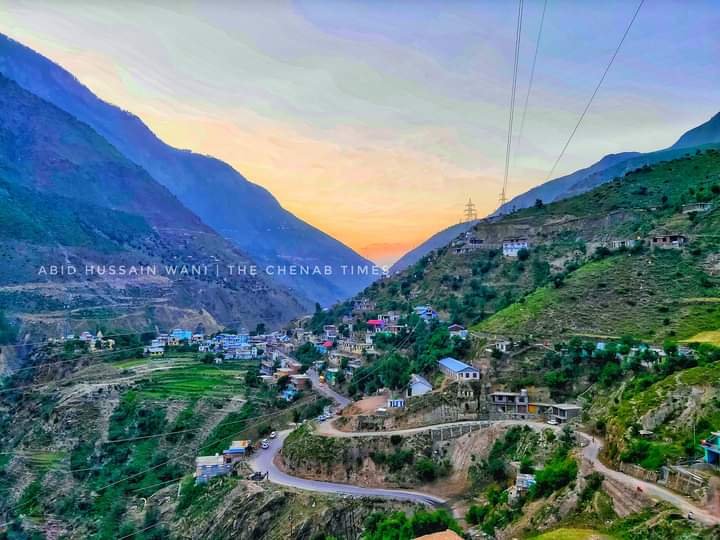
The first criterion, geographical isolation, remains highly relevant to the Chenab Valley. The region is marked by steep mountains, deep valleys, snow-prone passes, landslide zones, and scattered habitations. Areas such as Marwah, Warwan, Dachhan, Padder, Bhalessa, Pogal-Paristan, and the upper mountainous belts of Doda and Ramban continue to experience difficult access. Even where roads exist, travel remains uncertain during winter months and monsoon seasons. In many cases, reaching district headquarters, hospitals, colleges, or markets requires hours of travel. This is not symbolic remoteness but functional isolation that affects education, healthcare, administration, and livelihood opportunities.
The second criterion, distinctive culture, is strongly visible among the Pahari-speaking communities of the Chenab Valley. These populations have preserved their own linguistic traditions, oral literature, folk songs, marriage customs, agricultural rituals, seasonal celebrations, and social practices over generations. Languages such as Bhaderwahi, Bhalesi, Sarazi, Pogali, and Rambani are not merely dialect labels but markers of community continuity and cultural identity. Linguistic scholar George Abraham Grierson documented several of these speech forms within the Western Pahari linguistic group, reinforcing their distinct ethnolinguistic character.
The third criterion, backwardness, is reflected in measurable socio-economic indicators. Much of the Chenab Valley remains rural and dependent on agriculture, livestock rearing, wage labour, and seasonal migration. Farming is generally small-scale, terraced, rain-fed, and constrained by fragmented landholdings. Industrial development is minimal, private investment is limited, and formal employment opportunities are scarce. Educational attainment in remote belts continues to lag because of distance, infrastructure gaps, and affordability barriers. Healthcare access remains uneven due to terrain and limited specialist availability. These are classic indicators of structural backwardness arising from geography and historical underinvestment.
The fourth criterion, shyness of contact, must be interpreted carefully in modern language. It should not be understood as a social deficiency, but rather as historical distance from mainstream administrative, commercial, and institutional systems. In the case of the Chenab Valley, prolonged remoteness delayed the expansion of roads, markets, modern education, and regular state presence. Many communities were integrated into modern institutions later than populations in more accessible plains areas. This produced cumulative disadvantages that continue across generations.
The fifth criterion, formerly termed primitive traits, is no longer an acceptable expression in contemporary scholarship. However, when translated into present-day developmental language, it refers to communities historically dependent on traditional subsistence economies, low technological penetration, limited market integration, and customary modes of production. The Chenab Valley’s mountain populations long depended on subsistence farming, pastoral support systems, forest resources, barter-style local exchange, and low-surplus agriculture. Even today, many interior belts retain livelihood structures shaped more by ecology than by modern market economies.
When all five Lokur criteria are considered together, the relevance to the Chenab Valley becomes difficult to ignore. Geographical isolation is evident in terrain and seasonal disconnection. Distinctive culture survives through language and customs. Backwardness appears in economic and educational indicators. Historical distance from mainstream institutions reflects the older idea of shyness of contact. Traditional livelihood dependence corresponds to the modern reinterpretation of the final criterion.
Importantly, the Lokur Committee criteria were never meant to be read mechanically or in isolation. They were broad indicators intended to capture communities facing layered and long-term disadvantage. The Chenab Valley’s Pahari communities fit that larger logic because their challenges are interconnected. Geography restricts access, weak access limits education, low education narrows employment opportunities, and economic constraints reinforce migration and underdevelopment.
At the same time, recognition under any framework should not be viewed as a symbolic end in itself. It must be linked to meaningful development: all-weather roads, residential schooling, scholarships, telemedicine, women’s hostels, horticulture support, digital access, tourism planning, and language preservation. Constitutional recognition without developmental follow-through would remain incomplete.
The broader question is one of fairness. If policy frameworks exist to identify communities burdened by remoteness, underdevelopment, and historical exclusion, then those frameworks must be applied consistently. The Chenab Valley’s Pahari-speaking populations represent precisely the kind of mountain communities for whom such criteria were designed.
A modern reading of the Lokur framework therefore suggests one clear conclusion: the case of the Chenab Valley deserves careful, evidence-based, and sincere consideration within India’s continuing commitment to social justice and inclusive governance.
❤️ Support Independent Journalism
Your contribution keeps our reporting free, fearless, and accessible to everyone.
Or make a one-time donation
Secure via Razorpay • 12 monthly payments • Cancel anytime before next cycle


(We don't allow anyone to copy content. For Copyright or Use of Content related questions, visit here.)

Sadaket Malik is a Research Scholar in Centre for Research and Development LPU Punjab, He is based in Bhalessa (Doda) and can be mailed at sadaket.lpu@gmail.com