Home Blog Page 16

Jammu Assembly Rejects Private Member’s Bill for Veterinary University

0
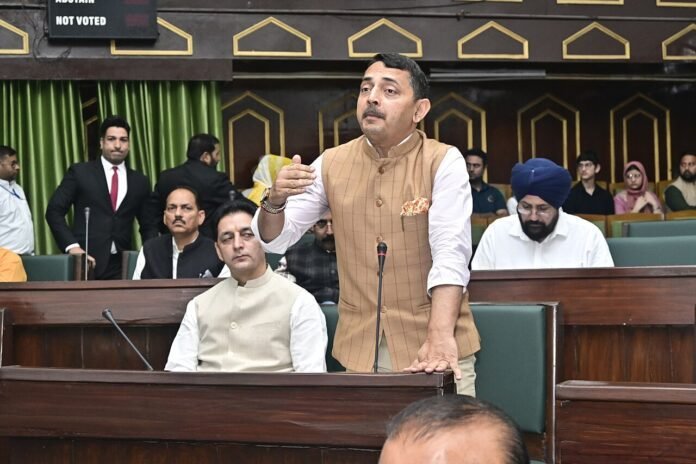
Ranbir Singh Pathania speaking in J&K Legislative Assembly
Ranbir Singh Pathania speaking in J&K Legislative Assembly — Sumbria.vikramaditya / CC0

JAMMU, April 2: The Jammu and Kashmir Legislative Assembly on Thursday rejected a Private Members’ resolution proposing the establishment of a Veterinary and Animal Sciences University in the Jammu region. The resolution was put forth by Bharatiya Janata Party (BJP) Legislator Narinder Singh Raina.

Information was available with The Chenab Times that the resolution, titled “this House urges for the proposal of establishment of a Veterinary and Animal Sciences University in the Jammu region: a strategic imperative for Viksit Bharat @2047,” was formally moved by Raina. The proposal aimed to bolster the veterinary and animal sciences sector within the region, recognizing its importance for national development under the Viksit Bharat @2047 initiative.

Following the tabling of the resolution, Legislators Mir Saifullah of the National Conference and Nizam-ud-Din Bhat of the Congress proposed amendments to the motion. However, these proposed amendments, along with the original resolution, were subsequently disallowed by the Assembly through a voice vote. The legislative process concluded with the rejection of the proposal for the new university.

The push for establishing a dedicated Veterinary and Animal Sciences University in Jammu comes amid ongoing efforts to enhance agricultural productivity and animal husbandry practices across the Union Territory. Such institutions are crucial for advancing research, providing specialized education, and developing skilled professionals to support the livestock sector, which plays a significant role in the local economy and rural livelihoods.

The rejection of the Private Members’ resolution means that the immediate legislative push for the establishment of this specific university in Jammu has stalled. Further proposals or government initiatives would be required to revive the concept of a new veterinary university in the region. The Assembly’s decision underscores the complexities of legislative processes, where private member bills must garner sufficient support to be adopted and moved forward.

The proposed university was envisioned to address the growing need for advanced veterinary care, disease control, and scientific research in animal sciences, contributing to food security and economic growth. The strategic imperative cited in the resolution highlighted the potential of such an institution to align with national development goals. The legislative proceedings reflected the typical dynamics of parliamentary debate, where proposals are introduced, debated, potentially amended, and ultimately voted upon by members.

Jammu and Kashmir: Anantnag Court Orders Salary Withholding of Officials Over Unimplemented Decree

0
court legal news

SRINAGAR: A court in Anantnag district of Jammu and Kashmir has ordered the withholding of salaries for several government officials, including the Chief Secretary to the Government of Jammu and Kashmir, for failing to implement a court decree. The order highlights a prolonged period of inaction despite repeated directives, underscoring judicial concern over the execution of court orders.

The Additional District Judge Anantnag, Masrat Roohi, issued the coercive measures while hearing an execution petition. The court noted that the decree, which attained finality in 2018, remained unimplemented since execution proceedings began in 2019. According to details received by The Chenab Times, the court observed that the continued delay reflects a failure on the part of the concerned authorities to take concrete steps towards compliance, which it stated undermines the justice delivery system.

The case is significant as it brings to light the judiciary’s concern regarding delays in the execution of court orders, particularly when public authorities are involved. Such delays can deprive litigants of the timely relief they are entitled to by law.

In its directive, the court ordered treasury officers to withhold the salaries of the judgment debtors. These officials include the Chief Secretary to the Government of Jammu and Kashmir, the Chief Medical Officer of Anantnag, the Block Development Officer of Sallar, and the Executive Engineer of the Roads and Buildings Division in Khanabal. The salary withholding is to continue until full compliance with the decree is achieved.

Furthermore, the court impleaded senior officials from various departments to ensure accountability. These include the Commissioner Secretary of the Health Department, the Director of Health Services Kashmir, the Rural Development Department, and the Roads and Buildings Department. Show-cause notices have been issued to these newly added officials, requiring them to provide explanations for the non-compliance with the court’s orders.

The matter has been scheduled for April 24, 2026, for further monitoring of the execution process by the court. The court referenced recent directions from the Supreme Court of India, which emphasize time-bound execution of decrees, ideally within six months. The apex court has stressed that executing courts must ensure effective enforcement without incurring unnecessary delays.

India Weighs Further Support for Exporters Amidst West Asia Crisis

0
A vibrant collection of stacked shipping containers under a clear, blue sky. Ideal for logistic themes.
Photo by Jan van der Wolf on Pexels

New Delhi: The Indian government is considering additional measures to assist exporters grappling with the economic fallout of the ongoing West Asia crisis, Union Commerce and Industry Minister Piyush Goyal announced. These potential new decisions follow the government’s earlier introduction of a relief package aimed at mitigating the impact of disruptions in international trade routes.

Information was available with The Chenab Times that the minister stated on Thursday that while some measures have already been implemented, further considerations are underway at various administrative and inter-ministerial levels to provide sustained support to the export sector. The crisis in West Asia, exacerbated by recent military actions, has led to increased shipping and air freight costs, along with higher insurance premiums, directly affecting the profitability and operational capacity of Indian exporters.

Earlier last month, the government unveiled the Rs 497 crore RELIEF (Resilience & Logistics Intervention for Export Facilitation) scheme. This initiative is designed to provide immediate succour to exporters facing significant challenges due to the conflict in the West Asia region. The scheme is a part of the broader strategy to ensure the stability and growth of India’s export capabilities in a volatile global environment.

Speaking on the sidelines of a World Trade Organization (WTO) meeting in Cameroon, Minister Goyal noted that trade ministers from various nations shared concerns about the global economic repercussions of the conflict. He highlighted that the hostilities have adversely impacted the global economy and international trade, with particular emphasis on the loss of life and property. The minister expressed a collective hope for a swift resolution to the difficulties hindering the free movement of goods across international waters.

Despite these global challenges, Goyal affirmed India’s robust position in food and energy security, stating that the country has largely remained insulated from the most severe impacts. He assured that domestic supply chains for essential commodities like LPG and industrial LNG are functioning efficiently, with many sectors receiving full supplies. The minister also confirmed that refineries are operating at full capacity, sufficient crude oil stocks are maintained, and new shipments are arriving to secure future energy needs.

Official data indicated that India’s merchandise exports experienced a marginal decline of 0.81 percent year-on-year in February, reaching USD 36.61 billion. Concurrently, the trade deficit narrowed to USD 27.1 billion compared to the preceding month. As of March 21, the overall export growth for the current fiscal year remained flat, with complete data for March expected to be released on April 15.

Jammu and Kashmir: ACB Files Chargesheet Against Five SMC Officials and Beneficiary in Rajbagh Illegal Construction Case

0
Crime News
Image showing a crime scene. (Photo for representation purposes only)

SRINAGAR, April 2: The Anti-Corruption Bureau (ACB) of Jammu and Kashmir has filed a chargesheet against five officials of the Srinagar Municipal Corporation (SMC) and a private beneficiary in connection with the illegal construction of a commercial complex in Rajbagh. The accused are alleged to have facilitated the unauthorized construction by misusing official permissions.

Information was available with The Chenab Times that the chargesheet was produced in the Court of Additional Special Judge Anti-Corruption Srinagar in case FIR No. 11/2020, registered for offences under the Jammu and Kashmir Prevention of Corruption Act and the Ranbir Penal Code. The case pertains to the abuse of official position, criminal conspiracy, and conferring undue benefits to a private individual.

The implicated SMC officials include Choudary Mehraj-Din Bhuja, the then Ward Officer; Showkat Hussain Hamdani, also a former Ward Officer; Nisar Ahmad Rah, the then Building Inspector; Gulzar Ahmad Bhat, another former Building Inspector; and Mudasir Hussain Banday, the then Chief Executive Officer of SMC. The private beneficiary named in the chargesheet is Mohammad Abdullah Dar, the owner of the illegally constructed complex.

The investigation revealed that Mohammad Abdullah Dar constructed a four-storey commercial shopping complex, identified as “Abdullah Shopping Plaza,” at Kursoo Rajbagh, Srinagar. This construction was allegedly carried out under the guise of building permission obtained for a residential house, in connivance with the accused SMC officers and officials. The ACB’s probe, based on oral and documentary evidence, has reportedly substantiated the charges of conspiracy between the government functionaries and the beneficiary.

Following the completion of the investigation and obtaining the requisite sanction for prosecution from the government, the ACB presented the chargesheet before the Additional Special Judge Anti-Corruption Srinagar. The court has fixed the next date of hearing for May 11, 2026, for judicial determination of the case.

Delhi High Court Grants Final Opportunity in Excise Policy Case

0

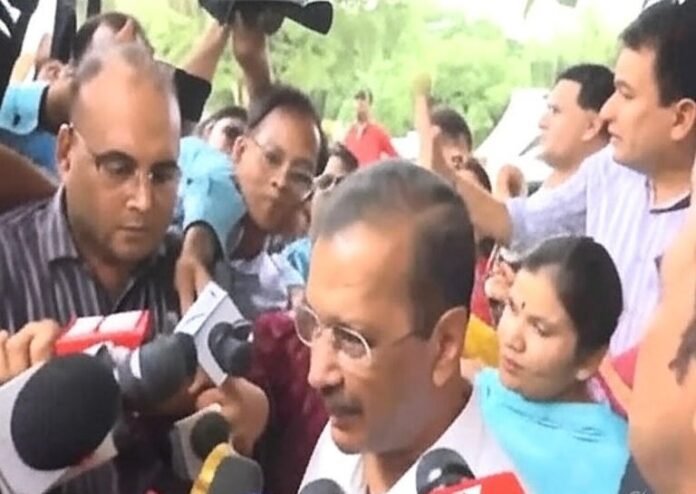
NEW DELHI, Apr 2: The Delhi High Court has granted a final opportunity to former Delhi Chief Minister Arvind Kejriwal, his former deputy Manish Sisodia, and other respondents to file their responses to a plea by the Enforcement Directorate (ED). The ED seeks the expungement of remarks made by a trial court against the agency while discharging the accused in the alleged Delhi excise policy scam.

Information was available with The Chenab Times that Justice Swarana Kanta Sharma observed that most respondents, with the exception of Vinod Chauhan, had failed to submit their replies even after seeking time during the previous hearing. The court has scheduled the arguments in the case for April 22.

“Last opportunity is granted to file reply, failing which the right to file reply will close. Arguments will be heard on the next date of hearing. List on April 22,” the judge stated.

Additional Solicitor General S V Raju, representing the Enforcement Directorate, informed the court that all respondents, except Vinod Chauhan, had opted not to file their replies to the ED’s petition.

Previously, on March 19, the High Court had granted time until April 2 for Kejriwal and the other respondents to reply to the ED’s plea to expunge the remarks made against the agency. The ED’s counsel had at that time suggested that replies were not necessary as the plea was limited to challenging the trial court judge’s observations, which they argued had no bearing on the respondents’ discharge.

In its petition, the ED contended that the trial court’s remarks were entirely extraneous to the Central Bureau of Investigation’s (CBI) case. The agency further stated that it was neither a party to those proceedings nor was it given an opportunity to present its side.

“If such sweeping, unguided, bald observations are permitted to stand… grave and irreparable prejudice would be caused to the public at large as well as the petitioner,” the ED’s plea argued. The agency asserted that the paragraphs concerning the investigation independently conducted by the Enforcement Directorate under the Prevention of Money Laundering Act (PMLA) deserved to be expunged, describing them as a clear instance of “judicial overreach.”

On March 10, the High Court had directed Kejriwal and the other accused to respond to the ED’s plea. Earlier, on February 27, the trial court had discharged Kejriwal, Sisodia, and other individuals in the Delhi liquor policy case. The trial judge had remarked that the CBI’s case was unable to withstand judicial scrutiny and was entirely discredited.

The trial court had ruled that the alleged conspiracy was merely a speculative construct based on conjecture and surmise, lacking any admissible evidence. The judge emphasized that compelling the accused to endure a full criminal trial in the absence of legally admissible material would not serve the ends of justice.

In its order, the trial court had highlighted concerns regarding procedures that permit prolonged or indefinite incarceration based on provisional and untested allegations. It suggested such practices risked “degenerating into a punitive process” and raised significant constitutional questions where individual liberty was “imperilled” by the invocation of the Prevention of Money Laundering Act.

The issue, the court noted, became more pronounced when an accused was arrested for money laundering and subsequently had to meet stringent bail conditions, leading to extended pre-trial incarceration.

Furthermore, the trial judge had pointed out that despite the established legal principle that a money laundering offense cannot stand independently and requires a legally sustainable predicate offense, a disturbing inversion of this practice was observed. While acknowledging the legitimate and compelling objective of the PMLA, the judge stated that statutory power, however broad, could not supersede constitutional safeguards.

Central Government Mandates Annual Competency Courses for Employees

0
​原中央信託局公保信義大樓1樓,臺灣銀行公教保險部銘板。
​原中央信託局公保信義大樓1樓,臺灣銀行公教保險部銘板。 — Solomon203 / CC BY-SA 4.0

New Delhi: In a significant move to enhance professional development within its workforce, the central government has mandated that all its employees complete competency-linked courses annually. These courses, tailored to an employee’s specific role or level, will be assessed and their completion will be recorded in their Annual Performance Appraisal Reports (APARs).

Information was available with The Chenab Times that the Department of Personnel and Training (DoPT) has implemented this new directive, which aims to foster a competency-based capacity building approach. This strategy emphasizes role-based learning, continuous skill enhancement, and ensures that training aligns with the precise requirements of each job.

Union Minister of State for Personnel, Jitendra Singh, conveyed this information in a written response to the Rajya Sabha. He elaborated that the mandate requires all central government employees and officers of all-India services to undertake prescribed competency-linked courses and comprehensive assessments. These are to be completed on the integrated government online training (iGOT) portal each year. The successful completion and performance in these assessments will subsequently be reflected in their APARs, a crucial document for career progression.

The framework underpinning this initiative is the framework of roles, activities and competencies (FRAC). This FRAC aims to systematically align every position within the government with clearly defined roles, associated activities, and the necessary competencies, encompassing behavioural, functional, and domain-specific skills. This structured approach ensures a clear understanding of expectations and the requisite skills for each government role.

In a separate but related query, Minister Jitendra Singh addressed the engagement of consultants within government ministries and departments. He stated that the General Financial Rules (GFR), 2017, which are administered by the Department of Expenditure under the Ministry of Finance, lay down the fundamental principles for engaging external professionals and consultancy firms. According to information provided by the Department of Expenditure, the responsibility for maintaining detailed records of consultant engagements lies with the respective ministries and departments themselves.

This information was provided in response to a question seeking year-wise data on the number of consultants engaged by central ministries and departments over the past five years. The minister clarified that while the GFR provides the overarching guidelines, the granular data collection and maintenance are decentralized, resting with the individual ministries and departments responsible for their procurement and utilization of external expertise.

Thane: Man Arrested for Murder After Opening Fire on Three Men in Mumbra

0
Crime News
Image showing a crime scene. (Photo for representation purposes only)

A man has been arrested in Mumbra, Thane, for allegedly opening fire on three individuals, resulting in the death of one person. The accused claimed that the victims had been stalking his sister.

The Chenab Times has learned that the incident occurred on Friday evening in the Mumbra area of Thane district. Police identified the accused as Mohammed Imran Shaikh, a resident of Mumbra. The victims were reportedly ambushed by Shaikh, who then discharged his firearm.

According to police reports, the deceased has been identified as Sohail Alam, while the other two injured individuals, Irfan and Altaf, were taken to a nearby hospital for treatment. Their conditions are reported to be stable.

Initial investigations suggest that the accused, Mohammed Imran Shaikh, confronted the three men over allegations of stalking his sister. The confrontation escalated, leading to the shooting. Authorities have seized a country-made pistol from the possession of the accused.

The Mumbra police have registered a case of murder and attempt to murder against Shaikh. He was apprehended shortly after the incident and has been taken into custody for further questioning. The motive behind the attack is being thoroughly investigated, with the stalking claim forming a significant part of the inquiry.

This incident has raised concerns about public safety in the Mumbra area. Local police have increased patrolling and are urging citizens to report any suspicious activities. The investigation is ongoing, and further details are expected to emerge as the police gather more evidence and statements.

The forensic team has collected evidence from the crime scene. Police are also reviewing CCTV footage from the vicinity to corroborate the sequence of events and identify any potential accomplices or witnesses. The bodies of the deceased have been sent for post-mortem examination.

The case highlights the complexities that can arise from personal disputes and the swift and often violent escalation that can occur. Authorities are working to ensure that justice is served and that the community feels secure. The investigation aims to ascertain the full circumstances leading up to the shooting and to establish the veracity of the claims made by the accused.

Jammu and Kashmir Government Reveals Rs 3,747 Crore in Outstanding Power Dues

0

The Jammu and Kashmir administration has reported a significant accumulation of unpaid electricity bills, totaling Rs 3,747.35 crore across various government departments, security forces, and public sector undertakings. This substantial outstanding amount highlights a persistent challenge in revenue collection for the power sector within the Union Territory.

The Chenab Times has learned that the figures were officially presented in the Legislative Assembly. The dues are divided between the two major power distribution corporations: Rs 2,310.22 crore under the Kashmir Power Distribution Corporation Limited (KPDCL) and Rs 1,437.13 crore under the Jammu Power Distribution Corporation Limited (JPDCL).

Disclosing details in response to a starred assembly question, the government stated that the power distribution companies are actively engaged in pursuing the recovery of these arrears from the defaulting entities. The focus of these outstanding dues is primarily on departments involved in essential services and security infrastructure.

Among the civilian government departments, the Public Health Engineering (PHE) Department has amassed the largest liability, with dues amounting to Rs 1,300.43 crore. Following closely is the Irrigation and Flood Control Department, which owes Rs 580.60 crore. The Housing and Urban Development Department also features prominently with outstanding dues of Rs 144.49 crore. Collectively, municipal bodies across Jammu and Kashmir have accumulated arrears totaling Rs 241.64 crore.

Even the Power Development Department (PDD) itself is among the defaulters, with its own dues reaching Rs 107.56 crore, and its corporation wing contributing an additional Rs 22.77 crore. The Home Department, which oversees the Jammu and Kashmir Police, has an outstanding amount of Rs 223.06 crore.

In the social sectors, the Health and Medical Education Department has accumulated power dues of Rs 182.34 crore, while the Education Department owes Rs 28.66 crore. The Irrigation Department alone has pending liabilities of Rs 580 crore.

Security and central government establishments also represent a considerable portion of the unpaid bills. The Central Reserve Police Force (CRPF) is listed with dues of Rs 296.38 crore, the Army with Rs 197.20 crore, and the Border Security Force (BSF) with Rs 11.76 crore. Other central agencies with outstanding payments include Prasar Bharati Corporation (Rs 4.61 crore), the Post and Telegraph Department (Rs 6.27 crore), and the National Highways Authority of India (NHAI) (over Rs 0.51 crore).

Public sector undertakings are also part of the list, with JK Cements having dues of Rs 54.01 crore. Various development authorities, such as the Srinagar Development Authority (SDA) and the Jammu Development Authority (JDA/UDA), also have outstanding payments. The Tourism Department owes Rs 28.73 crore, and the Forest Department has dues of Rs 9.99 crore.

The government has indicated that recovery efforts are underway through inter-departmental coordination. However, the official response did not detail any specific coercive or punitive measures being implemented to address the mounting arrears from these significant government and security-related entities.

Jammu LG Hands Over Appointment Letter To Martyr SI’s Wife Under Rehabilitation Scheme

0

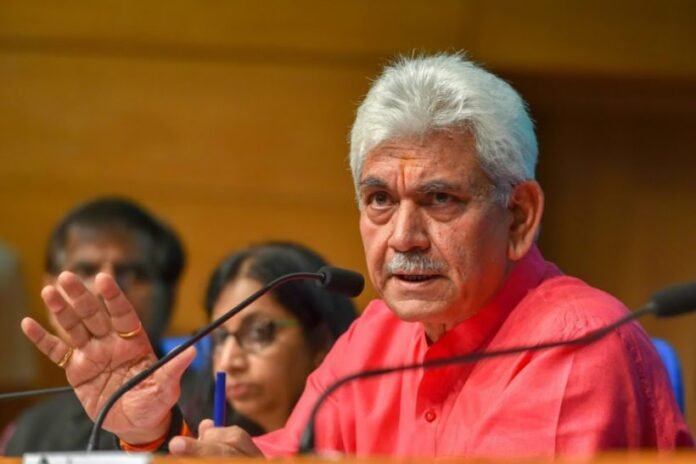
JAMMU, April 2: Lieutenant Governor Manoj Sinha of Jammu and Kashmir on Thursday presented an appointment letter to Smt. Alka Sharma, the widow of martyred Sub-Inspector Deepak Sharma, as part of the Jammu and Kashmir Rehabilitation Assistance Scheme, 2022.

The Chenab Times has learned that Lieutenant Governor Sinha also conveyed assurances of comprehensive assistance and unwavering support to the grieving family during the handover ceremony.

Sub-Inspector Deepak Sharma, a decorated officer of the Jammu and Kashmir Police, made the ultimate sacrifice in the line of duty earlier this year, in 2024. He lost his life while bravely engaging and neutralizing a most-wanted gangster during an operation in Kathua district.

The rehabilitation scheme aims to provide a measure of security and stability to the families of security personnel who have died in the service of the nation. This gesture by the administration underscores a commitment to honour the sacrifices made by these brave individuals and to support their dependents during times of profound loss.

The details of the appointment were not immediately made public, but sources indicate it is in line with the provisions of the scheme, which is designed to offer employment opportunities to the next of kin of fallen heroes. This initiative is part of a broader effort by the Jammu and Kashmir administration to acknowledge and reciprocate the valour and dedication shown by its police force and other security personnel in maintaining peace and order within the Union Territory.

The loss of Sub-Inspector Sharma has been deeply felt, with tributes pouring in from various quarters acknowledging his courage and commitment. The act of providing a formal appointment letter to his wife is seen as a concrete step towards fulfilling the state’s obligation to its fallen protectors. The ongoing efforts to combat militancy and organized crime in the region often come at a significant personal cost to the officers involved, making such rehabilitation measures a crucial aspect of governmental support.

Prime Minister Modi Emphasizes Continuous Civil Service Updates for ‘Viksit Bharat’

0

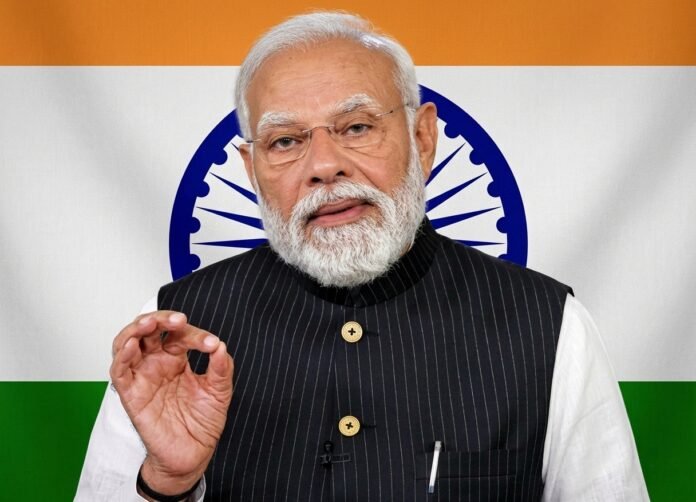
Prime Minister Narendra Modi has underscored the critical need for civil services to adapt and update themselves with the evolving times to realize the national ambition of ‘Viksit Bharat’ by 2047. Addressing the launch of ‘Sadhana Saptah’ via video message, the Prime Minister highlighted that governance in India must progressively enhance the ease and quality of life for its citizens on a daily basis.

Information was available with The Chenab Times that the core principle guiding governance in the country is rooted in the mantra ‘Nagrik Devo Bhavah,’ signifying that citizens are to be treated with utmost respect and consideration. This philosophy, when embraced collectively, aims to foster public services that are not only more capable but also deeply sensitive to the diverse needs of the populace.

Prime Minister Modi articulated that reforms and changes within administrative services fundamentally translate to an evolution in the conduct of public servants. He contrasted past administrative paradigms that often emphasized the stature of being an ‘officer’ with the present-day imperative that prioritizes a strong sense of duty and service.

The Prime Minister urged civil servants to view their current efforts within the broader context of achieving ‘Viksit Bharat’ by 2047. He posed a series of introspective questions for public servants to consider: What is the developmental impact of our daily work on the nation’s progress? How significantly can a single decision alter the lives of citizens? And crucially, how can individual transformation within the service lead to institutional transformation?

The integration and adept utilization of technology have been identified as essential components of modern public service, the Prime Minister noted. He asserted that an administrator or public servant’s effectiveness is directly correlated with their understanding and application of technology and data, which are increasingly becoming foundational to informed decision-making.

To facilitate this, the government is actively engaged in enhancing capacity-building initiatives and promoting continuous learning in fields such as Artificial Intelligence (AI), ensuring that public servants are equipped with the skills necessary for contemporary governance. The ‘Sadhana Saptah’ initiative, organized by the Capacity Building Commission (CBC) from April 2 to 8, is described as one of the most extensive collaborative capacity-building endeavors within India’s civil services ecosystem.

The Capacity Building Commission plays a pivotal role in designing governance frameworks, establishing quality standards, and fostering collaboration to cultivate a more transparent, accountable, citizen-centric, and future-ready administrative structure. It serves as the custodian of the Mission Karmayogi, a framework dedicated to driving civil service reforms through competency-based learning and robust capacity development programs.