Home Blog Page 17

Thane: Man Arrested for Murder After Opening Fire on Three Men in Mumbra

0
Crime News
Image showing a crime scene. (Photo for representation purposes only)

A man has been arrested in Mumbra, Thane, for allegedly opening fire on three individuals, resulting in the death of one person. The accused claimed that the victims had been stalking his sister.

The Chenab Times has learned that the incident occurred on Friday evening in the Mumbra area of Thane district. Police identified the accused as Mohammed Imran Shaikh, a resident of Mumbra. The victims were reportedly ambushed by Shaikh, who then discharged his firearm.

According to police reports, the deceased has been identified as Sohail Alam, while the other two injured individuals, Irfan and Altaf, were taken to a nearby hospital for treatment. Their conditions are reported to be stable.

Initial investigations suggest that the accused, Mohammed Imran Shaikh, confronted the three men over allegations of stalking his sister. The confrontation escalated, leading to the shooting. Authorities have seized a country-made pistol from the possession of the accused.

The Mumbra police have registered a case of murder and attempt to murder against Shaikh. He was apprehended shortly after the incident and has been taken into custody for further questioning. The motive behind the attack is being thoroughly investigated, with the stalking claim forming a significant part of the inquiry.

This incident has raised concerns about public safety in the Mumbra area. Local police have increased patrolling and are urging citizens to report any suspicious activities. The investigation is ongoing, and further details are expected to emerge as the police gather more evidence and statements.

The forensic team has collected evidence from the crime scene. Police are also reviewing CCTV footage from the vicinity to corroborate the sequence of events and identify any potential accomplices or witnesses. The bodies of the deceased have been sent for post-mortem examination.

The case highlights the complexities that can arise from personal disputes and the swift and often violent escalation that can occur. Authorities are working to ensure that justice is served and that the community feels secure. The investigation aims to ascertain the full circumstances leading up to the shooting and to establish the veracity of the claims made by the accused.
Jammu and Kashmir Government Reveals Rs 3,747 Crore in Outstanding Power Dues

0

The Jammu and Kashmir administration has reported a significant accumulation of unpaid electricity bills, totaling Rs 3,747.35 crore across various government departments, security forces, and public sector undertakings. This substantial outstanding amount highlights a persistent challenge in revenue collection for the power sector within the Union Territory.

The Chenab Times has learned that the figures were officially presented in the Legislative Assembly. The dues are divided between the two major power distribution corporations: Rs 2,310.22 crore under the Kashmir Power Distribution Corporation Limited (KPDCL) and Rs 1,437.13 crore under the Jammu Power Distribution Corporation Limited (JPDCL).

Disclosing details in response to a starred assembly question, the government stated that the power distribution companies are actively engaged in pursuing the recovery of these arrears from the defaulting entities. The focus of these outstanding dues is primarily on departments involved in essential services and security infrastructure.

Among the civilian government departments, the Public Health Engineering (PHE) Department has amassed the largest liability, with dues amounting to Rs 1,300.43 crore. Following closely is the Irrigation and Flood Control Department, which owes Rs 580.60 crore. The Housing and Urban Development Department also features prominently with outstanding dues of Rs 144.49 crore. Collectively, municipal bodies across Jammu and Kashmir have accumulated arrears totaling Rs 241.64 crore.

Even the Power Development Department (PDD) itself is among the defaulters, with its own dues reaching Rs 107.56 crore, and its corporation wing contributing an additional Rs 22.77 crore. The Home Department, which oversees the Jammu and Kashmir Police, has an outstanding amount of Rs 223.06 crore.

In the social sectors, the Health and Medical Education Department has accumulated power dues of Rs 182.34 crore, while the Education Department owes Rs 28.66 crore. The Irrigation Department alone has pending liabilities of Rs 580 crore.

Security and central government establishments also represent a considerable portion of the unpaid bills. The Central Reserve Police Force (CRPF) is listed with dues of Rs 296.38 crore, the Army with Rs 197.20 crore, and the Border Security Force (BSF) with Rs 11.76 crore. Other central agencies with outstanding payments include Prasar Bharati Corporation (Rs 4.61 crore), the Post and Telegraph Department (Rs 6.27 crore), and the National Highways Authority of India (NHAI) (over Rs 0.51 crore).

Public sector undertakings are also part of the list, with JK Cements having dues of Rs 54.01 crore. Various development authorities, such as the Srinagar Development Authority (SDA) and the Jammu Development Authority (JDA/UDA), also have outstanding payments. The Tourism Department owes Rs 28.73 crore, and the Forest Department has dues of Rs 9.99 crore.

The government has indicated that recovery efforts are underway through inter-departmental coordination. However, the official response did not detail any specific coercive or punitive measures being implemented to address the mounting arrears from these significant government and security-related entities.

Jammu LG Hands Over Appointment Letter To Martyr SI’s Wife Under Rehabilitation Scheme

0

JAMMU, April 2: Lieutenant Governor Manoj Sinha of Jammu and Kashmir on Thursday presented an appointment letter to Smt. Alka Sharma, the widow of martyred Sub-Inspector Deepak Sharma, as part of the Jammu and Kashmir Rehabilitation Assistance Scheme, 2022.

The Chenab Times has learned that Lieutenant Governor Sinha also conveyed assurances of comprehensive assistance and unwavering support to the grieving family during the handover ceremony.

Sub-Inspector Deepak Sharma, a decorated officer of the Jammu and Kashmir Police, made the ultimate sacrifice in the line of duty earlier this year, in 2024. He lost his life while bravely engaging and neutralizing a most-wanted gangster during an operation in Kathua district.

The rehabilitation scheme aims to provide a measure of security and stability to the families of security personnel who have died in the service of the nation. This gesture by the administration underscores a commitment to honour the sacrifices made by these brave individuals and to support their dependents during times of profound loss.

The details of the appointment were not immediately made public, but sources indicate it is in line with the provisions of the scheme, which is designed to offer employment opportunities to the next of kin of fallen heroes. This initiative is part of a broader effort by the Jammu and Kashmir administration to acknowledge and reciprocate the valour and dedication shown by its police force and other security personnel in maintaining peace and order within the Union Territory.

The loss of Sub-Inspector Sharma has been deeply felt, with tributes pouring in from various quarters acknowledging his courage and commitment. The act of providing a formal appointment letter to his wife is seen as a concrete step towards fulfilling the state’s obligation to its fallen protectors. The ongoing efforts to combat militancy and organized crime in the region often come at a significant personal cost to the officers involved, making such rehabilitation measures a crucial aspect of governmental support.

Prime Minister Modi Emphasizes Continuous Civil Service Updates for ‘Viksit Bharat’

0

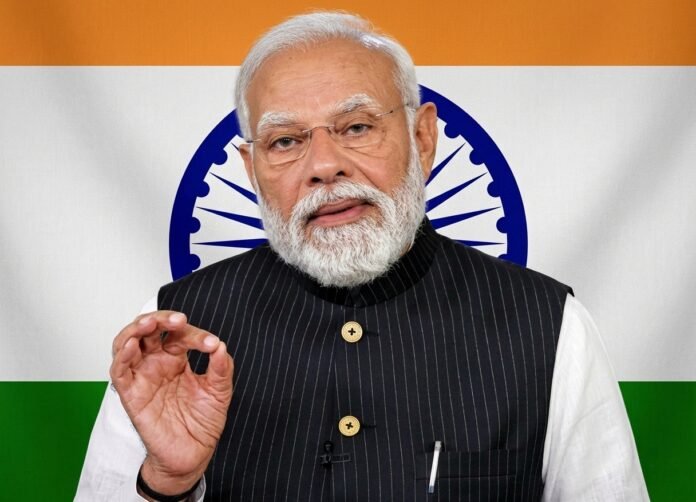
Prime Minister Narendra Modi has underscored the critical need for civil services to adapt and update themselves with the evolving times to realize the national ambition of ‘Viksit Bharat’ by 2047. Addressing the launch of ‘Sadhana Saptah’ via video message, the Prime Minister highlighted that governance in India must progressively enhance the ease and quality of life for its citizens on a daily basis.

Information was available with The Chenab Times that the core principle guiding governance in the country is rooted in the mantra ‘Nagrik Devo Bhavah,’ signifying that citizens are to be treated with utmost respect and consideration. This philosophy, when embraced collectively, aims to foster public services that are not only more capable but also deeply sensitive to the diverse needs of the populace.

Prime Minister Modi articulated that reforms and changes within administrative services fundamentally translate to an evolution in the conduct of public servants. He contrasted past administrative paradigms that often emphasized the stature of being an ‘officer’ with the present-day imperative that prioritizes a strong sense of duty and service.

The Prime Minister urged civil servants to view their current efforts within the broader context of achieving ‘Viksit Bharat’ by 2047. He posed a series of introspective questions for public servants to consider: What is the developmental impact of our daily work on the nation’s progress? How significantly can a single decision alter the lives of citizens? And crucially, how can individual transformation within the service lead to institutional transformation?

The integration and adept utilization of technology have been identified as essential components of modern public service, the Prime Minister noted. He asserted that an administrator or public servant’s effectiveness is directly correlated with their understanding and application of technology and data, which are increasingly becoming foundational to informed decision-making.

To facilitate this, the government is actively engaged in enhancing capacity-building initiatives and promoting continuous learning in fields such as Artificial Intelligence (AI), ensuring that public servants are equipped with the skills necessary for contemporary governance. The ‘Sadhana Saptah’ initiative, organized by the Capacity Building Commission (CBC) from April 2 to 8, is described as one of the most extensive collaborative capacity-building endeavors within India’s civil services ecosystem.

The Capacity Building Commission plays a pivotal role in designing governance frameworks, establishing quality standards, and fostering collaboration to cultivate a more transparent, accountable, citizen-centric, and future-ready administrative structure. It serves as the custodian of the Mission Karmayogi, a framework dedicated to driving civil service reforms through competency-based learning and robust capacity development programs.

Pune Metro to Transform Decommissioned Coach into Unique Restaurant at District Court Station

0

Pune, Maharashtra – The Pune Metro is set to introduce a novel dining experience by converting a decommissioned train coach into a unique restaurant. The innovative project will be situated at the District Court Metro station, aiming to offer commuters and residents an unusual gastronomic destination.

The Chenab Times has learned that this initiative is part of broader efforts to enhance the passenger experience and explore unconventional revenue streams for the urban transit system. The selection of a decommissioned train coach as the basis for the restaurant highlights a creative approach to repurposing old infrastructure.

The District Court Metro station, a significant hub within the Pune Metro network, has been chosen as the location for this distinctive culinary venture. The station’s accessibility and high footfall are expected to contribute to the restaurant’s potential success. Officials hope the novelty of dining inside a train carriage, albeit stationary, will attract a considerable number of patrons.

This development is not the first instance of train coaches being repurposed for commercial use, particularly in tourism and hospitality sectors across India. However, its integration within a modern metro station environment in Pune marks a distinct approach. The project aims to blend urban mobility with unique leisure activities, potentially setting a precedent for other metropolitan transit systems.

The specific design and operational details of the restaurant are still under wraps, but preliminary indications suggest that it will offer a comfortable and themed dining atmosphere. The idea is to leverage the aesthetic appeal of a train coach while providing a modern restaurant experience. This includes ensuring all necessary amenities and adhering to food safety standards are paramount.

The Pune Metro, operated by Maharashtra Metro Rail Corporation Limited (Maha-Metro), has been progressively expanding its services and stations across the city. This initiative appears to be a strategic move to generate additional income beyond fare collection, a common challenge for public transport authorities globally. Exploring such ancillary revenue models can contribute to the financial sustainability of metro operations.

Further details regarding the type of cuisine to be served, the operational timeline, and the management of the restaurant are expected to be released by Maha-Metro in the coming weeks. The project is anticipated to add a unique landmark to the city’s urban landscape, drawing inspiration from railway heritage while catering to contemporary urban lifestyles. The conversion process will involve significant structural modifications to the coach to ensure it meets all safety and accessibility regulations for a public eating establishment.

The integration of such amenities within metro stations is part of a growing trend in urban planning to create multi-functional public spaces. These spaces aim to serve not only their primary purpose of transit but also to foster community engagement and economic activity. The Pune Metro’s venture into operating a restaurant within its premises is a step in this direction, promising to transform a functional space into an experiential one.

UK Leads Diplomatic Push to Reopen Strait of Hormuz Amidst Global Shipping Crisis

0

The United Kingdom is spearheading an international diplomatic initiative, gathering over 30 nations for a virtual meeting to devise strategies for reopening the vital Strait of Hormuz, a crucial global shipping artery currently hampered by conflict.

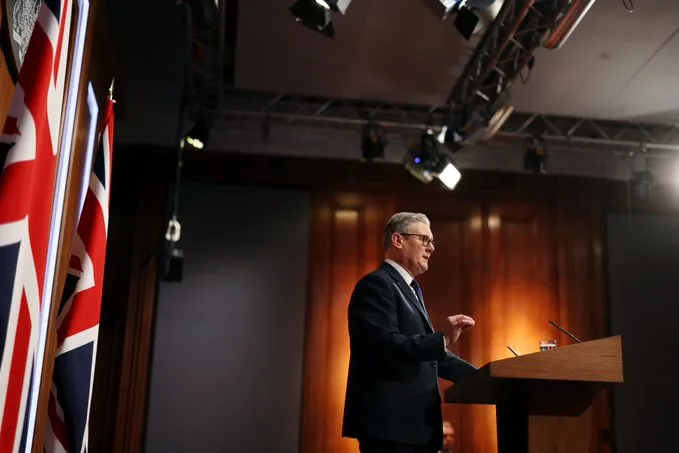
According to details received by The Chenab Times, the meeting, scheduled for Thursday, aims to exert diplomatic and political pressure to restore freedom of navigation through the waterway, which has been significantly impacted by ongoing hostilities involving Iran. British Prime Minister Keir Starmer indicated that the discussions would focus on assessing all viable measures to ensure the safety of vessels and seafarers, and to resume the flow of essential commodities.

The Strait of Hormuz, connecting the Persian Gulf to international waters, has become a focal point of tension, with reported Iranian actions against commercial shipping threatening to disrupt global oil supplies and drive up petroleum prices. While the United States is not participating in this specific diplomatic gathering, emphasizing that allies should take responsibility for securing their own energy routes, European nations are coordinating efforts to address the escalating crisis.

The urgency of the situation is underscored by the fact that no single nation appears willing to unilaterally enforce passage through the strait by military means while Iran possesses anti-ship missiles, drones, attack craft, and mines. However, British officials have stated that military planners from participating nations will convene separately in the near future to develop strategies for ensuring shipping security once active fighting subsides.

A joint statement has been issued by 35 countries, including the UK, France, Germany, Italy, Canada, Japan, and the United Arab Emirates, demanding that Iran cease its efforts to block the strait. These nations have pledged to contribute to efforts aimed at guaranteeing safe passage through the critical maritime chokepoint.

This initial diplomatic meeting is considered the first phase of a broader effort, which will be followed by working-level discussions among officials to elaborate on concrete plans. Prime Minister Starmer acknowledged the complexity of resuming shipping operations, emphasizing the need for a unified approach combining military preparedness and diplomatic engagement, in conjunction with the maritime industry.

The coordinated international approach draws parallels with previous coalitions formed to support security initiatives, such as the effort to bolster Ukraine’s security post-ceasefire. This diplomatic push also serves as a demonstration of European commitment to enhancing regional security, particularly in light of recent suggestions that the United States might reconsider its NATO commitments. The imperative for strengthened continental defense mechanisms has been amplified by these broader geopolitical considerations.

Oil Prices Surge, Asian Markets Dip Following US President’s Address on Iran

0

Global oil prices experienced a significant increase of over 4 percent, while Asian stock markets registered declines in early trading on Thursday. The shifts followed a primetime national address by United States President Donald Trump concerning the ongoing conflict with Iran.

The Chenab Times has learned that President Trump stated the U.S. would continue to apply substantial pressure on Iran and indicated that military operations could conclude in the near future, asserting that the United States would “finish the job.”

In early Asian trading, Tokyo’s Nikkei 225 index saw a downturn of 1.4 percent, falling to 53,004.81. South Korea’s Kospi index followed suit, losing 3.4 percent to trade at 5,292.36. Hong Kong’s Hang Seng index also experienced a decrease, down 0.8 percent at 25,082.59.

Futures for the U.S. market indicated further potential losses, with indices down more than 0.7 percent. The market reaction suggests investor apprehension regarding the geopolitical developments and their potential impact on global economic stability.

The surge in oil prices was a direct consequence of President Trump’s remarks. Brent crude, the international benchmark for oil, climbed 5 percent, reaching USD 106.22 per barrel. Simultaneously, U.S. benchmark crude saw a rise of 4.2 percent, trading at USD 104.36 a barrel. This heightened volatility in energy markets reflects the perceived risk associated with the escalating tensions in the Middle East.

The address, delivered as the first national speech since the commencement of hostilities with Iran, was closely watched by global financial markets. Investors are particularly sensitive to pronouncements concerning major oil-producing regions, given the significant influence of such events on commodity prices and international trade. The uncertainty generated by the ongoing conflict and presidential statements contributed to a cautious sentiment across equity markets in Asia.

Maharashtra Grapples With Viral ‘Walk of Shame’ Policing Trend

0
Crime News
Image showing a crime scene. (Photo for representation purposes only)

A policing tactic involving public shaming, exemplified by a “walk of shame” in Nashik, is gaining traction across Maharashtra, sparking debate and dividing public opinion on its efficacy and ethical implications.

The Chenab Times has learned that this method, which involves individuals accused of offenses being paraded or made to stand in public places, has been employed in various districts within the state. While proponents argue it serves as a deterrent and a form of immediate public accountability, critics express concerns about human rights violations, potential for misuse, and the erosion of due process.

Nashik Incident Fuels Widespread Discussion

The recent incident in Nashik, where individuals reportedly accused of minor offenses were made to walk through streets carrying signs or being subjected to public scrutiny, brought the practice into sharp focus. Visuals and accounts of these events have circulated widely on social media, igniting a national conversation about the methods adopted by law enforcement agencies to maintain order and deter crime.

This form of public shaming is not entirely new to India, with similar practices having been observed in other states in the past. However, its resurgence and apparent spread across Maharashtra have raised alarms among civil liberties advocates and legal experts. They point out that such tactics can disproportionately affect marginalized communities and can lead to irreparable damage to an individual’s reputation, regardless of their guilt or innocence.

Differing Perspectives on Deterrence

Supporters of the “walk of shame” approach often highlight its perceived effectiveness in deterring potential offenders. The immediate and visible consequences, they argue, instill a sense of fear and shame that can be more impactful than traditional legal proceedings, especially for petty offenses. In areas where community policing is emphasized, some believe these methods foster a greater sense of collective responsibility and help maintain a peaceful environment.

However, these arguments are countered by a substantial body of opinion that emphasizes the potential for abuse and the violation of fundamental rights. Legal scholars and human rights activists argue that the presumption of innocence is a cornerstone of justice, and public shaming directly undermines this principle. They also raise concerns about the lack of judicial oversight and the potential for mob justice, which can have severe and irreversible consequences.

Legal and Ethical Quandaries

The legality of such public shaming tactics is also under scrutiny. While specific laws might not explicitly prohibit public shaming in all its forms, it can often fall foul of broader constitutional provisions guaranteeing dignity and the right to a fair trial. The Supreme Court of India has, in various judgments, cautioned against extra-judicial measures and stressed the importance of adhering to established legal procedures.

The debate also touches upon the psychological impact of public humiliation. Experts suggest that the shame and stigma associated with such public displays can lead to severe mental health issues, including depression and anxiety, and can even push individuals towards more desperate measures. The long-term societal impact of normalizing such public punishment is also a significant concern, with fears that it could erode empathy and promote a punitive culture over rehabilitative approaches.

Maharashtra Police Response and Future Implications

Official responses from the Maharashtra Police regarding the trend have been varied, with some districts reportedly adopting such methods while others maintain a cautious stance. There are ongoing discussions within police leadership and state administration about the appropriateness and legality of these practices. The increasing visibility of these incidents through social media platforms puts additional pressure on authorities to clarify their stance and policy on public shaming as a law enforcement tool.

The unfolding situation in Maharashtra highlights a broader societal tension between the demand for immediate order and the imperative to uphold legal and ethical standards. As the “walk of shame” trend continues to spread, it prompts a critical examination of the methods used to enforce law and order and their long-term consequences on the fabric of justice and human dignity within the state and beyond.

Trump Declares US Forces Nearing ‘Finish Job’ in Iran, Claims Significant Victories

0

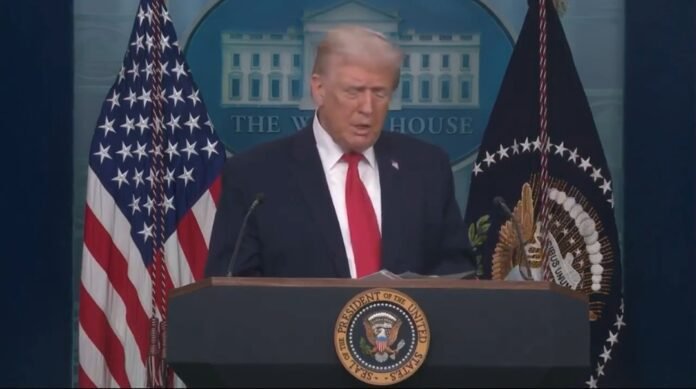
Washington D.C. – President Donald Trump announced on Wednesday night that U.S. forces are nearing the completion of their core strategic objectives in Iran, asserting that the mission is on track to be “finished soon.” In his first prime-time address to the nation since the commencement of hostilities, Trump detailed significant progress towards what he described as the war’s goals: dismantling Iran’s missile production and navy, preventing regional destabilization by Iranian proxies, and ensuring Iran does not acquire nuclear weapons.

Information was available with The Chenab Times indicating that President Trump emphasized the military action was not driven by a need for Iran’s natural resources, such as oil, but rather to support American allies. “We don’t have to be there. We don’t need their oil. We don’t need anything they have,” Trump stated, adding, “we’re there to help our allies.” He also sought to reassure the American public regarding potential impacts on gas prices, citing the nation’s substantial domestic oil and gas reserves, which he claimed exceed those of Saudi Arabia and Russia combined due to his administration’s energy policies.

Speaking from the White House, Trump detailed the impact of what he termed “Operation Epic Fury,” stating that over the past month, Iran’s capacity to launch missiles and drones has been severely curtailed, with its weapons factories and rocket launchers reportedly destroyed. He asserted that the Iranian navy has been neutralized, its air force is in ruins, and its leadership has been eliminated. The Islamic Revolutionary Guard Corps, he added, is currently being decimated.

The President characterized the last four weeks as a period of “swift, decisive, overwhelming victories on the battlefield” for American armed forces. He reiterated claims that Iran has been “essentially decimated” and suggested that international efforts to secure the Strait of Hormuz should now be less challenging, although independent observations have reportedly not corroborated this assertion. Trump also indicated that Iran’s nuclear sites are under “intense satellite surveillance and control” by the U.S., following repeated targeting by both American and Israeli forces.

Despite previously stating that joint strikes had “obliterated” Iran’s nuclear program, Trump has presented varying accounts of Tehran’s nuclear activities in recent months. He warned of forceful missile strikes if Iran makes any move towards nuclear development. Trump drew upon the history of U.S.-Iran tensions, suggesting the situation should have been resolved prior to his presidency. He was particularly critical of the previous administration’s nuclear deal, which he described as a pathway to Iran acquiring “a colossal arsenal of massive nuclear weapons.” Iran has consistently maintained its nuclear program is for peaceful purposes, though it had been enriching uranium to near weapons-grade levels.

U.S. intelligence agencies had assessed prior to the conflict that Iran had not yet initiated a weapons program but had taken steps to improve its capability to produce a nuclear device if it chose to do so. In an effort to foster patience among U.S. voters, Trump referenced the durations of past conflicts, including World War I, World War II, Korea, Vietnam, and Iraq, contrasting them with the 32-day operation in Iran, which he described as so effective that “one of the most powerful countries” is “really no longer a threat.”

A recent AP-NORC poll indicated that a majority of U.S. adults believe Trump’s actions in Iran have gone too far. The address did not directly address the deployment of thousands of additional U.S. troops to the Middle East, nor did it mention ongoing discussions regarding NATO’s role in securing the Strait of Hormuz, a crucial waterway through which approximately one-fifth of the world’s oil passes. The conflict has contributed to a surge in petroleum prices. Trump concluded by stating that Americans “don’t need” the strait and that nations reliant on it “must grab it and cherish it.”

Jammu and Kashmir Legislators Raise Student Evacuation, Infrastructure Gaps, and Financial Audit Issues

0
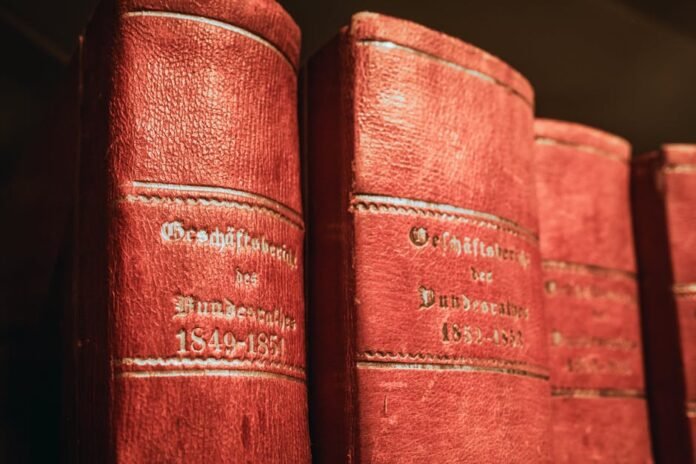
Red leather-bound parliamentary books from 19th century in Bern library, Switzerland.
Photo by Christian Wasserfallen on Pexels

Jammu, April 1: The Zero Hour session of the Jammu and Kashmir Legislative Assembly on Monday saw legislators bring forth a spectrum of public interest issues, ranging from the welfare of students stranded abroad to concerns over sports infrastructure and government fund accountability.

The Chenab Times has learned that members of the Assembly used the Zero Hour to press the government for immediate action on several pressing matters affecting the Union Territory.

Member of the Legislative Assembly Reyaz Ahmad Khan called for urgent government intervention to facilitate the safe return of students from Jammu and Kashmir who are currently studying in Iran. He underscored the necessity for a coordinated approach to ensure their safety and timely evacuation from the country.

Shabir Ahmad Kullay, another MLA, advocated for the formation of a committee to scrutinize the discrepancies between the officially reported sports infrastructure and the actual facilities available on the ground. He emphasized the need for transparency and accountability in the management of sports resources.

Balwant Singh Mankotia raised concerns regarding the findings of the Comptroller and Auditor General (CAG), particularly focusing on unspent and unaccounted-for funds within various government departments. He stressed the importance of financial prudence and strict adherence to audit recommendations to ensure responsible public expenditure.

In a separate issue, MLA Nizam-ud-din Bhat highlighted a critical shortage of specialist medical staff at the District Hospital Bandipora. He pointed out the absence of a Surgeon Specialist following a recent retirement and urged the authorities to address this deficiency promptly to maintain essential healthcare services for the local population.

The Assembly also engaged in a detailed discussion concerning the salaries, allowances, and related privileges of legislators. Dr. Narinder Singh Raina proposed a structured and periodic revision of legislators’ salaries, suggesting alignment with the patterns adopted for government employees.

Javid Hassan Baig supported the rational revision of salaries, viewing them as a legitimate entitlement of legislators, and advocated for adherence to parliamentary practices. He also noted the importance of discretion in public discussions, given the varied socio-economic backgrounds of the members.

Ranbir Singh Pathania echoed these sentiments, stressing the need for an institutionalized mechanism to revise legislators’ emoluments. He referenced the principles articulated by former Lok Sabha Speaker Somnath Chatterjee, suggesting that such matters should be addressed through an independent and credible framework to uphold the dignity and sovereignty of the House.

Sajad Gani Lone described the issue of legislator remuneration as a test of the Legislature’s authority and called for a review of any delays in implementing the House’s recommendations.

Nizam-ud-din Bhat further connected the salary issue to broader concerns about legislators’ privileges and protocol, advocating for a comprehensive and merit-based resolution.

Muzaffer Iqbal Khan commented that the proposed salary increase was modest, while a more significant enhancement was suggested for allowances to cover the escalating expenses associated with legislative duties.

Reiterating his earlier points, Shabir Ahmad Kullay emphasized the need to increase the Constituency Development Fund (CDF) allocated to legislators. He stated that the current annual allocation of ₹4 crore per constituency is inadequate to meet the developmental expectations of the public.