Home Blog Page 9

Top Maoist Leader Allegedly Involved in Plot Against PM Modi Dies in Ranchi

0
Crime News
Image showing a crime scene. (Photo for representation purposes only)

A top Maoist leader, who was reportedly involved in a plot to assassinate Prime Minister Narendra Modi in Pune, has died in Ranchi, Jharkhand. The individual, identified as M. K. R. Sharma, also known as Comrade Balraj, was a central committee member of the banned Communist Party of India (Maoist).

According to details received by The Chenab Times, Sharma died of a heart attack on Monday in Ranchi. The police had been investigating his alleged role in a conspiracy that aimed to carry out attacks on prominent political leaders, including the Prime Minister, during his visit to Pune in 2018. This alleged plot came to light following the arrest of Maoist ideologue Varavara Rao and other activists in the Elgar Parishad-Bhima Koregaon case.

Sharma, who was a key figure in the CPI (Maoist), was reportedly a central committee member and had been active in leading armed cadre. His involvement in the alleged assassination plot was based on documents and communication seized by the Maharashtra Police during investigations related to the Elgar Parishad case. These seized materials suggested a detailed plan to procure weapons and execute attacks targeting the Prime Minister and other high-ranking officials.

The investigation into the alleged plot had pointed towards a coordinated effort by various Maoist factions to destabilize the government and create widespread unrest. Sharma was considered one of the strategic minds behind the Maoist movement in India, responsible for formulating policies and directing operations in several states. His death, while attributed to natural causes, marks a significant development for security forces who have been seeking to dismantle the leadership of the banned organization.

The Elgar Parishad case, which led to the arrest of several activists and intellectuals, has been a subject of intense scrutiny and debate. While the prosecution alleges a conspiracy by Maoists to overthrow the government, civil rights groups have contested these claims, arguing that the evidence is fabricated. However, the alleged involvement of individuals like Sharma in plots against national leaders has been a consistent assertion by law enforcement agencies.

Sharma’s operational areas were believed to be spread across states like Jharkhand, Bihar, West Bengal, and Odisha, where the CPI (Maoist) has historically maintained a significant presence. His role was not merely confined to ideological dissemination but extended to the operational and logistical aspects of the movement, including arms procurement and cadre recruitment. Security agencies have been actively pursuing leaders like Sharma for years, aiming to cripple the organization from its apex.

The death of Sharma is likely to impact the organizational structure and operational capabilities of the CPI (Maoist), at least in the short term. However, the ongoing investigations into the Elgar Parishad case and other related activities continue, with authorities seeking to unravel the full extent of the conspiracy and bring all involved individuals to justice. The focus remains on combating left-wing extremism and ensuring national security against threats perceived from such organizations.

The security forces have been engaged in a protracted battle against Maoist insurgency, which has claimed numerous lives and caused significant damage to infrastructure over the decades. The government has reiterated its commitment to tackling this challenge through a multi-pronged approach, combining security operations with developmental initiatives in affected areas. The demise of a senior leader like Sharma, even under these circumstances, is seen as a blow to the banned outfit’s leadership.

Further details regarding Sharma’s activities and his precise role in the alleged plot are expected to emerge as investigations continue, although his death may complicate the ongoing legal proceedings related to the Elgar Parishad case. The narrative surrounding the case remains complex, with differing perspectives on the motivations and actions of the accused and the evidence presented by the prosecution.


Maharashtra: Piped Gas Network Expands to Over 40 Restaurants, 20 Industries Amid LPG Concerns

0
A red 'CLOSED' sign painted on an old gas pump at an outdoor station.
Photo by Vie Studio on Pexels

Pune, Maharashtra has seen a significant expansion of its piped natural gas (PNG) network, with over 40 restaurants and more than 20 industrial units in the region transitioning to PNG connections. This development comes as authorities aim to bolster gas infrastructure and mitigate potential shortages of Liquefied Petroleum Gas (LPG), particularly in light of geopolitical uncertainties affecting global supply chains.

The Chenab Times has learned that Maharashtra Natural Gas Limited (MNGL), a key player in the state’s gas distribution, has been actively extending its PNG pipeline network to cater to a growing demand from commercial and industrial sectors. The recent surge in conversions indicates a strategic shift towards more reliable and consistent gas supply for businesses, reducing their dependence on conventional LPG cylinders.

The expansion targets a diverse range of establishments, including eateries and manufacturing facilities, which are often heavy consumers of gas. By providing a direct and continuous supply of natural gas, MNGL aims to enhance operational efficiency for these businesses, eliminating the logistical challenges and potential disruptions associated with LPG procurement and storage. This initiative is expected to offer a more cost-effective and environmentally friendly alternative for many commercial operations.

Sources within the sector suggest that the impetus for accelerating PNG adoption has been amplified by recent global events, which have highlighted the vulnerabilities of LPG supplies. The ongoing conflict in the Middle East, a major supplier of LPG to India, has led to concerns about price volatility and availability. This has prompted a proactive approach from both gas distribution companies and consumers to secure stable energy sources.

MNGL officials have reportedly stated that the company is committed to expanding its network further to cover more areas and a larger number of consumers. The process involves laying down extensive underground pipeline infrastructure, which requires significant investment and planning. However, the long-term benefits of a robust PNG network, including improved safety, reduced pilferage, and environmental advantages, are seen as outweighing the initial capital expenditure.

The transition to PNG also aligns with India’s broader energy policy objectives, which emphasize increasing the share of natural gas in the country’s energy mix. Natural gas is considered a cleaner fuel compared to LPG and other fossil fuels, contributing to efforts to reduce air pollution and meet climate change targets. For restaurants, a consistent gas supply is crucial for uninterrupted kitchen operations, while for industries, it ensures smoother production cycles.

The company has been actively engaging with restaurant owners and industry representatives to facilitate the conversion process. This includes providing technical assistance and ensuring that installations meet safety standards. The positive response from the business community underscores the growing recognition of PNG as a reliable and efficient energy solution for commercial and industrial needs in Maharashtra.

In addition to serving new connections, MNGL is also working on strengthening its existing infrastructure to handle the increased demand and ensure a seamless supply to all its consumers. The company’s strategic expansion plan is a response to the evolving energy landscape and the increasing demand for cleaner and more dependable energy sources across the state.

The ongoing development of the PNG network in Pune and surrounding areas is a testament to the efforts being made to create a more resilient and sustainable energy infrastructure for the region. As more businesses embrace this shift, it is expected to contribute significantly to the local economy and the state’s overall energy security.

Pune Police Advise Honey Singh Against Vulgar Songs at Concerts

0
Open book on lace tablecloth next to tea cup, creating a cozy atmosphere.
Photo by betül nur akyürek on Pexels

Pune Police have issued an advisory to popular singer Honey Singh, urging him to refrain from performing songs with vulgar lyrics during his upcoming concert in the city. The directive aims to prevent any negative impact on children and adolescents attending the event.

According to details received by The Chenab Times, the advisory was communicated by the Pune City Police. The instruction comes as the singer is scheduled to perform at an event in Pune. Authorities have expressed concerns that certain songs in his repertoire might contain content that is inappropriate and could adversely influence young audiences.

The police department’s proactive measure is intended to ensure that public performances, particularly those attended by families and younger individuals, adhere to certain ethical and moral standards. While acknowledging the artist’s popularity and musical contributions, the police emphasized the importance of responsible content selection for public entertainment events. The advisory is a reminder of the authorities’ role in safeguarding the well-being of children and maintaining public order.

The request does not amount to a ban but is a specific appeal to the artist and event organizers to curate the performance content thoughtfully. This is particularly relevant given the potential for such songs to be perceived as explicit or offensive, especially by younger attendees. The police are likely collaborating with the concert organizers to ensure compliance and prevent any potential complaints or untoward incidents arising from the song choices.

While the exact songs that prompted the advisory have not been specified, Honey Singh’s music has historically been known for its Punjabi rap style, which has sometimes included provocative or bold lyrical content. The Pune Police’s communication signifies a growing trend of regulatory bodies in India taking a more active stance on the content of public entertainment, particularly concerning its potential effect on societal values and the impressionable youth.

This intervention highlights the delicate balance between artistic expression and social responsibility. In India, the Central Board of Certification of Films (CBFC) often scrutinizes film content, and similar considerations are now being extended to live performances and music concerts. The police’s advisory is a localized application of this broader societal concern.

The advisory is expected to prompt discussions among artists, event managers, and regulatory bodies about the standards of public entertainment. It is also anticipated that concert organizers will review their programming to ensure alignment with community expectations and legal guidelines. The aim is to foster an environment where entertainment is enjoyable for all age groups, without compromising on ethical considerations.

The police have not explicitly stated what actions would be taken if the advisory is not heeded, but the implication is a commitment to ensuring the event proceeds in a manner that is acceptable to the wider community. The focus remains on preventing a situation where the performance could lead to public discontent or concern about its impact on children.

Jammu and Kashmir: Code on Social Security 2020 Redefines Gratuity Norms

0
Accident news
Image showing accident scene. (For representation purposes only)

The Code on Social Security, 2020, has ushered in significant changes to gratuity provisions in India, expanding its coverage and clarifying rules for a more inclusive framework. This legislation aims to provide a stronger social security net for employees, particularly acknowledging evolving employment forms like fixed-term contracts.

Information was available with The Chenab Times indicating that the Code consolidates and modernises existing gratuity laws, addressing aspects such as eligibility, computation, and payment. The overarching objective is to ensure better protection for employees at the conclusion of their service tenure.

Gratuity Eligibility and Payment Scenarios

Gratuity is payable to an employee upon the termination of their employment after completing a minimum of five years of continuous service. This applies to situations including superannuation, retirement, resignation, and termination of fixed-term employment. It is also payable in cases of death or disablement resulting from an accident or disease, and upon the occurrence of any event notified by the Central Government.

For working journalists, the continuous service requirement for gratuity is notably reduced to three years. Crucially, the five-year service condition is waived entirely in instances of death, disablement, expiry of fixed-term employment, or when a relevant event is notified by the government. In the unfortunate event of an employee’s death, gratuity is to be paid to their nominee or legal heirs. If the designated nominee or heir is a minor, the gratuity amount is to be deposited with the competent authority for safekeeping and investment until the minor reaches the age of majority.

Calculation and Limitations on Gratuity

The computation of gratuity is generally based on fifteen days’ wages for every completed year of service, or any part thereof exceeding six months, calculated on the last drawn wages. For employees engaged on a piece-rate basis, the gratuity is calculated using the average wages of the last three months, excluding any overtime payments. Seasonal employees are entitled to gratuity based on seven days’ wages per season. For fixed-term employees and those deceased, gratuity is payable on a pro rata basis.

A maximum limit on the gratuity amount exists, as notified by the Central Government. In situations where an employee has become disabled and is working on reduced wages, the gratuity calculation considers the wages earned before disablement and the reduced wages for the period following disablement. Employees are also entitled to more favourable gratuity terms if provided under any existing award, agreement, or contract, superseding the statutory minimums.

Forfeiture and Exclusions

Gratuity can be forfeited under specific circumstances. This includes forfeiture to the extent of damage or loss caused to the employer due to wilful acts or negligence on the part of the employee. Gratuity may also be partially or wholly forfeited if an employee is terminated for riotous or disorderly conduct, violence, or an offence involving moral turpitude committed during their employment.

Certain individuals are excluded from the definition of ’employee’ for gratuity purposes. These primarily include persons holding posts under the Central or State Governments who are governed by separate gratuity laws or rules. Disablement, in the context of gratuity, is defined as the incapacity to perform previously held work due to an accident or disease.

Procedural Aspects and Dispute Resolution

The Code outlines clear procedures for nomination, claims, and payment of gratuity. Employees are required to make a nomination after completing one year of service. Nominations can be modified, and in the event of a nominee’s death before the employee, the share reverts to the employee, necessitating a fresh nomination. Nominees are typically family members if the employee has a family; otherwise, nominations can be made to any person but become void upon the employee acquiring a family, requiring a new nomination.

Employers are mandated to determine and notify the gratuity amount without requiring an explicit application from the employee. Gratuity must be paid within 30 days from the date it becomes payable. Delays in payment attract simple interest, unless the delay is attributable to the employee and approved by the competent authority. In cases of disputes, the employer must deposit the admitted gratuity amount, and parties can then approach the competent authority for resolution. The authority possesses powers akin to a civil court to conduct inquiries and decide on entitlement.

Appeals against the decisions of the competent authority can be filed within 60 days, extendable by another 60 days for sufficient cause. Employers filing appeals are required to deposit the gratuity amount. The appellate authority has the power to confirm, modify, or reverse the original decision.

Employer Obligations and Insurance

Employers are generally required to insure their gratuity liability, with the exception of government establishments. Exemptions from this insurance requirement are possible if employers maintain an approved gratuity fund or employ 500 or more persons with such a fund. Registration for gratuity insurance or fund establishment is mandatory. In cases of default in premium payments or contributions, the employer becomes immediately liable for the gratuity payment along with interest.

Strait of Hormuz Crisis: A Cycle of Escalation and Unintended Consequences

0
Accident news
Image showing accident scene. (For representation purposes only)

The ongoing crisis surrounding the Strait of Hormuz, a critical global energy transit chokepoint, highlights a complex geopolitical paradox: the instigators of conflict are now calling for international aid to resolve it. This situation raises profound questions about the nature of power, the management of international relations, and the ethical implications of actions that create crises and then demand collaborative solutions.

According to details received by The Chenab Times, the Strait of Hormuz, once open to global transit, faced restrictions following a conflict initiated by the United States and Israel, leading Iran to threaten its closure. Now, the United States is seeking international cooperation to ensure its reopening, a scenario described by observers as a manifestation of escalating tensions and a flawed approach to global security.

For years, the Strait operated under a state of tension, with escalating rhetoric and sanctions but without crossing a critical threshold. A fragile, unspoken understanding of limits, born not of goodwill but of mutual recognition of potentially uncontrollable consequences, had prevailed. However, historical patterns indicate that power often tests boundaries not out of necessity but because the capability exists.

The decision by the United States and Israel to escalate actions in a region already characterized by delicate equilibrium was reportedly calculated, not impulsive. Yet, geopolitical calculations can be clouded by the illusion that consequences can be effectively managed once unleashed.

This juncture brings philosophical concepts into sharp focus. The ancient Greek tragedians wrote of hubris, the excessive pride of power that blinds leaders to limits and invites eventual downfall. In contemporary terms, hubris can be seen not as ignorance but as overconfidence, the belief that regional destabilization can occur without relinquishing control over the subsequent stability.

Iran’s response to perceived pressure, which includes threatening to close or restrict passage through the Strait of Hormuz, is thus presented as a predictable outcome. When a state cannot match conventional military force, it often resorts to asymmetric strategies, utilizing geographical advantages. The Strait becomes Iran’s strategic leverage, a means of communication that vulnerability, when cornered, can transform into significant influence.

However, the prevailing narrative has shifted. The United States is now invoking the language of global order, emphasizing the importance of open seas, secure trade routes, and shared responsibility. While these are inherently valuable objectives, their articulation without acknowledgment of the crisis’s origins appears to serve more as instruments of strategy than as adherence to principle. This represents a subtle repurposing of ethical language.

Philosophers have long cautioned against situations where morality is not discarded but recontextualized, where terms like “freedom” and “security” are employed to manipulate perceptions rather than reflect reality. The call to reopen the Strait of Hormuz is framed as a collective duty, yet the attribution of responsibility for its closure is deliberately diffused. In such circumstances, responsibility does not vanish but dissipates, and with its dissolution, accountability also fades.

The disquiet surrounding this situation stems from its morally inverted logic, where those who initiate disruptive actions bear less visible costs, while those who were not involved in the initial actions face the repercussions. The global community becomes an unwilling participant, drawn into resolving a crisis it neither instigated nor endorsed.

For regions distant from the immediate conflict zone, the effects are palpable. Disruption of the Strait can lead to increased fuel prices, economic strain, and hardship affecting ordinary citizens. The decisions made by powerful entities have far-reaching consequences that resonate in daily life, often disconnected from the decision-making chambers.

This scenario poses a significant ethical question: can a system be deemed rational if its burdens are disproportionately borne by those who had no part in shaping its course? What is unfolding may not be clinical insanity but a form of structured irrationality—an order that appears logical within its own framework but yields outcomes that defy fairness, balance, and moral coherence.

It is a system where power creates disruption, and interdependence compels others to rectify the situation. Crises emerge not as accidents but as recurring consequences, perpetuated by normalization rather than justice. The Strait of Hormuz, in this context, serves as a geopolitical chokepoint and a philosophical mirror, reflecting a world where might precedes right, and right is subsequently invoked to manage the fallout.

The repetition of actions that predictably lead to crisis, followed by appeals for resolution without addressing the root causes, may indeed warrant the term “insanity.” What is being observed is not chaos, but a discernible pattern that, if left unquestioned on both political and philosophical levels, will perpetuate a cycle where the instigators of conflict are also called upon to be its resolution. This dynamic underscores the profound sense of unease surrounding the current geopolitical landscape.

Maharashtra Officials Urged to Expedite Water Projects Using AI, Fast-Track Services

0
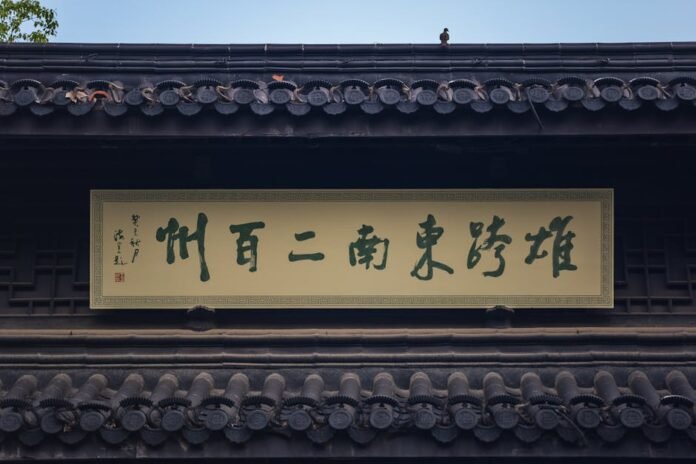
Traditional building exterior with Chinese characters on sign and decorative roof, featuring a small bird.
Photo by Dylann Hendricks on Pexels

Maharashtra’s civic officials have been directed to leverage Artificial Intelligence (AI) and e-governance tools to expedite water supply projects and streamline public services across the state.

According to details received by The Chenab Times, Ashwini Bhide, Principal Secretary of the Urban Development Department, emphasized the need for a proactive approach during a recent review meeting concerning the Mumbai Metropolitan Region Development Authority (MMRDA) and the Brihanmumbai Municipal Corporation (BMC). The directive aims to accelerate the completion of critical infrastructure projects, particularly desalination plants, and enhance the efficiency of citizen-centric services.

Bhide highlighted that the integration of technology, including AI and e-governance platforms, is crucial for optimizing project management and delivery. This includes faster processing of applications, improved communication channels, and more efficient resource allocation. The focus on water supply projects, such as the Manori desalination plant, underscores the government’s commitment to ensuring reliable access to potable water for urban populations.

The meeting also addressed the progress of ongoing projects within the MMRDA and BMC, with officials urged to identify and remove bottlenecks that hinder timely completion. Bhide stressed the importance of inter-departmental coordination and the adoption of innovative solutions to overcome challenges. The application of AI in planning, monitoring, and execution phases of these projects was discussed as a potential game-changer.

E-governance initiatives were also a key point of discussion, with a call for making all citizen services accessible online and ensuring their speedy resolution. This includes simplifying procedures for obtaining permissions, licenses, and other essential documents. The aim is to reduce physical interface, minimize delays, and enhance transparency in administrative processes.

Officials were instructed to conduct regular reviews of project timelines and performance metrics. The Principal Secretary reiterated the expectation that all departments would embrace technological advancements to improve their operational efficiency and service delivery. The emphasis is on creating a more responsive and accountable governance framework that benefits the citizens of Maharashtra.

The push towards digital transformation and the adoption of AI signifies a broader strategy by the state government to modernize its administrative machinery and infrastructure development processes. By harnessing the power of technology, Maharashtra aims to achieve faster economic growth and improve the quality of life for its residents. The directive is expected to spur innovation and lead to tangible improvements in the delivery of essential services and the completion of development projects.

IIT Bombay Firm to Commercialize Campus Technology Innovations

0
Detailed view of the Gateway of India archway in Mumbai, showcasing its architectural grandeur.
Photo by aksinfo7 universe on Pexels

A newly established firm, incubated at the Indian Institute of Technology Bombay (IIT Bombay), is set to bridge the gap between cutting-edge academic research and market-ready products. The venture aims to transform technological innovations developed within the institute’s labs into tangible solutions for various industries.

The Chenab Times has learned that this initiative is a strategic move by IIT Bombay to foster a more robust ecosystem for entrepreneurship and to accelerate the translation of intellectual property into commercial applications. The firm will focus on identifying promising technologies and providing the necessary support, including funding, mentorship, and business development, to bring them to market.

Incubating Innovation

The core objective of the IIT Bombay-incubated firm is to identify and nurture nascent technologies emerging from the institute’s research departments. These technologies span a wide range of fields, including but not limited to, artificial intelligence, biotechnology, sustainable energy, and advanced materials. The firm will act as a catalyst, providing a structured pathway for these innovations to move from the laboratory to real-world applications.

This development signifies a proactive approach by academic institutions to contribute more directly to economic growth and technological advancement. By creating a dedicated entity, IIT Bombay aims to streamline the process of technology commercialization, which can often be a complex and lengthy endeavor for individual researchers or small teams.

Bridging the Gap to Market

The firm’s operational strategy involves a multi-faceted approach to support the commercialization process. This includes conducting thorough market research to assess the viability of innovations, developing robust business plans, securing intellectual property rights, and facilitating strategic partnerships. Furthermore, the firm will play a crucial role in attracting venture capital and other forms of investment to scale up production and market reach.

Experts in the field of technology transfer and incubation suggest that such initiatives are vital for creating a vibrant startup culture and driving innovation. The successful commercialization of academic research not only benefits the institutions involved but also contributes to job creation and economic development. The firm’s success will likely depend on its ability to effectively identify high-potential technologies and provide comprehensive support to the founding teams.

Focus on Impact and Scalability

The emphasis will be on technologies that have the potential for significant societal impact and commercial scalability. This includes innovations that address pressing global challenges in areas such as healthcare, environmental sustainability, and digital transformation. By focusing on these critical sectors, the firm aims to ensure that the innovations it supports lead to meaningful advancements.

The incubation process at IIT Bombay is known for its rigorous selection criteria and comprehensive support system. This new venture is expected to leverage the institute’s vast network of faculty, alumni, and industry connections to provide unparalleled guidance and resources to the startups it will mentor. The firm’s establishment is a testament to the growing recognition of the economic and social value of academic research when effectively translated into market-ready products and services.

The initiative is also expected to encourage more students and researchers at IIT Bombay to explore entrepreneurial avenues, transforming their academic projects into viable businesses. This creates a virtuous cycle of innovation, where successful startups can, in turn, contribute back to the institute’s research and development efforts.

Details regarding specific technologies selected for initial focus or the names of key personnel leading the firm were not immediately available. However, the announcement marks a significant step forward in IIT Bombay’s commitment to translating its world-class research into impactful commercial ventures, bolstering India’s position in the global innovation landscape.

Iranian Military Helicopters Search for Crew of Downed Aircraft

0
Accident news
Image showing accident scene. (For representation purposes only)

Iranian state media reported on Thursday that military helicopters were actively searching for the crew of an aircraft that had crashed, with initial reports suggesting the incident involved a military jet.

The Chenab Times has learned that the incident occurred in a remote region, prompting a significant search and rescue operation. Details regarding the specific type of aircraft, the number of crew members on board, and the circumstances leading to the crash remain scarce, with official statements offering limited information.

Iranian news agencies, including IRNA and Tasnim, disseminated information about the ongoing search efforts. These reports indicated that the crash site was located in a mountainous area, complicating the access for rescue teams. The primary objective of the operation, as stated by officials, is to locate and assist any surviving crew members and to recover the aircraft’s flight recorders.

The Iranian armed forces have not yet officially confirmed the nature of the downed aircraft, nor have they provided any casualty figures. The lack of immediate details has led to speculation, but official sources have urged patience as the investigation and rescue operations unfold. State television showed footage of helicopters surveying a rugged landscape.

Search and rescue teams, equipped with specialized gear for difficult terrain, have been deployed to the suspected crash zone. The Iranian military maintains a fleet of various aircraft, including fighter jets, bombers, and transport planes, and the precise identity of the crashed vehicle will be crucial in understanding the potential causes of the incident. The country’s air force has experienced a range of aircraft, some of which are aging and have been a subject of concerns regarding maintenance and upgrades.

Such incidents in Iran are often subject to strict information control, with official media being the primary source of updates. The remoteness of the crash site, coupled with the challenging mountainous environment, is expected to prolong the search and recovery efforts. The weather conditions in the region will also play a significant role in the efficiency of the operation.

Iran’s aviation sector, both civilian and military, has faced challenges in recent decades, partly due to international sanctions that have limited access to new aircraft and spare parts. This has led to a reliance on older fleets and has been cited as a contributing factor in a number of aviation accidents over the years. The military, in particular, operates a diverse range of aircraft, some of which are Soviet- or American-made from before the 1979 revolution, alongside domestically produced models.

The Iranian military conducts regular training exercises, and while accidents are not uncommon in such activities, the official silence surrounding this particular event has amplified the attention it has received. The focus remains on the intensive search for the crew, with the hope of finding survivors. The investigation into the cause of the crash will commence once the site is secured and relevant evidence is collected.

The mountainous terrain where the aircraft is believed to have gone down presents considerable difficulties for helicopters and ground teams. Search operations in such environments require careful planning and execution to ensure the safety of the rescue personnel and to maximize the chances of success. Information will likely be released incrementally as the situation develops and official assessments are made.

Maharashtra Contractors Threaten Statewide Strike Over Rs 96,000 Crore Unpaid Dues

0
Two contractors using a level bar to check wall alignment inside a building.
Photo by Thirdman on Pexels

Contractors in Maharashtra have warned of a statewide strike if substantial unpaid dues, amounting to an estimated Rs 96,000 crore, are not settled promptly. The warning comes from various contractor associations representing diverse sectors, including construction, infrastructure, and public works.

The Chenab Times has learned that the contractors are alleging a prolonged period of delayed payments from government departments and agencies, severely impacting their operational capacity and financial stability. Several meetings and representations to government authorities have reportedly yielded little concrete action, leading to mounting frustration among the affected parties.

The sum of Rs 96,000 crore is a significant figure, reflecting the scale of the financial strain on thousands of small, medium, and large contracting firms across the state. These firms are responsible for a wide array of development projects, from building roads and bridges to constructing public facilities and maintaining essential services.

Representatives from the contractor groups have indicated that the continuous delay in payments has led to liquidity crises, making it difficult to procure materials, pay wages to workers, and meet other operational expenses. This situation is also jeopardizing the progress of ongoing government projects, potentially leading to further cost escalations and delays in public service delivery.

The contractors are demanding a clear roadmap for the immediate clearance of their outstanding payments, along with a mechanism to prevent future such accumulations. They have expressed concerns that without swift intervention, many businesses may face insolvency, leading to job losses and a slowdown in economic activity within the construction sector.

One of the key concerns raised is the lack of a transparent and efficient payment system. Contractors often face bureaucratic hurdles and lengthy approval processes, which are exacerbated when payments are withheld for extended periods without proper justification. This has led to accusations of inefficiency and a lack of urgency from the concerned government departments.

The potential strike, if initiated, could bring numerous development projects to a standstill across Maharashtra, including major infrastructure initiatives that are critical for the state’s economic growth. This includes projects under various state government bodies, municipal corporations, and other public sector undertakings.

The umbrella organizations representing the contractors have stated that they are prepared to escalate their protest if their demands are not met within a stipulated timeframe. This could involve ceasing work on all ongoing projects and boycotting any future tenders issued by government departments. The associations are urging the state government to prioritize the settlement of these dues to avert a crisis that could have far-reaching economic consequences.

The Maharashtra government has, in the past, acknowledged the issue of pending payments to contractors. However, the sheer magnitude of the current outstanding amount suggests that a comprehensive and immediate financial solution is required. The contractors are looking for concrete steps, including the allocation of funds and a streamlined disbursement process, to address the crisis effectively.

This situation highlights a broader issue within the public procurement and payment ecosystem in India, where contractors often bear the brunt of delayed payments, affecting their ability to sustain operations and contribute to national development goals. The contractors in Maharashtra are now at a critical juncture, and their decision to strike will depend on the government’s response to their pressing financial demands.

San Diego Zoo Safari Park Names Four New Cheetah Cubs

0
Entrance to Denny Sanford Elephant Valley surrounded by nature at Escondido's Safari Park.
Photo by Amanda on Pexels

The San Diego Zoo Safari Park has announced the names of its four newest cheetah cubs, a litter born at the park for the first time since 2020. The naming process involved a public online poll alongside input from the wildlife care staff.

Information was available with The Chenab Times indicating that the chosen names reflect the playful nature and the distinct identities of the young cheetahs. The public poll, which garnered significant engagement, allowed animal enthusiasts and conservation supporters to participate in selecting names that resonated with the cubs’ emerging personalities.

The park, a renowned conservation center for cheetahs, celebrated the arrival of the four cubs as a vital contribution to the species’ breeding program. Cheetahs are listed as vulnerable by the International Union for Conservation of Nature (IUCN), facing threats from habitat loss, poaching, and conflict with humans in their native African and Iranian habitats. Successful breeding in accredited zoos and wildlife parks like the San Diego Zoo Safari Park plays a crucial role in maintaining a healthy and genetically diverse population, ensuring the long-term survival of the species.

The San Diego Zoo Safari Park has a long-standing commitment to cheetah conservation, participating in various research initiatives and breeding programs aimed at understanding and protecting the species. The park’s efforts extend beyond breeding, encompassing habitat restoration projects in Africa and public education campaigns to raise awareness about the challenges faced by cheetahs in the wild. The birth of these cubs represents a significant milestone in these ongoing conservation endeavors, offering hope for the future of this iconic big cat.

The naming selection process emphasized community involvement, a common practice at the San Diego Zoo Wildlife Alliance, which operates both the San Diego Zoo and the San Diego Zoo Safari Park. This approach aims to foster a deeper connection between the public and the animals, encouraging greater support for conservation efforts worldwide. By allowing the public to vote, the park not only selects names but also educates a wider audience about the importance of wildlife conservation and the specific needs of species like the cheetah.

The four cubs, who are currently under the dedicated care of the park’s expert animal care team, are thriving. Their development is being closely monitored, with regular health checks and enrichment activities designed to prepare them for eventual public viewing and, in some cases, integration into future breeding programs. The safari park environment at San Diego provides a semi-naturalistic habitat, allowing the cubs to develop essential behaviors under close observation, mimicking their natural instincts in a secure setting.

The San Diego Zoo Safari Park is a 1,800-acre zoo located in Escondido, California, owned by the San Diego Zoo Wildlife Alliance. It is home to a wide variety of exotic animals, including many endangered species, and is a leading institution in animal welfare, conservation, and research. The park’s mission is to connect people with wildlife and inspire them to conserve the natural world.

The birth of the cheetah cubs serves as a reminder of the ongoing need for global conservation efforts. The species’ precarious status in the wild underscores the importance of such breeding programs and the continuous work required to protect their natural habitats. The San Diego Zoo Safari Park continues to be a vital sanctuary and a beacon of hope for the preservation of the cheetah and numerous other threatened species.