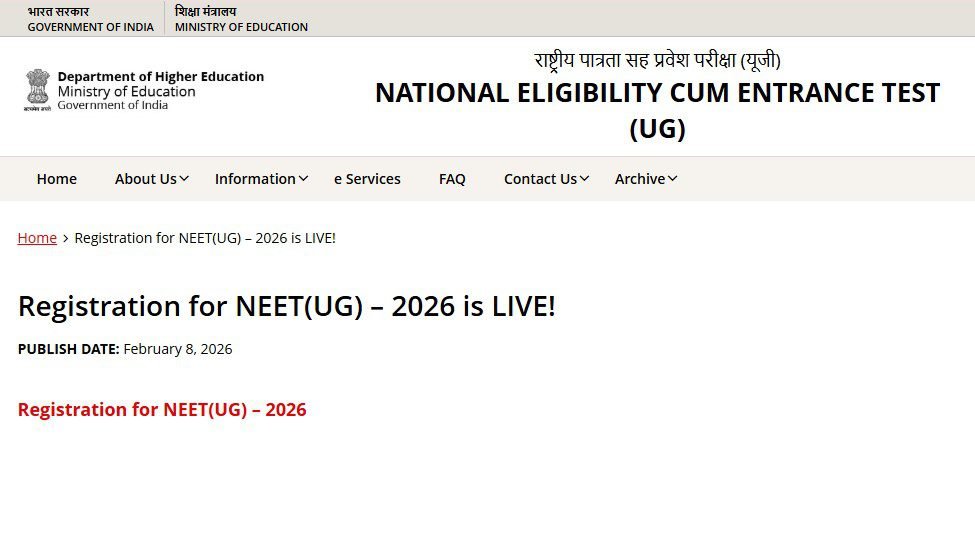
The recent judgment of the Supreme Court of India reiterating the mandatory nature of the Teacher Eligibility Test (TET) for teachers of Classes I–VIII has sparked nationwide debate. As a Union Territory, Jammu and Kashmir is legally and administratively bound to comply with this directive. Yet, in our region, the issue demands a balanced and context-sensitive approach rather than polarized positions.
This is not a matter of supporting or opposing TET. It is about implementing reform in a way that strengthens the system while respecting those who have sustained it for decades.
The Rationale Behind TET
Education today is evolving rapidly. Classrooms are no longer limited to chalkboards and printed textbooks. Digital platforms, AI-assisted learning tools, competency-based assessment models, and technology-driven pedagogy are gradually reshaping teaching methods. The emphasis is shifting from rote memorization to conceptual clarity, analytical thinking, and measurable learning outcomes.
In this context, the TET serves as a benchmark to ensure that teachers possess a minimum standard of pedagogical understanding, subject competence, and awareness of child psychology. Standardization of teacher qualifications is a logical step in maintaining national academic parity and improving foundational learning outcomes.
From a systemic perspective, the Supreme Court’s directive aims to safeguard educational quality and uphold statutory norms under the Right to Education framework.
The Local Reality
However, policy must account for history and ground realities.
Jammu & Kashmir’s education sector has developed under unique circumstances. Many teachers presently in service were appointed under frameworks that were legally valid at the time, including the Rehbar-e-Taleem (RET) scheme and other special recruitment drives. These policies were introduced to address acute teacher shortages, particularly in remote and difficult areas.
For decades, teachers have worked in challenging terrains, conflict-affected zones, and under limited infrastructural support. Their contribution to sustaining schooling in far-flung regions cannot be understated. Experience, community trust, and practical classroom exposure have been their primary strengths.
Furthermore, many of these teachers, particularly those from the RET scheme, served for years on nominal honorariums, often in difficult conditions, with the promise of eventual regularization. To now face a career-threatening examination after decades of dedicated service creates a profound sense of insecurity and can be perceived as a disregard for their sacrifices.
Now, asking such teachers, many of whom have 15–25 years of service, to immediately qualify through a modern, objective-type competitive examination presents genuine challenges. The concern is not about their competence in the classroom but about their aptitude for a high-stakes, time-bound competitive examination—a format many have not encountered for decades. The format, pace, and technological orientation of current standardized tests may be daunting for traditional educators.
Therefore, while the Court’s judgment must be respected, its implementation should not ignore the human dimension.
Law and Governance: A Delicate Balance
Compliance with judicial directions is non-negotiable. However, governance is not merely about enforcement; it is about thoughtful execution.
A rigid “qualify or face consequences” framework risks lowering morale and generating anxiety among teachers who have otherwise maintained clean service records. Sudden enforcement without adequate preparation may disrupt the educational environment, particularly in rural areas where teacher shortages already exist.
A more balanced approach is possible—one that respects the law while supporting those who have dedicated their lives to education.
Exploring a Constructive Middle Path
Rather than rigid enforcement, the Government of Jammu & Kashmir could consider a more calibrated and supportive approach. The following suggestions are offered as possible elements of such a strategy:
er First, a graded qualification structure could be explored. Instead of treating TET as a simple pass-or-fail barrier, performance bands might be considered. A minimum qualifying score would ensure compliance with the Supreme Court directive, while higher score brackets could be linked to incentives.
Second, a reward-based model could be adopted. Teachers scoring above certain thresholds might be considered for accelerated promotions, academic grade increments, leadership eligibility, or specialized certifications in digital pedagogy. This would help transform TET from a perceived threat into a professional opportunity.
Third, structured capacity-building programs could be introduced before strict enforcement takes effect. Government-sponsored preparatory modules, refresher workshops, and digital literacy sessions would equip teachers with the tools required to succeed. Reform must be accompanied by empowerment.
Fourth, reasonable accommodation for senior teachers could be considered. Those nearing retirement or with long and unblemished service records might be given extended opportunities and supportive mentorship rather than punitive treatment.
Fifth, the Union Territory’s direct link to the central government presents a unique advantage. J&K could potentially pilot a comprehensive “Teacher Up-skilling Mission” in collaboration with central educational institutions like the NCERT or NIEPA. This would provide access to national-level expertise and resources for training, making capacity-building programs more robust and effective.
Such measures, if thoughtfully designed and implemented, could help preserve teacher dignity while achieving compliance with the law.
Reforming Future Recruitment
While sensitivity is required for serving teachers, clarity must define future recruitment. All upcoming advertisements for teaching posts should explicitly mention TET as a mandatory prerequisite. Recruitment rules should be updated in advance to eliminate ambiguity and prevent future legal complications.
Prospective teachers must enter the system fully aware of qualification standards. This ensures fairness, transparency, and long-term policy stability.
Experience and Qualification: Not Opposites
The debate surrounding TET should not become a confrontation between experience and qualification. Experience cultivates the invaluable wisdom of classroom management and community connection, while standardized benchmarks ensure a baseline of academic and pedagogical consistency. Both are essential to building a robust educational framework.
In Jammu & Kashmir, where teachers have served through extraordinary circumstances, reform must be firm yet humane. The objective is not merely to enforce an examination but to modernize the system while honoring those who built it.
The Supreme Court’s directive offers an opportunity—not just a mandate. If implemented with foresight, it can strengthen teacher professionalism, align pedagogy with technological progress, and elevate educational standards across the Union Territory.
Ultimately, the success of this exercise will not be measured by the number of teachers who pass an exam but by the transformation it brings to the classroom. A supported and empowered teacher is the single greatest asset for a child’s learning journey. Therefore, the goal of this reform must be to create a generation of J&K’s teachers who are not only legally compliant but also pedagogically equipped and technologically empowered to nurture the potential of every student in their care.
The moment demands administrative wisdom: respect the law, support the teachers, modernize recruitment, and ensure that reform unites rather than divides the educational community.
Only then can the TET mandate truly serve its intended purpose—improving the quality of education for the children of Jammu & Kashmir.
❤️ Support Independent Journalism
Your contribution keeps our reporting free, fearless, and accessible to everyone.
Or make a one-time donation
Secure via Razorpay • 12 monthly payments • Cancel anytime before next cycle


(We don't allow anyone to copy content. For Copyright or Use of Content related questions, visit here.)
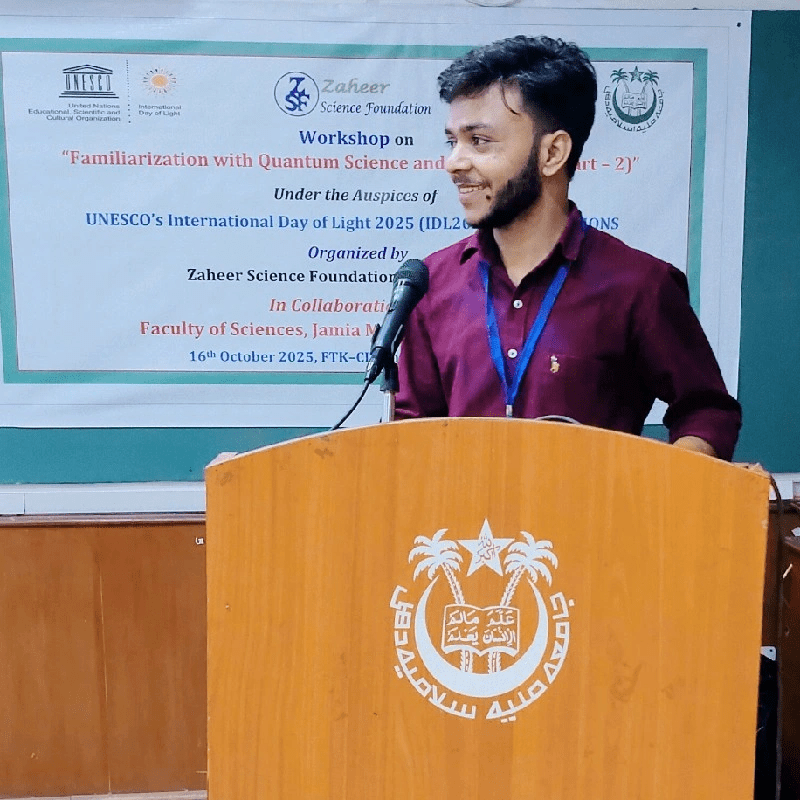
Adnan Ur Rehman is a physics graduate from Jamia Millia Islamia, education commentator, and contributor to The Chenab Times.