A Congress spokesperson in Karnataka has claimed the BJP’s recently introduced women’s reservation bill is designed to protect male political interests, sparking a political debate that involves issues of delimitation and regional representation.
The Congress party has accused the ruling Bharatiya Janata Party (BJP) of introducing a women’s reservation bill that, in effect, serves to safeguard seats for men rather than genuinely empower women in politics.
Political Allegations Surface Over Women’s Reservation Bill
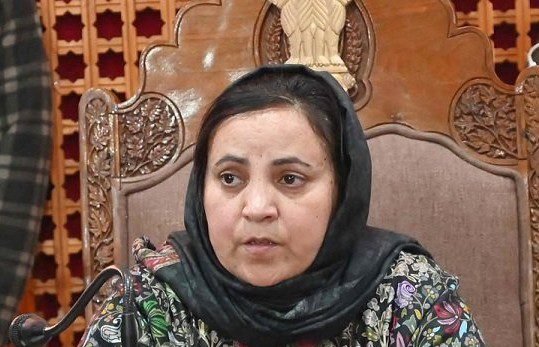
According to details received by The Chenab Times, Congress spokesperson Bhavya Narasimhamurthy leveled the accusation, suggesting the bill’s current structure does not effectively achieve its stated goal of increasing women’s representation. This assertion comes amidst a broader political discourse surrounding the bill, which has been linked to the process of delimitation—the redrawing of electoral boundaries based on population figures. The Delimitation Commission redraws constituencies to ensure that each constituency has roughly the same population, a process that can alter the number of seats allocated to states in Parliament and state assemblies.
The BJP, in response to such criticisms, has defended the legislation, asserting its commitment to women’s empowerment through increased political representation. BJP leaders, including those from Karnataka, have countered that the bill, when paired with delimitation based on census data, is intended to ensure fair representation for women by potentially increasing the total number of seats in Parliament and state assemblies. They argue that the intention is to provide a pro-rata political representation that benefits all regions, including the southern states. BJP functionary Anurag Thakur has dismissed allegations that the exercise would reduce representation for southern states, stating that they currently have a higher representation relative to their population than northern India, and that the delimitation bill, if passed, would see southern states gain higher representation.
Delimitation and Regional Representation Concerns
However, opposition parties, including the Congress, have raised significant concerns that the delimitation process, particularly when linked to the 2011 census data as proposed, could disproportionately benefit northern states at the expense of southern states. Karnataka Chief Minister Siddaramaiah has been vocal on this point, clarifying that while the Congress party is not opposed to women’s reservation, it objects to the manner in which the delimitation is being proposed. He has argued that linking reservation with delimitation based on the 2011 census, without accounting for more recent population changes or caste data, could lead to an unfair redistribution of seats, potentially reducing the representation of southern states which have demonstrated greater success in population control. Siddaramaiah has pointed out that states like Uttar Pradesh in the north may see a significant increase in Lok Sabha seats, while states like Karnataka might experience only marginal gains. He has also questioned why the BJP-led government did not implement women’s reservation earlier, given that the Act was passed in 2023.
The BJP has refuted these claims, with spokespersons indicating that the delimitation exercise, as proposed, would actually lead to an increase in representation for southern states. They have pointed out that states in the South currently have a higher representation relative to their population compared to some northern states, and the proposed delimitation aims for a more equitable distribution. The party has also accused the Congress of misleading the public and betraying women by opposing the bill, framing it as a move to stall women’s progress in politics. Prime Minister Narendra Modi himself has accused the Congress of being anti-women, a charge that Siddaramaiah has countered by stating the Prime Minister’s attitude is discriminatory and not in favour of social justice, and that the speech was delivered with an eye on upcoming elections in West Bengal and Tamil Nadu.
Historical Context of Women’s Reservation
The debate highlights a complex interplay between women’s reservation, the census, and the delimitation of constituencies. The Women’s Reservation Bill, also known as the Nari Shakti Vandan Adhiniyam, aims to reserve one-third of seats for women in the Lok Sabha, state legislative assemblies, and the Legislative Assembly of the National Capital Territory of Delhi. However, its implementation is legally tied to the delimitation of constituencies, which must occur after a census and the subsequent readjustment of seats. The opposition’s demand for a fresh census before delimitation is rooted in the argument that the 2011 census data is outdated and does not reflect current population demographics accurately, especially concerning differential population growth rates across regions.
Historically, the concept of reservation for women in Indian politics has been a long-standing issue. While reservations were introduced in Panchayati Raj Institutions through the 73rd and 74th Constitutional Amendments during a Congress government’s tenure, extending similar reservation to Parliament and state legislatures faced several legislative hurdles. The current bill, passed by Parliament, aims to fulfill this long-pending demand, but the practical challenges and political disagreements surrounding its implementation, particularly the delimitation aspect, have become a significant point of contention. The political parties are also using this issue to score points in the run-up to elections, with allegations of political opportunism being traded. The core of the dispute lies in whether the delimitation process, linked to an older census, would create a more equitable and just representation for all sections of society and all regions of the country, or if it poses a risk of perpetuating existing imbalances.
❤️ Support Independent Journalism
Your contribution keeps our reporting free, fearless, and accessible to everyone.
Or make a one-time donation
Secure via Razorpay • 12 monthly payments • Cancel anytime before next cycle


(We don't allow anyone to copy content. For Copyright or Use of Content related questions, visit here.)

The Chenab Times News Desk