Unusual snowfall, persistent hailstorms, and relentless rain have severely impacted the traditional transhumance migration of Gujjar and Bakarwal communities in Jammu and Kashmir, threatening their livestock and livelihoods.
According to details received by The Chenab Times, the annual migration towards the high-altitude meadows, a practice deeply rooted in the region’s history, has been fraught with unprecedented climatic challenges this year. The inclement weather, which has persisted well into late May and continues to affect areas like Gurez, Sonamarg, and the upper reaches near Zoji La, has left thousands of nomadic families struggling to navigate treacherous routes and protect their animals.
Traditionally, the onset of summer signals the opening of green grazing pastures in the Himalayas. However, this year, many of these areas remain partially covered in snow, forcing nomadic herders to halt their journeys or camp in makeshift shelters along the way. The unpredictable weather patterns have instilled fear among the communities, accustomed to a more stable seasonal cycle.
Mohammad Yousuf, a Bakarwal herder en route to Sonamarg with approximately 300 sheep, described the current conditions as unlike anything seen in recent years. “We have never seen weather like this in recent years. Every evening there is hailstorm or heavy rain. Our animals are weak, the routes are slippery and many families are stuck midway,” he stated, highlighting the growing anxieties of nomadic families who often spend nights in the open mountains.
The plight of the livestock is compounded by the lack of adequate grazing. “The children are shivering and the animals have no proper grass to graze because the meadows are still under snow,” Yousuf added, underscoring the dual challenge of cold exposure for both humans and animals, coupled with dwindling food sources for the livestock.
The severity of the weather was tragically demonstrated in south Kashmir’s Pahalgam area, where a recent lightning strike during a heavy rain and thunderstorm killed over 69 livestock animals. Such losses represent a significant economic blow to nomadic families, for whom each animal is crucial for sustenance and income. “One animal feeds an entire household. Losing dozens of sheep means losing a year’s income,” remarked 55-year-old tribal elder Abdul Rashid, near Baltal, emphasizing the precarious financial situation created by these climate-related disasters.
The annual migration, known locally as Baharwal, involves the Gujjar and Bakarwal tribes traveling hundreds of kilometers from the plains of Jammu to the alpine pastures of Kashmir in search of fresh grasslands. This movement has historically followed a predictable rhythm, dictated by weather patterns and mountain accessibility. However, tribal communities report a drastic shift in these climatic conditions over recent years.
Shabir Ahmed, a shepherd from Rajouri district, noted the prolonged winter-like conditions. “Earlier snowfall would end by April in many places, but this year even late May looks like winter in the mountains. Every evening dark clouds gather suddenly and hail starts falling,” he said. The challenging terrain, combined with sudden downpours and icy winds, has significantly slowed the progress of the caravans, causing them to halt for extended periods on highways and forest routes.
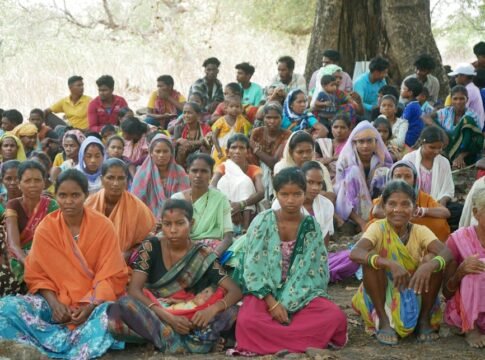
Makeshift camps near Sonamarg have become common sights, with families resorting to temporary shelters made of tarpaulin. Women are seen preparing meals using damp firewood, while children huddle near livestock to seek warmth from the biting cold. Meteorological Department officials have forecast continued rainfall, thunderstorms, and hailstorm activity in the coming days, with fresh snowfall expected in the higher altitudes.
For the nomadic tribes of Kashmir, these extreme weather events are evolving from a seasonal inconvenience into a substantial threat to their age-old way of life, which has been sustained across the Himalayas for generations.
❤️ Support Independent Journalism
Your contribution keeps our reporting free, fearless, and accessible to everyone.
Or make a one-time donation
Secure via Razorpay • 12 monthly payments • Cancel anytime before next cycle


(We don't allow anyone to copy content. For Copyright or Use of Content related questions, visit here.)

The Chenab Times News Desk