Nestled amidst the Himalayas, the region known as “Kashmir” has captivated imaginations for centuries. Its snow-capped peaks, fertile valleys, and vibrant culture have inspired poets, artists, and travelers alike. But beyond its undeniable beauty lies a complex reality, marked by political conflict and contested narratives. One key element of this complexity is the very name – why is the region internationally recognized as “Kashmir,” despite officially being “Jammu and Kashmir“?
Echoes of the Past
“Kashmir” carries the weight of a rich and ancient past. The Kashmir Valley, with its fertile lands and strategic location, has been a crossroads of civilizations for millennia. From the legendary Kashyapa to the Mughal emperors, its history is woven with tales of empires, conquests, and cultural exchanges. This long history, particularly the valley’s unique cultural identity, left a deeper imprint on the world’s consciousness than the relatively newer construct of “Jammu and Kashmir,” a princely state formed in the 19th century.
Jammu and the Chenab Valley, despite being geographically close neighbors within the present day Jammu division, possess distinct historical trajectories. Jammu, primarily comprising the Duggar region, served as a historical crossroads for various empires and communities. Its inhabitants, predominantly Dogras, developed a unique cultural identity with influences from neighboring regions like Himachal Pradesh and Punjab, evident in their language, music, and traditions. Historically, Jammu rose to prominence under the Dogra dynasty in the 18th century, eventually conquering Kashmir and solidifying its position as a powerful kingdom.
In contrast, the Chenab Valley, nestled along the Chenab River and surrounded by the Himalayas, maintained a relative degree of independence throughout much of history. While strategically placed on the ancient Silk Road, various communities like the Saraji people and Gujjars inhabited the valley, each contributing to its diverse cultural tapestry. Unlike Jammu, the Chenab Valley remained outside Dogra control until the 19th century, eventually becoming part of their expanding kingdom.
The Allure of the Valley
Furthering the association with “Kashmir” is the valley’s undeniable allure. Its breathtaking landscapes, from serene lakes to majestic mountains, have earned it the moniker “Paradise on Earth.” The world-renowned Kashmiri shawls, crafted from the region’s fine wool, served as cultural ambassadors, carrying the name “Kashmir” far and wide. This pre-existing global recognition cemented the valley’s name in the international imagination.
Identity and Conflict
The term “Kashmir” resonates deeply with the people who call it home. The majority population in the valley identifies as Kashmiri, a distinct ethnicity with its own language, customs, and cultural heritage. This strong sense of identity fuels the aspirations of self-determination that lie at the heart of the ongoing conflict. When news outlets report on political tensions or human rights concerns, they often focus on the valley due to its distinct ethnic identity and complex political situation, further entrenching the use of “Kashmir” in global discourse.
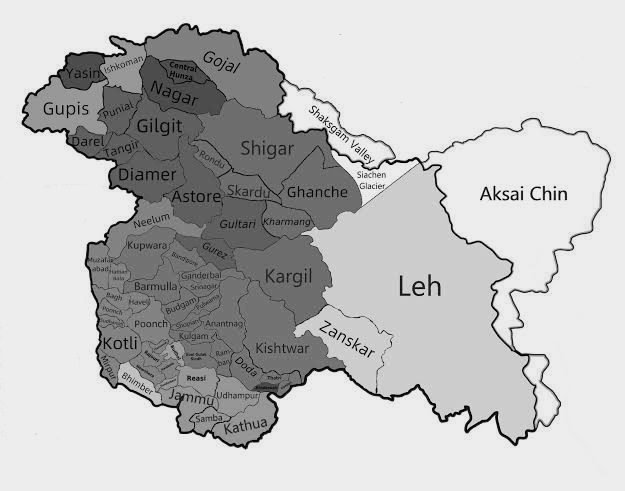
While the Kashmir Valley often takes center stage in international discourse, it’s crucial to acknowledge the diverse identities and aspirations within the larger region officially designated as “Jammu and Kashmir.” Regions like the Chenab Valley and Pir Panjal, predominantly populated by communities identifying as Kashmiri, further complicate the equation. Although administratively part of the Jammu division, the majority in these areas align themselves culturally and politically with the aspirations of the Kashmir Valley. Even I as a resident of Chenab Valley consider myself as “Chenabi Kashmiri“. This highlights the limitations of relying solely on “Kashmir” and underscores the need for recognizing the intricate tapestry of identities within the region.
Despite being located within the Jammu region of Jammu and Kashmir, the Chenab Valley exhibits a closer connection to Kashmir compared to Jammu city. This proximity can be attributed to various factors, primarily geographical. Nestled amidst the Himalayas, the Chenab Valley shares a similar mountainous landscape with Kashmir, separated only by the Pir Panjal range. This contrasts with the distance and challenging terrain that separates the valley from Jammu city, situated in the foothills of the lower Himalayas.
Examining historical context reveals a more intricate picture. While the Chenab Valley wasn’t officially part of the historical Duggar region (present day Jammu), its pre-19th century affiliation remains unclear due to limited historical documentation. Evidence suggests the presence of the Saraji people, whose language and customs demonstrate a potential historical link to Kashmir. However, the region was primarily governed by independent chiefs and local dynasties, indicating a lack of formal political affiliation to any specific kingdom for a prolonged period.
Neutrality in a Contested Landscape
In the context of the long-standing and sensitive conflict, using “Kashmir” can be perceived as more neutral than “Jammu and Kashmir,” which carries the baggage of India’s official administrative designation. It avoids potentially favoring a specific territorial claim, particularly in international forums where neutrality is essential.
Relying solely on “Kashmir” can be problematic, as the region encompasses diverse landscapes and populations. Jammu, with its distinct Hindu majority, and Ladakh, with its unique Buddhist heritage, exemplify this diversity. While using more specific terms like “Indian-administered Kashmir,” “Azad Kashmir/Pakistan-administered Kashmir,” and “Gilgit-Baltistan” acknowledges this complexity and avoids homogenization, the term “Kashmir” also has historical context and avoids controversy regarding territorial claims. Therefore, using “Kashmir” for the wider region may be justified in certain contexts, but it’s important to be mindful of the potential for misunderstanding and to consider the specific context when choosing terminology.
Understanding the Nuances
Ultimately, understanding why “Kashmir” resonates internationally requires delving into the region’s rich history, distinct cultural identity, and ongoing political struggle. Recognizing the limitations of this single term and employing precise language when necessary is crucial for navigating the complexities of this sensitive region. While “Kashmir” may capture the world’s imagination, appreciating the nuances behind its usage is essential for a deeper and more informed understanding.
❤️ Support Independent Journalism
Your contribution keeps our reporting free, fearless, and accessible to everyone.
Or make a one-time donation
Secure via Razorpay • 12 monthly payments • Cancel anytime before next cycle


(We don't allow anyone to copy content. For Copyright or Use of Content related questions, visit here.)

Anzer Ayoob is the Founder and Chief Editor to The Chenab Times