Syrian transitional forces are preparing for possible military steps against Kurdish-led Syrian Democratic Forces positions east of Aleppo, amid ongoing U.S. concerns about a Turkish-supported operation in the region.
Tensions persist following recent clashes in Aleppo city and stalled progress on integrating the SDF into national institutions. According to details received by The Chenab Times, U.S. intelligence assessments reported by the Wall Street Journal indicate that President Ahmed al-Sharaa may be planning a multipronged operation targeting SDF-held areas in eastern Aleppo province, with potential risks of expansion across the Euphrates into northeastern Syria. Reuters sources have noted Syrian troops positioning near Deir Hafer and surrounding areas, describing them as ready to act if talks fail to advance.
The developments follow a U.S.-mediated agreement signed in March 2025 between al-Sharaa and SDF commander Mazloum Abdi. The deal called for a nationwide ceasefire and integration of Kurdish military and civilian structures into the Syrian state by the end of 2025, including transfers of border crossings, airports, and oil fields. Implementation has seen limited advancement, with both sides accusing each other of obstruction. Al-Sharaa has stated on state media that the SDF has taken no practical steps forward, while expressing hope for calm execution of the pact.
Clashes erupted in early January 2026 in Aleppo’s Kurdish-majority neighborhoods of Sheikh Maqsoud and Ashrafiyah. Reports from Reuters and Al Jazeera indicate dozens killed, including civilians, and significant displacement—figures varying from at least 23 deaths per health authorities to over 150,000 people affected according to some accounts. The fighting ended with a mediated ceasefire, allowing SDF fighters to evacuate to areas east of the Euphrates. Syrian forces subsequently secured the neighborhoods, conducting searches for explosives.
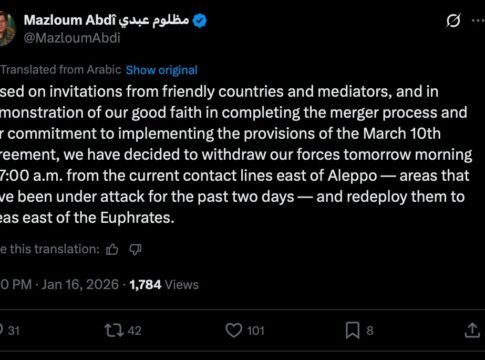
On January 16, 2026, Mazloum Abdi announced via X that SDF forces would withdraw from current contact lines east of Aleppo starting at 7:00 a.m. local time the following day, redeploying east of the Euphrates. He cited calls from mediators and friendly countries, framing the move as a demonstration of goodwill toward the March agreement. Syrian military statements have accused SDF elements of using areas like Deir Hafer for attacks on Aleppo, including drone operations, and have declared certain zones closed military areas.
Turkey, a key supporter of the transitional government, has pressed for SDF withdrawal from contested zones to show commitment. Foreign Minister Hakan Fidan emphasized unilateral steps by the SDF to avoid enforced measures, viewing the group’s main components as linked to the PKK, designated a terrorist organization by Ankara. Turkish backing could include military assistance if requested by Damascus.
The United States maintains troops in eastern Syria and has partnered with the SDF against Islamic State remnants. U.S. officials, including envoy Tom Barrack, have urged maximum restraint, engaged all parties, and stressed preventing escalation to protect counterterrorism efforts and regional stability. The SDF controls important oil resources and facilities holding Islamic State detainees, adding to the stakes.
President al-Sharaa issued a decree on January 16 recognizing Kurdish language, culture, and nationality rights, calling for Kurds to return to northern areas and disarm against the government. Syrian authorities have vowed close monitoring of any agreement steps and readiness to secure vacated territories.
This situation shows challenges in Syria’s post-2024 transition after Bashar al-Assad’s ouster. Sporadic incidents continue in border zones like Manbij and Deir ez-Zor, complicating unification efforts. Humanitarian concerns persist, with restricted access in affected areas and risks of further displacement if de-escalation does not hold. International actors monitor closely to support dialogue and avoid renewed broader conflict in the fractured nation.
(Inputs from various reports)
❤️ Support Independent Journalism
Your contribution keeps our reporting free, fearless, and accessible to everyone.
Or make a one-time donation
Secure via Razorpay • 12 monthly payments • Cancel anytime before next cycle


(We don't allow anyone to copy content. For Copyright or Use of Content related questions, visit here.)
Global Affairs Desk at The Chenab Times covers international developments, global diplomacy, and foreign policy issues through fact-based reporting, explainers, and analytical pieces. The desk focuses on major geopolitical events, diplomatic engagements, and international trends, with an emphasis on verified information, multiple perspectives, and contextual understanding of global affairs.