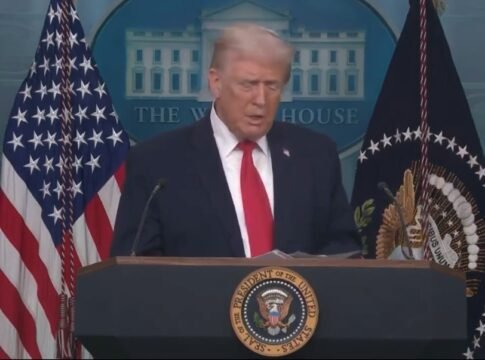
United States President Donald Trump announced on Saturday that a planned diplomatic trip by U.S. envoys Steve Witkoff and Jared Kushner to Pakistan for talks with Iran has been canceled. The decision, communicated in an interview with Fox News, was attributed to the perceived strong negotiating position of the United States and a desire to avoid unnecessary travel.
Trump stated that the 18-hour flight to Pakistan was not warranted, asserting, “We have all the cards. They can call us whenever they want, but you’re not going to fly 18 hours to sit and talk about nothing.” He also cited “tremendous infighting and confusion” within Iran’s leadership as a factor in canceling the trip, suggesting it was unproductive to proceed under such circumstances.
The cancellation occurred despite earlier indications from the White House that the envoys were expected to engage in discussions with Iranian Foreign Minister Abbas Araghchi. Reports indicated that Araghchi had already departed Islamabad on Saturday evening without direct talks with the U.S. delegation taking place. Iran’s foreign ministry had previously communicated that its officials would not engage directly with American representatives, preferring to convey their positions through Pakistani intermediaries.
This move introduces further uncertainty into the ongoing diplomatic efforts aimed at resolving the conflict between the United States and Iran. The first round of direct negotiations, mediated by Pakistan, had been held in Islamabad approximately two weeks prior but did not result in an agreement. A ceasefire, brokered by Pakistan on April 8 and subsequently extended by President Trump, had been in place, but its durability remained a concern.
The core issues reportedly contributing to the diplomatic stalemate include the strategic importance of the Strait of Hormuz, the U.S. blockade of Iranian ports, and Iran’s nuclear program, particularly its stockpile of enriched uranium. These complex matters have presented significant challenges to achieving a lasting resolution.
Pakistan has played a crucial role in mediating between the two nations. During his visit to Islamabad, Iranian Foreign Minister Araghchi held discussions with Pakistani Prime Minister Shehbaz Sharif and other high-ranking officials, including Army Chief General Asim Munir. Prime Minister Sharif characterized the meeting as “most warm, cordial” and noted that it covered regional issues and bilateral relations between Pakistan and Iran.
The cancellation of the U.S. envoys’ trip underscores the volatile nature of U.S.-Iran relations and the intricate dynamics of international diplomacy. The decision reflects a strategic approach by the Trump administration to leverage its perceived advantages and await direct communication from Iran, rather than undertaking extensive travel for what were viewed as potentially fruitless negotiations.
❤️ Support Independent Journalism
Your contribution keeps our reporting free, fearless, and accessible to everyone.
Or make a one-time donation
Secure via Razorpay • 12 monthly payments • Cancel anytime before next cycle


(We don't allow anyone to copy content. For Copyright or Use of Content related questions, visit here.)

Global Affairs Desk at The Chenab Times covers international developments, global diplomacy, and foreign policy issues through fact-based reporting, explainers, and analytical pieces. The desk focuses on major geopolitical events, diplomatic engagements, and international trends, with an emphasis on verified information, multiple perspectives, and contextual understanding of global affairs.