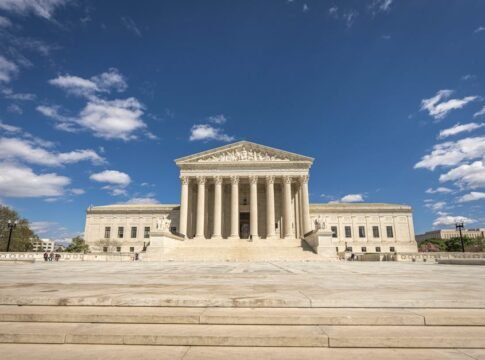
The Supreme Court has directed the National Mission for Clean Ganga (NMCG) to furnish a comprehensive report within three months detailing the extent of encroachments along the Ganga river basin across various states.
The Chenab Times has learned that the directive was issued by a Supreme Court bench presided over by Justice JB Pardiwala. The order came after Additional Solicitor General Aishwarya Bhati requested additional time to provide complete and accurate information in response to five specific questions posed by the court.
In its order issued late last month, the bench, which also included Justice KV Viswanathan, scheduled the next hearing for July 21, 2026. This development is part of a larger ongoing effort to address illegal constructions and encroachments impacting the sacred river and its tributaries.
An intervention application was also filed in the proceedings by the Braj-Vrindavan Devalaya Samiti. This application specifically highlighted illegal construction activities occurring within the Yamuna riverbed in Vrindavan, a significant pilgrimage site. However, the court indicated that it would address this specific matter after receiving the NMCG’s report on the encroachments along the Ganga.
The Supreme Court had previously expressed grave concern over the widespread illegal encroachments along the banks of the Ganga. On March 14, the court had instructed Ms. Bhati to gather appropriate instructions and submit a thorough report on the matter of encroachments within the Ganga basin. The river Ganga is a vital national waterway, flowing through multiple states and holding immense cultural and ecological significance.
The Ganga river traverses the states of Uttarakhand, Uttar Pradesh, Bihar, Jharkhand, and West Bengal. Its river basin, however, extends much further, encompassing six additional states and union territories. These include Himachal Pradesh, Haryana, Rajasthan, Delhi, Madhya Pradesh, and Chhattisgarh. The extensive reach of the basin underscores the pan-Indian nature of the encroachment issue.
Notices were issued to various states by the Supreme Court following the submission of a 2024 affidavit by the NMCGA. This affidavit detailed the prevalence of encroachments along the entire banks and periphery of the Ganga river in several key states, including Uttarakhand, Delhi, Haryana, Rajasthan, Uttar Pradesh, Bihar, Jharkhand, West Bengal, and Chhattisgarh. The affidavit provided critical evidence of the scale of the problem.
Advocate Akash Vashishtha, representing the appellant Ashok Kumar Sinha, informed the court that significant encroachments were present along the riverbanks, necessitating urgent attention. He further pointed out that certain sections of these riverbanks are crucial habitats for freshwater dolphins, highlighting the ecological impact of the encroachments. The preservation of biodiversity was emphasized as a key concern.
Acknowledging that the NMCGA’s affidavit was two years old, the Supreme Court sought an updated report on the current status of encroachments across all affected states and union territories. The court also inquired about the measures implemented to date for the effective execution of all provisions outlined in the October 7, 2016 notification. This notification, issued by the Ministry of Water Resources, River Development and Ganga Rejuvenation under the Environment (Protection) Act, 1986, aims to protect the river Ganga.
The bench specifically asked about any impediments or challenges hindering the NMCGA’s ability to effectively implement the notification. Furthermore, the court sought to understand the steps the authority intends to take to safeguard the Ganga river as it flows through these numerous states, ensuring that the river plains and banks are cleared of all encroachments. This indicates a demand for concrete action plans.
Ms. Bhati was also asked to seek instructions regarding any specific directions the NMCGA might require from the Supreme Court. Such directions would aim to give meaningful effect to the notification and support the Government of India’s overarching mission to ensure that the river plains and banks of the Ganga are entirely free from encroachments. This collaborative approach between the judiciary and the executive aims to achieve the desired environmental outcomes.
In its March 12 order, the bench also stipulated that the report must include the status of flood plain demarcation in each of the aforementioned states. This information is crucial for proper land-use planning and preventing future encroachments by clearly defining the areas vulnerable to flooding.
During the proceedings, the Bihar government informed the bench that out of 213 identified encroachments, 58 had been demolished. However, the state authorities reported difficulties in removing the remaining 145 encroachments. These challenges were partly attributed to interim orders issued by the Patna High Court and various other district courts, indicating the complex legal landscape surrounding the issue.
❤️ Support Independent Journalism
Your contribution keeps our reporting free, fearless, and accessible to everyone.
Or make a one-time donation
Secure via Razorpay • 12 monthly payments • Cancel anytime before next cycle


(We don't allow anyone to copy content. For Copyright or Use of Content related questions, visit here.)

The Chenab Times News Desk