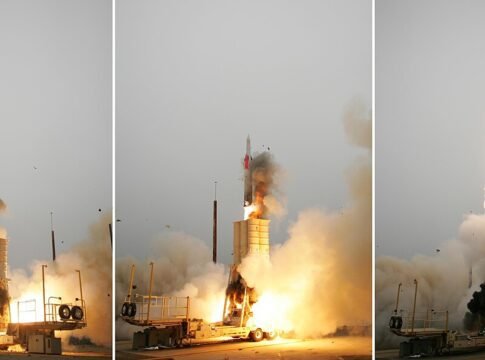
The United States has approved the sale of thousands of air defense interceptor missiles and related services valued at $17 billion to Kuwait, the United Arab Emirates, and Bahrain. The approvals come as concerns mount over dwindling U.S. stockpiles of such missiles, which have been heavily expended during the ongoing conflict with Iran. The State Department and congressional officials confirmed the sales, which bypass the standard congressional review process by invoking emergency powers. This move underscores the urgent need to replenish U.S. and allied defensive capabilities in a region experiencing heightened tensions.
The sales are part of a broader effort by the U.S. to bolster air defenses across the Middle East, addressing threats from missile and drone attacks that have intensified amid the war with Iran. These attacks have put significant pressure on existing air defense systems designed to protect both U.S. forces and regional allies. The State Department has cited emergency circumstances, necessitating immediate sales to recipient nations to ensure their security interests are met.
The approved packages include various air and missile defense systems. Kuwait is set to receive $8 billion worth of lower-tier air and missile defense sensor radars, designed to track high-speed targets and provide data to missile defense networks. The United Arab Emirates will acquire a long-range discrimination radar for $4.5 billion, intended to track ballistic missile threats, along with systems designed to counter small unmanned aircraft for $2.1 billion, advanced air-to-air missiles for $1.22 billion, and munitions and upgrades for its F-16 warplanes totaling $644 million. While Bahrain was mentioned in relation to the overall $17 billion figure, specific details of its package were not immediately available.
These transactions highlight the strategic importance of the Middle East in the current geopolitical climate. The region has been a focal point of conflict, leading to a significant drawdown of U.S. military assets, particularly missile interceptors. Reports indicate that U.S. forces expended a substantial number of Patriot interceptors during recent operations, raising alarms among Pentagon officials about the adequacy of remaining stockpiles. The continuous replenishment of these critical defensive assets is seen as vital to maintaining regional stability and deterring further aggression.
The decision to expedite these sales by waiving congressional review has drawn attention, as U.S. law typically mandates such oversight for major foreign military sales. Invoking emergency authority for such transactions, while rare, is employed when immediate national security interests are perceived to be at stake. This approach allows for quicker delivery of essential defense equipment to allies facing immediate threats.
The demand for American arms, particularly air defense systems, has surged due to the ongoing conflict. Several reports indicate that U.S. air defense systems have been used at a rate that raises concerns about the pace of stockpile replenishment. The recent sales are intended to address this deficit and ensure that both U.S. forces and their allies in the region maintain robust defensive capabilities against evolving threats.
Major defense contractors, including Lockheed Martin and RTX, are expected to benefit from these significant sales, as they are key suppliers of the advanced missile systems and defense technologies being procured. The United States continues to prioritize the security of its Middle Eastern partners, recognizing the complex security landscape shaped by regional conflicts and strategic competition.
❤️ Support Independent Journalism
Your contribution keeps our reporting free, fearless, and accessible to everyone.
Or make a one-time donation
Secure via Razorpay • 12 monthly payments • Cancel anytime before next cycle


(We don't allow anyone to copy content. For Copyright or Use of Content related questions, visit here.)

Global Affairs Desk at The Chenab Times covers international developments, global diplomacy, and foreign policy issues through fact-based reporting, explainers, and analytical pieces. The desk focuses on major geopolitical events, diplomatic engagements, and international trends, with an emphasis on verified information, multiple perspectives, and contextual understanding of global affairs.