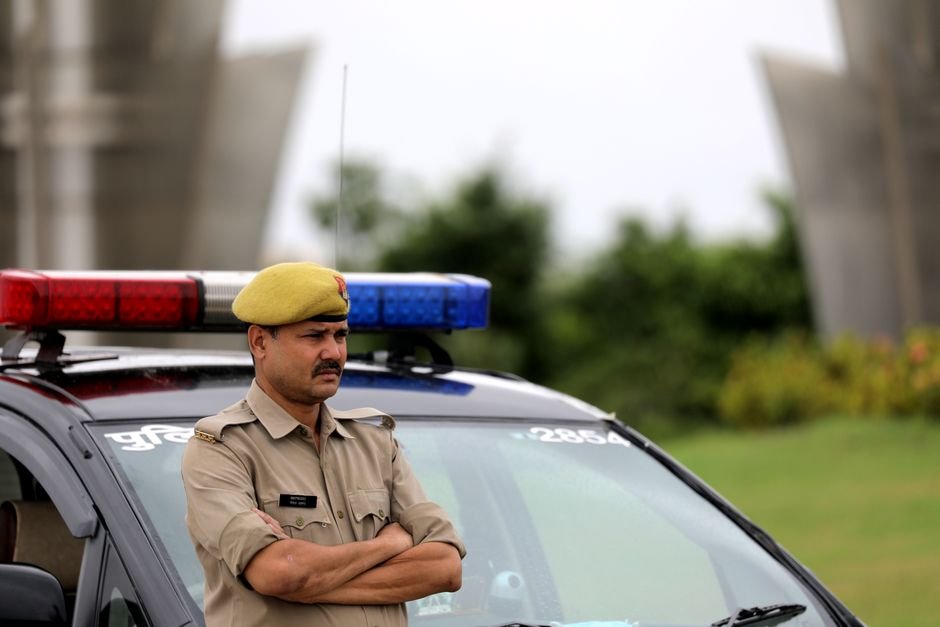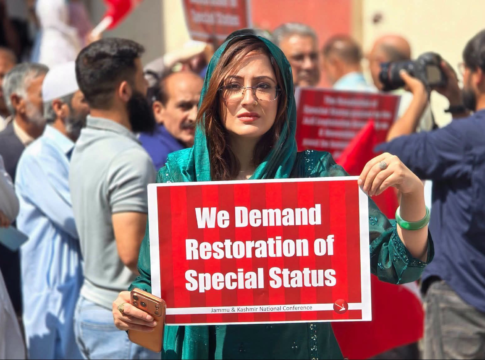
For political parties in Jammu and Kashmir, August 5 remains one of the most significant and contested dates in recent history. While the National Conference (NC), Peoples Democratic Party (PDP) and Congress observed the day as a “Black Day” through protests against the 2019 constitutional changes, the Bharatiya Janata Party (BJP) marked the anniversary as a milestone in the Union Territory’s integration with the rest of India. Security was heightened across parts of Jammu and Kashmir ahead of the programmes.
According to details received by The Chenab Times, the political divide centres on the Union government’s decision of August 5, 2019, when it issued the Constitution (Application to Jammu and Kashmir) Order, 2019, rendering the special provisions under Article 370 inoperative. Parliament also passed the Jammu and Kashmir Reorganisation Act, which bifurcated the erstwhile state into the Union Territories of Jammu and Kashmir, with a legislative assembly, and Ladakh, without one.
The constitutional changes were introduced while Jammu and Kashmir was under President’s Rule and did not have an elected government. Ahead of the announcement, the Centre deployed additional security personnel and imposed restrictions across the region, including the suspension of internet and communication services, citing security concerns and the possibility of unrest.
Political parties opposing the move argue that the decision altered Jammu and Kashmir’s constitutional position without the consent of an elected legislative assembly. The NC and PDP maintain that August 5 represents the loss of the region’s special constitutional status, while Congress has also continued to oppose the manner in which the changes were implemented. This year, the three parties organised separate protests describing the anniversary as a “Black Day,” while the BJP held events highlighting the anniversary as a landmark decision for national integration.
The Central government has consistently defended the decision, stating that the removal of Article 370 ensured the uniform application of the Indian Constitution and central laws in Jammu and Kashmir. It has also argued that the move has improved governance, encouraged development and created greater opportunities for investment in the region. Prime Minister Narendra Modi, marking the seventh anniversary, said Jammu and Kashmir and Ladakh had entered “a decisive new chapter” following the constitutional changes.
The constitutional validity of the Centre’s decision was upheld by a five-judge Constitution Bench of the Supreme Court in December 2023. The court ruled that Article 370 was a temporary provision and directed that Assembly elections in Jammu and Kashmir be conducted by September 30, 2024, while observing that statehood should be restored at the earliest. Assembly elections were subsequently held in 2024, leading to the formation of an elected government.
Seven years after the abrogation of Article 370, August 5 continues to symbolise two competing political narratives in Jammu and Kashmir. For supporters of the decision, it marks deeper constitutional integration with India, while for its opponents, it remains a reminder of the region’s former special status and autonomy. The contrasting programmes held each year underscore that Article 370 remains a central issue in the Union Territory’s political discourse.
❤️ Support Independent Journalism
Your contribution keeps our reporting free, fearless, and accessible to everyone.
Or make a one-time donation
Secure via Razorpay • 12 monthly payments • Cancel anytime before next cycle


(We don't allow anyone to copy content. For Copyright or Use of Content related questions, visit here.)

The Chenab Times News Desk