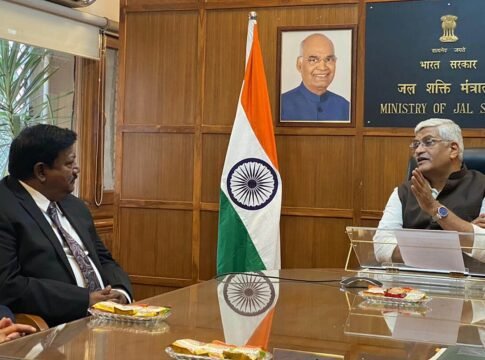
Union Power Secretary Pankaj Agarwal conducted a comprehensive review of several of SJVN Limited’s ongoing and operational hydroelectric projects in Himachal Pradesh. The visit, which included high-ranking officials from the Ministry of Power and the Central Electricity Authority (CEA), focused on assessing the progress and operational efficiency of key power generation facilities within the state.
Information was available with The Chenab Times that the delegation was warmly received by the leadership of SJVN, including Chairman and Managing Director Bhupender Gupta and other directors. The tour encompassed visits to the Nathpa Jhakri hydro power station, the Luhri-1 hydroelectric project, the Rampur Hydro power station, and the Sunni Dam hydroelectric project, collectively representing a significant capacity for power generation in the region.
During his visit, Secretary Agarwal, accompanied by Additional Secretary (Hydro and EC&ET) Diwakar Nath Misra and Member (Hydro), CEA, Milind Ganesh Gokhale, meticulously examined the construction activities and operational status of these vital infrastructure projects. The Nathpa Jhakri hydro power station, with a capacity of 1,500 MW, is a cornerstone of SJVN’s operations in Himachal Pradesh. The review also covered the 210-MW Luhri-1 hydroelectric project, the 412-MW Rampur Hydro power station, and the 382-MW Sunni Dam hydroelectric project, all of which are crucial for meeting the energy demands of the country.
The review aimed to ensure that the projects were progressing as per schedule and adhering to all regulatory and environmental standards. Discussions likely focused on challenges, potential bottlenecks, and strategies to enhance efficiency and output from these renewable energy sources. SJVN, a public sector undertaking, plays a pivotal role in developing hydropower resources in the Himalayan region, contributing significantly to India’s clean energy goals.
A notable event during the visit was the inauguration of a double-lane steel truss bridge at Khaira. This bridge spans the Sutlej River and is a crucial piece of infrastructure associated with the Sunni Dam hydroelectric project. The successful completion and inauguration of this bridge are expected to facilitate logistical operations for the project and improve connectivity in the local area, potentially easing the transportation of materials and personnel essential for the construction and maintenance of the dam and associated power infrastructure.
The Ministry of Power regularly undertakes such site visits to monitor the progress of major infrastructure projects across the country, particularly in the renewable energy sector. These reviews are instrumental in identifying areas where central government support might be required and in ensuring timely execution of projects that are critical for national energy security and economic development. Himachal Pradesh, with its abundant water resources, is a key state for hydropower development in India, and SJVN has been a primary developer of these projects for decades.
SJVN’s portfolio in Himachal Pradesh includes some of the largest and most complex hydroelectric installations. The company has a long-standing presence in the state and has been instrumental in harnessing the hydro potential of rivers like the Sutlej. The ongoing and planned projects by SJVN are expected to significantly augment the country’s installed capacity of renewable energy, thereby reducing reliance on fossil fuels and mitigating carbon emissions.
The presence of senior officials from the CEA underscores the importance placed on the efficient and effective development of the country’s hydroelectric power resources. The CEA is the statutory body responsible for the technical, financial, and economic appraisal of electricity projects in India, and its member’s participation in such reviews highlights the strategic importance of SJVN’s projects in Himachal Pradesh within the national power grid architecture.
The Secretary’s visit to these power projects in Himachal Pradesh is part of a broader initiative to boost the renewable energy sector in India. Hydroelectric power is considered a vital component of the country’s renewable energy mix, offering a stable and dispatchable source of electricity that can complement intermittent sources like solar and wind power. The successful completion and operation of projects like those reviewed are therefore critical for achieving India’s climate targets and ensuring a sustainable energy future.
❤️ Support Independent Journalism
Your contribution keeps our reporting free, fearless, and accessible to everyone.
Or make a one-time donation
Secure via Razorpay • 12 monthly payments • Cancel anytime before next cycle


(We don't allow anyone to copy content. For Copyright or Use of Content related questions, visit here.)

The Chenab Times News Desk