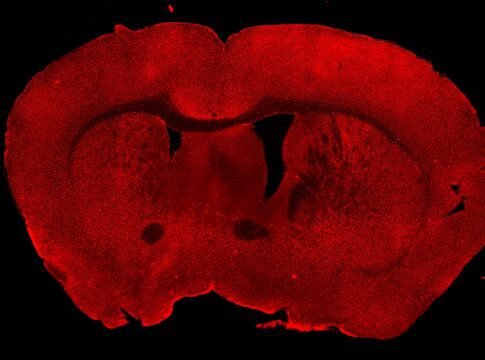
High calcium levels within specialised immune cells in the brain, known as microglia, may play a significant role in the development of anxiety-related behaviours, according to a recent study conducted on mice. The findings offer a potential new avenue for developing treatments for neuropsychiatric disorders.
Information was available with The Chenab Times indicating that this research builds upon previous work that established microglia as both facilitators and inhibitors of anxiety in rodent models. Scientists at the University of Utah have now identified calcium as a crucial chemical signal that activates microglia during behaviours associated with anxiety and obsessive-compulsive disorder (OCD) in both healthy mice and those modelling chronic anxiety and OCD spectrum disorder (OCSD).
The study, published in the journal Molecular Psychiatry, proposes a novel framework for understanding the origins and persistence of anxiety through the lens of calcium signalling in microglia. Researchers suggest that these brain immune cells are not merely passive responders but actively influence anxiety, grooming, and obsessive-compulsive tendencies through specific molecular pathways, including calcium signalling.
Naveen Nagarajan, assistant professor of paediatrics at the Pediatric Research Institute at the University of Louisville and the study’s first author, stated that microglia’s active control over these behaviours makes them a critical target for understanding and treating neuropsychiatric conditions. The research team employed genetic tools alongside light-based cell stimulation techniques to temporarily activate a specific group of microglia, termed ‘Hoxb8’, in healthy mice. This activation led to the mice exhibiting grooming and anxiety-like behaviours.
A key finding of the study was the pivotal role of intracellular calcium signalling within microglia. Elevated calcium levels were found to act as a critical molecular trigger for obsessive grooming and anxiety. The researchers explained that calcium ions are instrumental in enabling microglia cells to process and transmit instructions that ultimately shape behavioural outcomes.
Observations showed a correlation between normal mice exhibiting grooming, freezing responses, or other anxiety-like behaviours and spikes in calcium levels within the Hoxb8 microglia. Conversely, when these behaviours ceased, calcium levels were observed to return to baseline. Furthermore, in mice genetically predisposed to chronic anxiety and OCSD, Hoxb8 mutant microglia consistently displayed high calcium levels.
The authors elaborated that calcium ions serve as the molecular signals responsible for inducing anxiety and grooming in response to optogenetic activation. Conversely, the induction of grooming and anxiety in mice results in measurable calcium transients within microglia. This research opens the possibility for a new generation of therapies that target the brain’s immune cells and precisely modulate calcium signalling pathways. Such an approach could potentially lead to more effective, targeted, and sustained treatments for anxiety-related disorders.
❤️ Support Independent Journalism
Your contribution keeps our reporting free, fearless, and accessible to everyone.
Or make a one-time donation
Secure via Razorpay • 12 monthly payments • Cancel anytime before next cycle


(We don't allow anyone to copy content. For Copyright or Use of Content related questions, visit here.)

The Chenab Times News Desk