The Law Minister of Tamil Nadu has alleged that Karnataka is politicising the Mekedatu project, stating that the neighbouring state cannot proceed with its dam construction plans without fulfilling legal requirements.
According to details received by The Chenab Times, the minister’s statement comes amidst ongoing tensions between Tamil Nadu and Karnataka over the proposed multi-purpose dam across the Cauvery river near Mekedatu in Karnataka’s Ramanagara district.
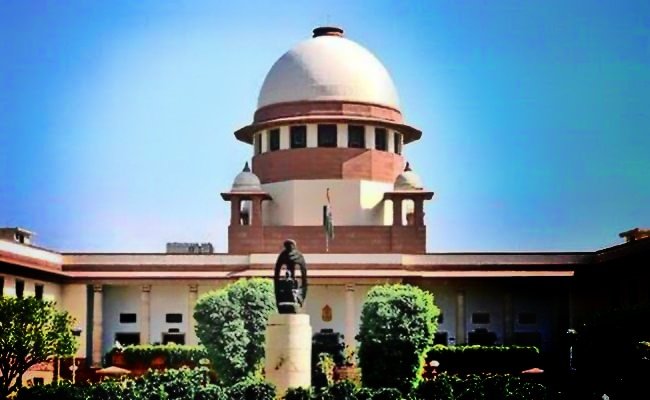
Speaking to reporters at the Secretariat in Chennai, the Tamil Nadu Law Minister asserted that Karnataka’s ability to conduct a ‘bhoomi pooja’ for the Mekedatu dam construction is questionable. He highlighted that the Supreme Court has, at best, only requested the submission of a project report, which is a preliminary step and does not grant permission for commencement of construction.
The Mekedatu project, envisioned by Karnataka as a drinking water and hydroelectric power generation scheme, has been a point of contention for years. Tamil Nadu has consistently opposed the project, citing concerns over water sharing agreements and potential impacts on its water supply, particularly from the Cauvery river.
The dispute centres on the interpretation of court orders and inter-state water sharing pacts. Tamil Nadu argues that any project impacting the river’s flow must have the concurrence of downstream states and must adhere to the final awards of the Cauvery Water Disputes Tribunal and subsequent Supreme Court judgments.
Karnataka, on the other hand, maintains that the project is primarily for drinking water supply to Bengaluru and surrounding areas, and also aims to generate power. It contends that the project falls within its territorial jurisdiction and that its plans are being misrepresented by Tamil Nadu.
The legal battle over the Mekedatu project has seen several rounds in various courts, including the Supreme Court. While Karnataka has sought approvals from central government bodies and has periodically announced intentions to push the project forward, Tamil Nadu has actively challenged these moves. The state has often approached the Supreme Court to seek directives restraining Karnataka from proceeding with the project without obtaining necessary clearances and without considering the downstream impact.
The Tamil Nadu minister’s remarks underscore the deep-seated political and administrative disagreements that continue to complicate the resolution of inter-state river water disputes in India. These disputes often become entangled with regional politics, making a consensus-based approach challenging.
The Supreme Court’s role in such inter-state water disputes is crucial, involving the adjudication of rights and responsibilities based on established legal frameworks and scientific assessments of riverine systems. Any project of this magnitude requires a comprehensive environmental impact assessment, clearances from the Central Water Commission, and, often, approval from the Ministry of Environment, Forest and Climate Change, besides consideration of the interstate riparian rights.
The minister’s statement implies that Karnataka has not yet secured these essential clearances and is attempting to create a fait accompli by politicising the issue to gain public support and exert political pressure. This approach, he suggested, is contrary to the spirit of cooperative federalism and due legal process.
The ongoing debate highlights the complexities of water resource management in a country with a large population and diverse geographical regions, where rivers often transcend state boundaries. Finding a sustainable and equitable solution requires adherence to legal provisions, inter-state cooperation, and scientific planning, rather than what Tamil Nadu alleges to be unilateral and politically motivated actions.
❤️ Support Independent Journalism
Your contribution keeps our reporting free, fearless, and accessible to everyone.
Or make a one-time donation
Secure via Razorpay • 12 monthly payments • Cancel anytime before next cycle


(We don't allow anyone to copy content. For Copyright or Use of Content related questions, visit here.)

The Chenab Times News Desk