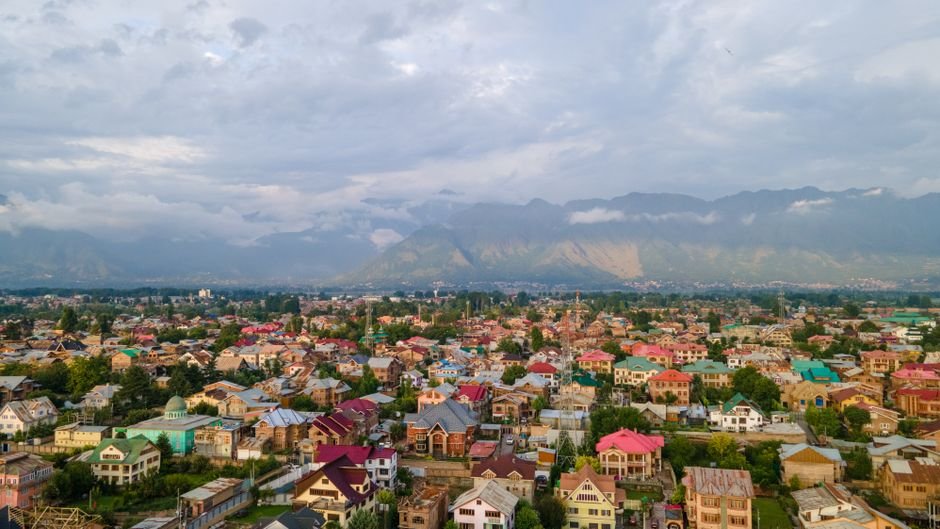
Ludhiana’s urban landscape is grappling with a significant decline in its green cover, a trend that experts and residents increasingly link to escalating city temperatures and the intensification of the urban heat island effect. The unchecked felling of trees for rapid urbanization, road widening, and construction projects has diminished the city’s natural cooling systems, leading to more uncomfortable summers and increased energy consumption for cooling.
The Chenab Times has learned that a chorus of voices, comprising environmentalists, urban planners, and concerned citizens, is urging for the implementation of stringent policies to halt indiscriminate tree cutting and promote substantial compensatory plantation. The urgency stems from observations that areas once shaded by mature trees are now exposed to direct sunlight, raising surface temperatures and exacerbating the discomfort during warmer months.
Trees as Essential Urban Regulators
Trees are fundamentally acknowledged for their role in regulating urban temperatures, absorbing pollutants, reducing dust, and supporting biodiversity. Their absence directly contributes to the rise in ambient temperatures, making the city environment harsher. Experts note that mature trees can significantly lower temperatures in their immediate vicinity, offering a crucial buffer against heat stress and reducing the reliance on energy-intensive cooling systems like air conditioners. This, in turn, can decrease greenhouse gas emissions and alleviate strain on power grids.
The issue is not unique to Ludhiana, with many rapidly urbanizing cities across the country facing similar challenges. However, the direct correlation between the loss of green cover and increased heat is becoming more pronounced, prompting calls for immediate and decisive action. The current state of affairs highlights a critical disconnect between development imperatives and environmental sustainability.
Calls for Policy Reform and Enforcement
Multiple contributors to an open house discussion emphasized the need for robust policy reforms. Suggestions include making prior permission mandatory for felling any mature tree, imposing heavy penalties for violations, and ensuring that compensatory plantation is not merely a formality but a rigorous process with a high survival rate for saplings. Some experts advocate for a ratio of planting five saplings for every tree felled, coupled with mandatory geo-tagging and a multi-year survival check.
The effectiveness of existing policies, such as the state’s Tree Preservation Policy for non-forest lands, is often undermined by weak enforcement. This has led to situations where voluntary measures and less stringent enforcement fail to counteract the pressures of development. Authorities are being urged to implement a multi-pronged approach that integrates protection, expansion, and maintenance of urban green spaces with effective urban planning.
The Urban Heat Island Effect Intensified
The urban heat island effect, where concrete and asphalt structures absorb and radiate heat more than natural landscapes, is amplified by the shrinking tree cover. This phenomenon keeps nights uncomfortably warm, contributing to health risks, particularly during heatwaves. The article references that the state’s forest cover has dwindled to less than three percent, placing it among the lowest in the country, further underscoring the severity of the situation.
Concerns have been raised about the survival rate of saplings planted as compensation, with many failing to mature due to inadequate care and maintenance. The long gestation period for saplings to provide significant ecological benefits means that protecting existing mature trees is paramount. The suggestion to utilize dilapidated parks for planting native, shade-providing trees like neem, peepal, and banyan has been put forth as a practical step towards increasing green cover.
Balanced Development: A Crucial Need
The narrative highlights a persistent struggle between necessary economic development and environmental preservation. While urbanisation, industrial expansion, and commercialisation are driving economic growth, they are often at the expense of green belts. Experts argue that industrial cities require even more extensive green belts to counteract the pollution generated by industries and vehicular traffic.
Residents and observers frequently point out that areas with mature tree cover and green spaces remain noticeably cooler compared to heavily concretised and densely populated industrial zones. This observation reinforces the argument that development and environmental protection must proceed in tandem, with every development project, from road construction to industrial approvals, incorporating mandatory green buffers and compensatory plantation measures.
Looking Ahead: Revival and Public Engagement
Initiatives like a scientific drive to plant trees based on satellite heat maps, prioritizing the hottest zones, were launched in the city. The revival of such programs with proper monitoring and follow-through is deemed essential. Issues such as staff shortages and a lack of dedicated penalty mechanisms have hampered previous efforts to expand green cover.
Public awareness campaigns and the active involvement of educational institutions, Resident Welfare Associations (RWAs), and local communities are vital. Encouraging citizens to adopt trees and ensure their survival, alongside government initiatives for regular maintenance and watering in public areas, could significantly bolster green cover expansion. While data indicates a slight improvement in Ludhiana’s green cover between 2000 and 2020, and a marginal decrease in peak temperatures, these gains are insufficient to combat intensified heatwaves and rising night temperatures, underscoring the continuing need for stricter rules and policies.
❤️ Support Independent Journalism
Your contribution keeps our reporting free, fearless, and accessible to everyone.
Or make a one-time donation
Secure via Razorpay • 12 monthly payments • Cancel anytime before next cycle


(We don't allow anyone to copy content. For Copyright or Use of Content related questions, visit here.)

The Chenab Times News Desk