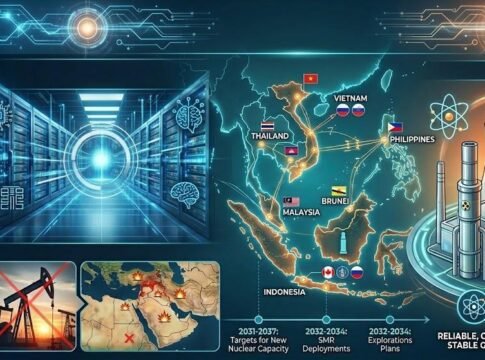
Several Southeast Asian nations are revisiting their nuclear power aspirations, driven by escalating energy demands from the burgeoning artificial intelligence sector and growing concerns over the volatility of global energy supplies, exacerbated by geopolitical conflicts.
The Chenab Times has learned that a confluence of factors, including the push for decarbonization and the need for reliable, high-capacity energy sources to power AI-focused data centres, is prompting countries like Vietnam, Indonesia, Thailand, and the Philippines to re-evaluate and advance their nuclear energy plans. This renewed interest marks a significant shift, as the region has historically not produced any nuclear energy despite earlier ambitions.
According to the International Energy Agency (IEA), Southeast Asia is projected to account for a quarter of the global growth in energy demand by 2035. A substantial portion of this increase is attributed to the more than 2,000 data centres already operating across Indonesia, Malaysia, Singapore, Thailand, Vietnam, and the Philippines, with many more in development. Malaysia, in particular, aims to become a regional hub for AI computing, attracting significant investments from major technology firms.
The ongoing geopolitical tensions, including the conflict in Iran, have underscored the vulnerability of traditional energy supplies, particularly oil and gas. Analysts note that the surge in crude oil prices due to these conflicts has amplified the urgency for countries in Southeast Asia to accelerate their pursuit of alternative energy sources. Alvie Asuncion-Astronomo of the Philippine Nuclear Research Institute highlighted that the escalating conflict in the Middle East demonstrates the volatility of fossil fuel costs and supply instability, making nuclear power an attractive alternative for enhanced energy self-reliance.
Vietnam and Russia have recently advanced a nuclear power deal, reflecting the region’s heightened energy security concerns. Vietnam is currently constructing two nuclear power plants with the backing of Russia’s state corporation Rosatom, projects described by Prime Minister Pham Minh Chinh as “nationally significant, strategic projects.” The country’s revised atomic energy law came into effect in January.
Indonesia has integrated nuclear power into its new energy plan, targeting the construction of two small modular reactors by 2034. Both Canada and Russia have reportedly submitted formal cooperation proposals to Indonesia, with other nations expected to follow. Thailand has set a target to add 600 megawatts of nuclear generating capacity by 2037, with officials from the Electricity Generating Authority of Thailand deeming nuclear power a “promising solution” for meeting rising demand for affordable, clean electricity.
The Philippines, which previously built but never operated a nuclear power plant in the 1970s, is also actively pursuing nuclear energy. A new atomic energy regulatory authority established last year is expected to facilitate the integration of nuclear power. The country has set a 2032 target and approved a roadmap for potential investors in February. While acknowledging that nuclear electricity may not be inexpensive initially, officials believe it will enhance energy reliability, security, independence, and eventually reduce costs in the long term.
Even countries without concrete nuclear plans are exploring the possibility. Cambodia’s latest national strategy indicates an openness to nuclear energy, and Singapore has outlined plans to study its atomic potential. Brunei, a sultanate reliant on oil and gas, is also “carefully exploring nuclear energy,” according to the International Atomic Energy Agency (IAEA).
The global impetus for nuclear energy expansion is significant, with nearly 40 nations, including major economies like the United States, Japan, South Korea, and China, committed to tripling installed nuclear energy capacity by 2050. The World Nuclear Association projects that Southeast Asia will contribute nearly a quarter of the 157 gigawatts expected from “newcomer nuclear nations” by mid-century.
Malaysia’s renewed focus on nuclear energy is partly driven by the substantial energy requirements of its growing data centre industry. With over 500 operational data centres and many more planned or under construction, the demand for electricity is substantial. The country revived its nuclear program last year with a target for atomic energy to be operational by 2031. Experts note that the expansion of industries such as data centres, semiconductors, and mining necessitates significant energy resources, especially as Malaysia’s oil and gas reserves are finite.
Despite the renewed interest, concerns regarding nuclear safety, waste disposal, and supply chain reliability persist. Historical incidents like Chernobyl and Fukushima have led to public apprehension. However, even Japan, which had idled its nuclear plants after the 2011 disaster, is now restarting them. Research groups caution that countries considering establishing a nuclear industry from scratch must carefully assess the risks, including the possibility of accidents, as they navigate the path towards meeting climate goals and energy demands.
❤️ Support Independent Journalism
Your contribution keeps our reporting free, fearless, and accessible to everyone.
Or make a one-time donation
Secure via Razorpay • 12 monthly payments • Cancel anytime before next cycle


(We don't allow anyone to copy content. For Copyright or Use of Content related questions, visit here.)

The Chenab Times News Desk