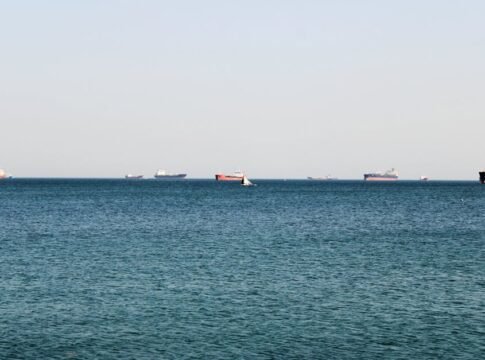
The Caspian Sea is increasingly becoming a critical strategic trade route for Iran, particularly as maritime shipping through the Strait of Hormuz faces significant disruptions. With a substantial portion of Iran’s foreign trade traditionally relying on the Persian Gulf, recent geopolitical tensions and a naval blockade have rendered these southern routes largely inaccessible, elevating the importance of northern corridors.
The escalating conflict and resulting instability in the region have forced a re-evaluation of global trade routes. The Trans-Caspian International Transport Route, also known as the Middle Corridor, which connects China and Central Asia to Europe via Kazakhstan, Azerbaijan, Georgia, and Turkey, is experiencing a revitalization. This route offers a crucial alternative to traditional northern passages through Russia and southern maritime routes via the Suez Canal, which have been impacted by global conflicts since 2022.
For Iran, the Caspian Sea presents an essential avenue for its goods to reach international markets, bypassing its Arab and Gulf neighbors. This shift underscores the Caspian’s transformation from a primarily commercial waterway into a vital component of economic and strategic infrastructure. Russia is playing a significant role in this evolving dynamic, with increased trade volumes observed between Moscow and Tehran. Analysts suggest the region is being utilized for the supply of various equipment, facilitated by alternative logistics schemes.
The strategic importance of the Caspian Sea for Iran is further amplified by the economic pressures resulting from international sanctions and a naval blockade imposed by the United States. While the Strait of Hormuz, a key maritime chokepoint, has been effectively closed, Iran is leveraging alternative routes. These include overland transport from neighboring Pakistan and Turkey, as well as shipping cargo through the Caspian Sea from Russia, its ally. Iran is also exploring oil exports by rail to China, a major trading partner.
However, these alternative routes are not without their challenges. Trucking is more expensive than maritime transport, and the capacity of Caspian ports and fleets is limited, leading to potentially higher landed costs and increased inflation. Recent strikes on the port of Bandar-e Anzali in Iran’s Gilan province in March and April have also damaged trade infrastructure and complicated regional logistics.
Despite these hurdles, Iran and Russia are reportedly using the Caspian Sea for more than just legitimate trade, with media reports suggesting its use for smuggling sanctioned oil and weapons. Nevertheless, the exchange of goods such as food commodities, including grain, corn, and sunflower oil, continues between the two nations via this route.
The Caspian Sea itself is a unique geopolitical space, being the world’s largest inland body of water, bordered by five nations: Russia, Iran, Azerbaijan, Kazakhstan, and Turkmenistan. The region holds substantial geopolitical weight due to its vast energy resources, with estimates of 48 billion barrels of oil and 292 trillion cubic feet of natural gas. This energy wealth fuels disputes over resource allocation and maritime security among the littoral states, intensifying regional militarization.
A 2018 convention on the legal status of the Caspian Sea attempted to delineate national seabed sectors, but enforcement has been challenging. Iran, allocated only 13% of the seabed despite occupying 20% of the coastline, has protested resource extraction by Russia and Azerbaijan. Declining water levels in the Caspian Sea also risk altering maritime boundaries, potentially leading to renewed conflicts over fishing rights and subsea assets.
Russia and Iran have significantly deepened their strategic partnership, particularly in the wake of international sanctions. Both nations view the Caspian Sea as a critical trade corridor and a means to circumvent Western sanctions. While their bilateral trade volume was reported to be around $4 billion in 2024, this is expected to grow as Moscow increasingly sees Iran as a “window to Asia.” The recently signed comprehensive strategic partnership treaty between Russia and Iran formalizes many existing bilateral processes, including economic integration and cooperation in the Caspian Sea region.
The Makhachkala Sea Trade Port in Russia is emerging as a key hub within the International North-South Transport Corridor (INSTC), aiming to bolster Russia’s position in the Caspian Sea and provide access to Middle Eastern and African markets. Plans include restoring ferry services and modernizing infrastructure, with cargo flows to Iran increasing by over 50% in the first three months of the year due to Iranian demand for Russian metal products and other goods.
The growing importance of the Caspian Sea as a trade route is underscored by the significant investments being made in infrastructure, such as the Trans-Caspian International Transport Route, which aims to reduce transit times between Asia and Europe. However, challenges remain, including limited port and railway capacities and the absence of a unified tariff structure.
Amidst these developments, the Caspian Sea is also transforming into a military corridor, with Russia and Iran conducting joint military exercises. This heightened military activity, coupled with environmental concerns such as declining water levels, creates a complex geopolitical landscape. The strategic value of the Caspian Sea, encompassing both commercial and military dimensions, is becoming increasingly undeniable in the context of evolving global trade dynamics and regional security concerns.
❤️ Support Independent Journalism
Your contribution keeps our reporting free, fearless, and accessible to everyone.
Or make a one-time donation
Secure via Razorpay • 12 monthly payments • Cancel anytime before next cycle


(We don't allow anyone to copy content. For Copyright or Use of Content related questions, visit here.)

Global Affairs Desk at The Chenab Times covers international developments, global diplomacy, and foreign policy issues through fact-based reporting, explainers, and analytical pieces. The desk focuses on major geopolitical events, diplomatic engagements, and international trends, with an emphasis on verified information, multiple perspectives, and contextual understanding of global affairs.