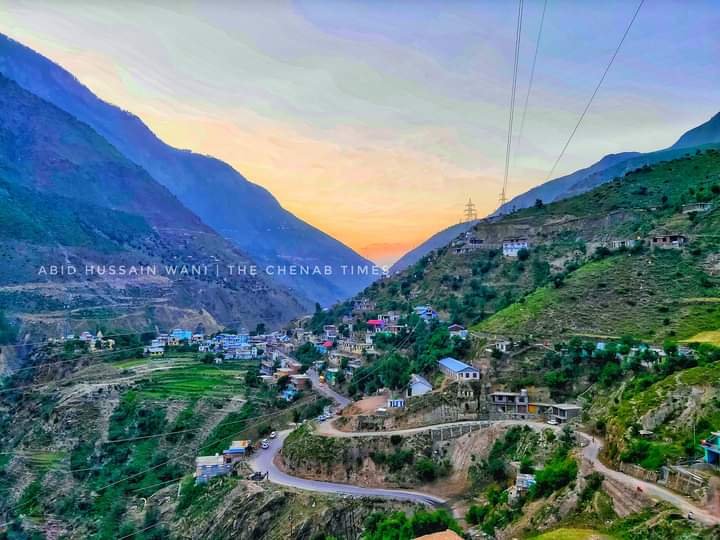
The recent debate on Chenab as a separate division has once again brought to the forefront a question that has lingered for decades: whether administrative reorganisation is an act of fragmentation or an instrument of equitable justice. For the people of Doda, Kishtwar, and Ramban, this is not merely a political slogan but a lived reality marked by geographic isolation, developmental neglect, and administrative inaccessibility.
The Chenab Valley, named after the life-giving river that carves through its majestic topography, is a region of immense potential and contribution. Yet, despite its strategic importance and rich natural resources, it remains one of the most underdeveloped pockets in the Union Territory of Jammu and Kashmir. A separate administrative division is not about creating a wedge; it is about bridging the gap between the people and governance, ensuring that the fruits of development reach the last mile with dignity and efficiency.
The Cry for Educational Justice
The foundation of any progressive society is education, yet the Chenab region faces a severe infrastructural deficit in this sector. While the government has established government degree colleges at the district headquarters, the higher education landscape remains barren for the rural population. Students aspiring for professional courses in engineering, medicine, or management are forced to migrate to Jammu or beyond — a journey fraught with difficult terrain and heavy financial burden.
A separate divisional status would necessitate the establishment of a dedicated Directorate of School Education and Higher Education within the region. This would enable:
- Decentralized Administration: Faster recruitment of teaching staff, who currently avoid postings in the region due to the hardships of travelling to the winter capital for bureaucratic processes.
- Satellite Campuses: The creation of cluster universities or satellite campuses of Jammu University in Kishtwar, Doda, and Ramban to serve the local population.
- Skill Development: Focused ITIs and polytechnics tailored to the region’s industrial needs — particularly in hydropower and tourism — ensuring that locals are equipped for the jobs created in their own backyard.
Healthcare: A Question of Survival
If education is the foundation, healthcare is the lifeline. Currently, the Chenab region’s healthcare infrastructure is woefully inadequate to handle its geographic isolation. During winter, when the region is often cut off from Jammu, residents of far-flung areas like Marwah, Warwan, or Paddar must travel 6 to 8 hours on treacherous roads to reach the district hospital in Kishtwar or the Government Medical College (GMC) in Doda.
With separate divisional status, the following improvements could be realized:
- Specialized Tertiary Care: The existing GMC Doda could be upgraded into a full-fledged super-specialty hospital under the administrative control of a Division-level Directorate of Health Services, making oncology, cardiology, and neurology units truly functional rather than existing only on paper.
- Winter Preparedness: A Division-level Disaster Management Authority stationed in the valley would ensure faster road clearance, adequate stocking of essential medicines, and significantly reduced emergency response times during harsh winter months.
- Reduced Referral Burden: Patients requiring advanced care would no longer need to travel 180–220 km to Jammu.
Power Projects: Powering the Nation, Yet Living in Darkness
The irony of the Chenab region is stark. This area forms the backbone of India’s green energy mission, with operational power projects such as Salal, Baglihar, and Dulhasti already contributing significantly to the national grid. Today, the Chenab Valley is witnessing an unprecedented surge in hydropower development. Major projects including Pakal Dul, Kiru, Ratle, and Kwar are under construction and are being fast-tracked for commissioning in the coming years. Once completed, these projects will further establish the region as the powerhouse of the Union Territory.
Yet, despite this immense contribution, the local population continues to face erratic power supply and lacks the industrial growth that such energy abundance should naturally foster. The valley powers the nation, but its own development remains a distant dream — a paradox that a separate divisional administration could effectively address by ensuring rightful royalties, local employment opportunities, and infrastructure upgrades commensurate with the scale of these monumental projects.
Linguistics and Cultural Uniqueness
One of the strongest arguments for a separate division lies in linguistics. The Chenab region is the cradle of Pogali, Sarazi, Bhaderwahi, Kashmiri, and Kishtwari dialects. While Kashmir predominantly speaks Kashmiri and Jammu predominantly speaks Dogri, the Chenab Valley possesses a distinct linguistic identity that is often overlooked.
A separate division would allow this unique linguistic and cultural identity to receive the patronage it deserves. A divisional administration would be empowered to advocate for the official recognition of local dialects, which form the soul of this land. This would not only safeguard an invaluable cultural heritage but also instill a deep sense of pride and belonging among the people.
Tourism: The Untapped Paradise
For decades, tourism in Jammu and Kashmir has been synonymous with the Kashmir Valley. However, the Chenab region holds the key to the future of sustainable, offbeat, and adventure tourism. With the Chenab River raging through deep gorges, the area is a goldmine for white-water rafting, trekking, and mountaineering. Destinations like Sinthan Top (connecting Kishtwar to Anantnag) and Kailash Kund offer alpine landscapes that rival the best in the world.
Currently, the region lacks the administrative focus needed to market these assets effectively. A Divisional Commissioner stationed in the valley could aggressively promote tourism infrastructure — including hotels, homestays, and improved road connectivity — thereby creating meaningful employment for local youth.
A Demand for Administrative Efficiency
The demand for a separate Chenab Division is fundamentally a demand for administrative efficiency. Currently, the region falls under the Jammu Division. While Jammu is an excellent administrative hub, it is geographically distant. A Deputy Commissioner in Doda, for instance, reports to the Divisional Commissioner in Jammu, who sits nearly 200 kilometres away, across a formidable mountain range.
Creating a new division with its headquarters in the central part of the valley would:
- Reduce bureaucratic red tape
- Ensure timely utilization of funds allocated for roads, healthcare, and education
- Give the people of the region a genuine “seat at the table” where decisions affecting their lives are made
This is not about dividing Jammu. It is about doing justice to a region that powers the nation, preserves cultural diversity, and guards its borders. It is about transforming “Chenab” from a mere postal address into a dynamic administrative entity.
As the new power projects illuminate the national grid and roads to remote tourist destinations improve, let us also light up the lives of the people of Doda, Kishtwar, and Ramban with the justice of administrative proximity. A separate Chenab Division is not a division of land — it is a union of aspirations.
❤️ Support Independent Journalism
Your contribution keeps our reporting free, fearless, and accessible to everyone.
Or make a one-time donation
Secure via Razorpay • 12 monthly payments • Cancel anytime before next cycle


(We don't allow anyone to copy content. For Copyright or Use of Content related questions, visit here.)
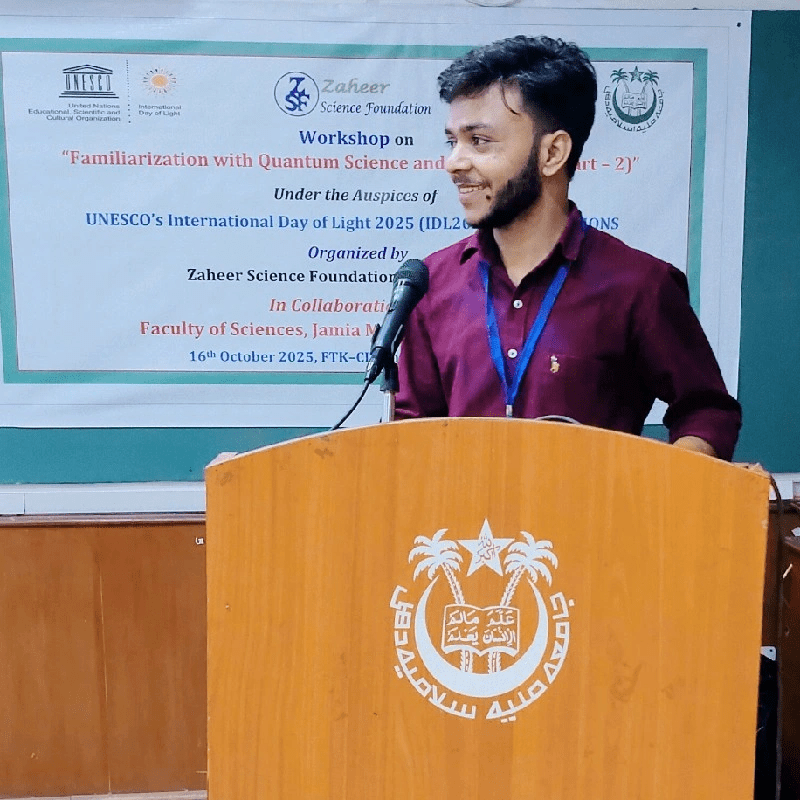
Adnan Ur Rehman is a physics graduate from Jamia Millia Islamia, education commentator, and contributor to The Chenab Times.