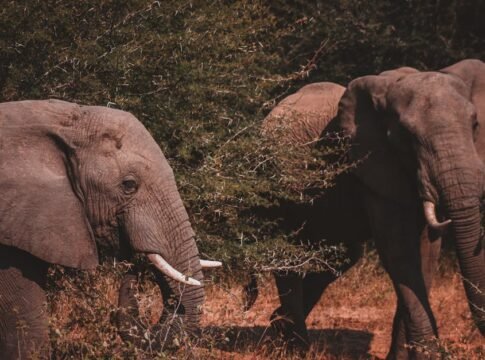
Higher-elevation towns in The Nilgiris district are experiencing increasingly frequent incursions by elephants, raising concerns among residents and wildlife experts about potential conflicts and ecological imbalances. The animals are being drawn to human settlements due to the degradation of their natural habitat and a scarcity of food sources in the upper plateau region.
Expert Concerns Over Habitat Degradation
Information was available with The Chenab Times indicating that elephant populations are increasingly venturing into areas like Udhagamandalam town. This behaviour is attributed by wildlife experts to the severely degraded state of forests on the upper plateau, which are unable to provide adequate natural fodder. As a result, elephants may resort to foraging in garbage dumps within towns, posing further risks to both wildlife and human health.
The expert pointed out that a lack of natural food sources in the upper plateau forests compels elephants to seek sustenance elsewhere. This often leads them into areas inhabited by humans, creating a cycle of conflict. The presence of elephants in towns like Udhagamandalam, a popular tourist destination, also raises concerns about public safety and potential damage to property. Wildlife officials are reportedly monitoring the situation closely, but the underlying issue of habitat degradation remains a significant challenge.
Udhagamandalam, commonly known as Ooty, and its surrounding higher-elevation areas have historically been home to diverse wildlife, including elephants. However, the ecological balance has been increasingly disturbed by human activities such as urbanization, agriculture, and deforestation. This has resulted in a shrinking and fragmented habitat for the elephants, forcing them to adapt their behaviour and range in search of food and water.
Ecological Impact and Potential Solutions
The expert also highlighted that the reliance of elephants on artificial food sources, such as garbage, can have detrimental effects on their health and natural behaviour. It can lead to dependency on human-provided food, reducing their natural foraging instincts and potentially making them more aggressive when their food source is unavailable. Furthermore, the presence of elephants in urbanised areas increases the risk of human-wildlife conflict, which can result in injuries or fatalities for both elephants and humans, and also damage to crops and property.
Addressing the issue requires a multi-pronged approach. Conservationists and forest department officials are exploring various strategies to mitigate human-elephant conflicts. These include strengthening anti-poaching patrols, creating and maintaining natural corridors for wildlife movement, and promoting afforestation drives using native species that can restore the natural fodder base. Efforts are also underway to create awareness among local communities about safe coexistence with wildlife and to implement measures that deter elephants from entering human settlements, such as electric fencing and the use of early warning systems.
The situation in The Nilgiris underscores the broader challenge of human-wildlife conflict that is prevalent across India. As human populations expand and natural habitats shrink, the interface between humans and wildlife becomes more frequent. Sustainable land-use planning, effective conservation policies, and community involvement are crucial for ensuring the long-term survival of species like elephants and for fostering harmonious coexistence between humans and wildlife.
The forest department has acknowledged the growing problem and is reportedly coordinating with local authorities and conservation groups to devise immediate and long-term solutions. The emphasis is on understanding elephant behaviour patterns, identifying critical habitats, and implementing measures that reduce the likelihood of incursions while ensuring the welfare of both the animals and the residents of the affected towns in The Nilgiris.
❤️ Support Independent Journalism
Your contribution keeps our reporting free, fearless, and accessible to everyone.
Or make a one-time donation
Secure via Razorpay • 12 monthly payments • Cancel anytime before next cycle


(We don't allow anyone to copy content. For Copyright or Use of Content related questions, visit here.)

The Chenab Times News Desk