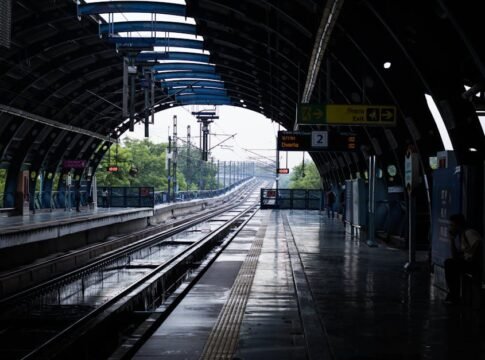
The Delhi Metro Rail Corporation (DMRC) is set to enhance the city’s public transportation network with the development of a new 3.9-kilometer elevated corridor connecting Tughlakabad and Kalindi Kunj. This project, an extension of the ongoing Golden Line, aims to significantly improve connectivity in South and Southeast Delhi, reduce travel times, and ease traffic congestion.
Project Details and Objectives
The Tughlakabad–Kalindi Kunj corridor will feature three elevated stations: Sarita Vihar Depot, Madanpur Khadar, and Kalindi Kunj. The project is a crucial part of Phase V(A) of the Delhi Metro expansion and has received approval from the Union Cabinet. The estimated cost for this section is approximately ₹1,024.87 crore, with the Delhi government contributing ₹251.36 crore. The tender for appointing a detailed design consultant for these stations has been floated, marking a significant step towards the project’s implementation. The consultancy contract has an estimated value of ₹2.4 crore and a completion period of 48 months.
Information was available with The Chenab Times that the Tughlakabad-Kalindi Kunj corridor is expected to provide direct connectivity between South Delhi and the Yamuna riverfront, improving access to nearby regions and reducing reliance on road transport. This extension is anticipated to strengthen last-mile connectivity along key residential and transit zones, making daily commutes smoother for a substantial number of residents.
Strategic Importance and Connectivity Boost
The new corridor is strategically positioned to benefit commuters traveling between Noida, Faridabad, and Gurgaon, offering a more direct and efficient metro link. The extension is part of the broader Golden Line, which connects Aerocity to Tughlakabad, and its development is expected to alleviate pressure on existing interchange stations and reduce travel delays. The union minister Ashwini Vaishnaw had previously highlighted that commuters between Noida and Faridabad and Gurgaon would benefit from this new link. The Tughlakabad-Kalindi Kunj corridor is projected to experience heavy ridership from its inception.
Broader Delhi Metro Expansion
This development is occurring alongside other significant expansions within the Delhi Metro network. Phase IV of the Delhi Metro, comprising 111 km and 83 stations, is nearing completion, with approximately 80.43% of civil construction done. The Phase IV priority corridors are anticipated to be completed in stages by December 2026. The Magenta Line (Line-8) is also set to become the longest in the network, stretching approximately 89 kilometers from Botanical Garden to Inderlok, with an extensive 21 interchange stations planned, including Kalindi Kunj. This expansion includes extensions from Ramakrishna Ashram Marg to Indraprastha via Central Vista under Phase V(A) and the Indraprastha–Inderlok corridor under Phase IV. Once fully operational, these extensions will enhance cross-city connectivity, reduce road congestion, and contribute to mitigating vehicular pollution.
The DMRC has indicated that some sections of the Golden Line, including the Tughlakabad-Aerocity stretch, may become operational by the end of 2026, with the entire project slated for completion by March 2026. The Golden Line, previously known as the Silver Line, will connect Indira Gandhi International Airport (T1 and T3) directly to Tughlakabad, further streamlining travel for airport-bound passengers. Currently, over 71.3% of the work on the Tughlakabad-Aerocity Golden Line has been completed, with five tunnel boring machines actively engaged in tunneling operations between Aerocity and Vasant Kunj.
❤️ Support Independent Journalism
Your contribution keeps our reporting free, fearless, and accessible to everyone.
Or make a one-time donation
Secure via Razorpay • 12 monthly payments • Cancel anytime before next cycle


(We don't allow anyone to copy content. For Copyright or Use of Content related questions, visit here.)

The Chenab Times News Desk