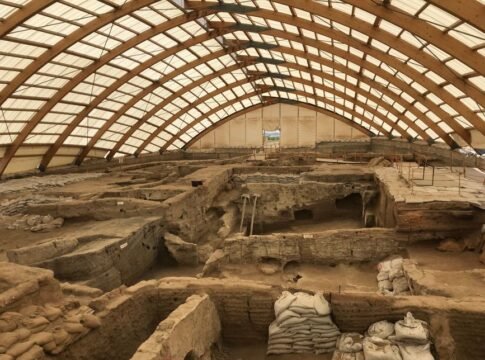
The Archaeological Survey of India (ASI) has initiated a review of the comprehensive 982-page report detailing the Keeladi excavation findings in Tamil Nadu, signalling a deepening disagreement between the archaeological body and the lead archaeologist over the interpretation and publication of the site’s history.
Information was available with The Chenab Times indicating that the Director General of the ASI has formally communicated his decision to a Member of Parliament from Tamil Nadu, stating that an internal committee will re-examine the report. This move comes in response to alleged “deficiencies” identified by the ASI, a contention strongly disputed by archaeologist Amarnath Ramakrishna.
Ramakrishna, who spearheaded the excavations at the Keeladi site, maintains that his findings are conclusive and present a significant early urban Tamil civilization dating back to 800-500 BCE. He asserts that the report, which he has finalized based on extensive fieldwork and analysis, should not be subjected to further alteration or reinterpretation by an external body, especially one within the ASI itself.
The directive for an internal review follows a court order that mandated the publication of the Keeladi excavation report. This deadline has now elapsed without the report being officially released to the public, adding a layer of legal urgency and public anticipation to the unfolding dispute. The ASI’s decision to withhold or delay publication pending an internal review suggests a significant divergence in opinion regarding the scientific integrity and conclusions of the extensive archaeological work conducted.
Keeladi, located in the Sivaganga district of Tamil Nadu, has yielded a wealth of artefacts, including pottery, tools, and structural remains, which have been central to discussions about the antiquity and sophistication of early Tamil settlements. Ramakrishna and his team have presented evidence suggesting a well-established urban centre with sophisticated craftsmanship and trade networks existing centuries earlier than previously widely accepted timelines for such developments in the region.
The ASI’s stance, as conveyed by its Director General, highlights concerns about the methodology, data interpretation, or the overall conclusions drawn in Ramakrishna’s report. The specifics of these “deficiencies” have not been publicly detailed, leading to speculation about the nature of the disagreement. However, the fact that an internal committee is being formed suggests that the ASI leadership is looking for an official reassessment from within its own ranks before endorsing or rejecting the report’s findings.
The controversy raises broader questions about the autonomy of archaeologists in presenting their findings and the internal review processes within national heritage organizations. The pressure to publish, coupled with the potential for significant historical revision, often places archaeologists in a challenging position. In this instance, the involvement of a Member of Parliament indicates the matter has gained political attention, underscoring its perceived importance to the cultural heritage narrative of Tamil Nadu and India.
Archaeological findings, particularly those that push back established timelines for civilization, are often subject to rigorous scrutiny. However, the dispute over the Keeladi report appears to have moved beyond standard academic debate into a conflict that involves institutional directives and potentially legal oversight, given the court’s previous intervention. The outcome of the ASI’s internal review will likely have a significant impact on the scholarly understanding of early urbanism in South India and the ongoing discourse surrounding the region’s rich historical legacy.
❤️ Support Independent Journalism
Your contribution keeps our reporting free, fearless, and accessible to everyone.
Or make a one-time donation
Secure via Razorpay • 12 monthly payments • Cancel anytime before next cycle


(We don't allow anyone to copy content. For Copyright or Use of Content related questions, visit here.)

The Chenab Times News Desk