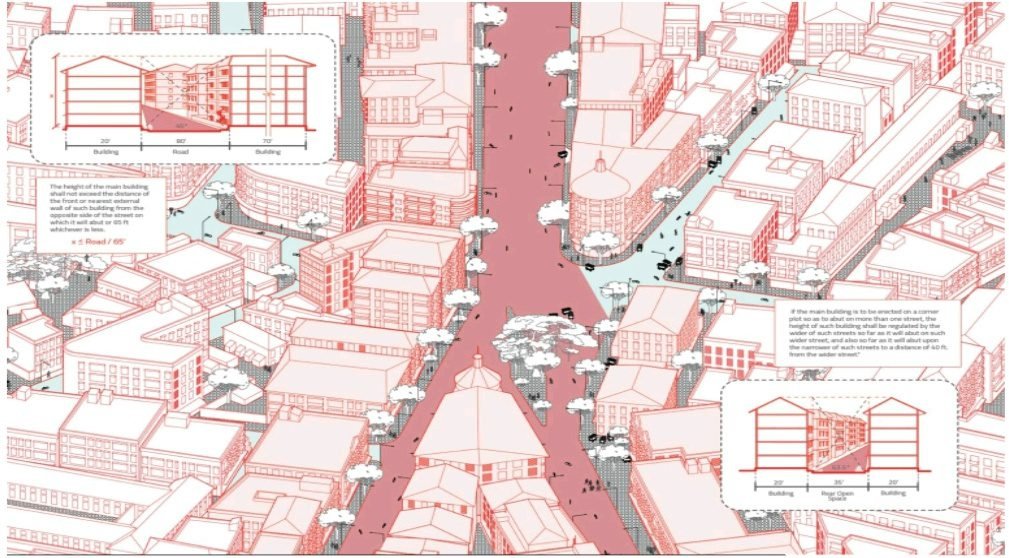
A bustling metropolis on Maharashtra’s coast, Mumbai is India’s biggest and densest urban area, blessed with an indomitable spirit. As the city’s architectural heritage is a mix of Gothic, Victorian, and Art Deco styles, older administrative and commercial buildings are gradually being replaced by skyscrapers and multistory concrete blocks.

In research by Ar. Sameep Padora, presented in an ice factory turned cultural center, IFBE, Mumbai, which complimented the research in the sense of bringing forward the current challenges that the city is negotiating, especially by questioning how we can deal with the ageing built stock of the city. Hence, he tried to trace and contextualise the development of Mumbai’s built form. In 2016, while developing a housing project, he did field studies and found beautiful examples of housing types responsive to the need for light and ventilation in those homes embedded in the city, which were published as a book called In the Name of Housing.
The next question was why some of these elements that create sensitive living environments from a physical or social health point of view were no longer possible. Building codes/development plans regulate the built form of the city today, of which housing is a majority, which became a natural progression to the research. The megacity of Mumbai is at the verge of another paradigmatic shift in how its urban form will be produced, which will have serious implications for livability and the city’s work. One of the key factors in this shift would be the Development Control Regulations (DCR) and the Development Plan. A study like this is hoped to offer key insights into the history of development plans and regulations in the city, and by examining the history and impacts of development plans and regulations in the city, this study would offer key insights for the future consideration of a DCR.

The research covered the building regulations that emerged in 1896 from the plague to the modern building regulations of today, signifying the two very different timelines.

The first point was post the plague, as new sets of laws were written to enable better light and ventilation for the residents of the city, and the second was the Doctors For You report from 2018, attributing the ill health of the residents of three colonies, who were surveyed in Mumbai, due to the lack of light and ventilation as a result of the poor planning and design of the buildings they lived in.
The city seemed to have come full circle. Where the regulations started off to improve living conditions, they have come back to reversal in today’s times. The pandemic has only brought to light a condition that has existed for a while now. Any regulations governing the distance between buildings, light ventilation, and how the building interacts with the city are critical to the overall quality of life.
Resilience planning is also essential. the impending threat of climate change and flooding. There is no one right solution to the problems, but rather an ecosystem/network of agencies that need to come forward and first accept and acknowledge the challenges.
❤️ Support Independent Journalism
Your contribution keeps our reporting free, fearless, and accessible to everyone.
Or make a one-time donation
Secure via Razorpay • 12 monthly payments • Cancel anytime before next cycle


(We don't allow anyone to copy content. For Copyright or Use of Content related questions, visit here.)

Ar. Kritika Juneja is an Architect, Architecture journalist and Founder Arch Valor.