


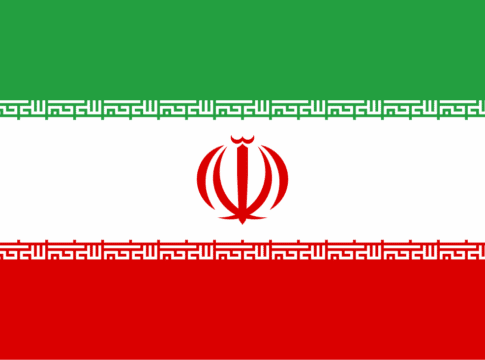
Pakistan announced on Sunday that it would soon host talks between the United States and Iran, though neither Washington nor Tehran immediately confirmed the development. It remained unclear whether any discussions on the ongoing conflict would be direct or indirect.
According to details received by The Chenab Times, Pakistan’s Foreign Minister Ishaq Dar stated after meetings with top diplomats from Turkey, Egypt, and Saudi Arabia in Islamabad that Pakistan was pleased to be trusted by both Iran and the U.S. to facilitate the discussions. He added that Pakistan would be honoured to host and facilitate meaningful talks in the coming days. The foreign ministry did not respond to queries, and Iran’s mission to the United Nations declined to comment.
Iran Issues Stark Warning
Earlier, Iran’s parliament speaker, Mohammad Bagher Qalibaf, dismissed the planned talks in Pakistan as a mere ‘cover.’ This statement came amid reports of approximately 2,500 U.S. Marines arriving in the Middle East, trained for amphibious landings. According to state media, Qalibaf warned that Iranian forces were prepared to ‘set on fire’ any American troops who entered the region, vowing to punish their regional partners.
Iran also issued threats to target the homes of U.S. and Israeli ‘commanders and political officials’ in the region. A spokesperson for Iran’s military joint command cited alleged ‘targeting of residential homes of the Iranian people in various cities’ and other ‘malicious actions’ as justification for such potential responses, state media reported.
Regional Tensions Escalate
In Israel, Prime Minister Benjamin Netanyahu announced that the military would expand its invasion of Lebanon, intending to widen the ‘existing security strip’ in the country’s south. The primary target of this expanded operation would be the Iranian-backed Hezbollah militant group, though specific details were not released.
The conflict has had a significant impact on global supply chains, threatening the availability of oil, natural gas, and fertilizer, and disrupting international air travel. Iran’s control over the Strait of Hormuz has already caused market volatility. The involvement of Iran-backed Houthi rebels in the conflict further jeopardizes shipping routes through the Bab el-Mandeb strait, a crucial waterway leading to the Red Sea.
Military Actions and Casualties
The Israeli military reported on Monday morning that its air force had intercepted two drones launched from Yemen. On Sunday, the military also stated that its fighter jets had dropped over 120 munitions in Tehran within the preceding 24 hours, targeting facilities involved in weapons research, development, and production. Concurrently, Iranian state television reported that power had been restored to areas of Tehran that had experienced outages following attacks on electricity infrastructure.
The Iranian-backed Houthi rebels claimed responsibility for their first attack in the current war, a missile fired at Israel that was intercepted early Saturday morning. The current conflict, which began with U.S. and Israeli strikes on Iran, has triggered retaliatory attacks by Iran against Israel and U.S. military assets in neighbouring Gulf Arab states. The war is also being waged on the digital front.
Diplomatic Efforts Amidst Conflict
Egyptian Foreign Minister Badr Abdelatty indicated that the meetings in Pakistan were aimed at initiating ‘direct dialogue’ between the U.S. and Iran, countries that have largely relied on intermediaries for communication. Pakistan noted that the foreign ministers met on Sunday without the participation of the U.S. or Israel. While Iranian officials have reportedly rejected a U.S. proposal for a peace deal and dismissed negotiations under pressure, Iranian state broadcaster has suggested Tehran has drafted its own five-point proposal.
This proposal reportedly calls for a halt to the killing of Iranian officials, guarantees against future attacks, reparations, and Iran’s ‘exercise of sovereignty over the Strait of Hormuz.’ In a gesture that could be interpreted as a signal of openness, Iran agreed late Saturday to allow 20 additional Pakistani-flagged vessels to transit through the Strait of Hormuz. Asif Durrani, Pakistan’s former ambassador to Iran, stated this move indicated Iran remains ‘open for business with the world, provided the United States abandons coercion.’
Rising Death Toll Reported
In Lebanon, officials reported that over 1,200 people have been killed. Fears of further casualties were amplified following Prime Minister Netanyahu’s announcement of an expanded invasion of southern Lebanon, aimed at targeting Hezbollah. Netanyahu stated that Hezbollah ‘still has residual capability to fire rockets at us.’
Iranian authorities have reported that more than 1,900 people have died within the Islamic Republic, with 19 reported deaths in Israel. In Iraq, where Iranian-supported militia groups have joined the conflict, 80 members of the security forces have been killed. Twenty people have died in Gulf states, and four have been killed in the occupied West Bank. Thirteen U.S. service members have also been killed in the war.
❤️ Support Independent Journalism
Your contribution keeps our reporting free, fearless, and accessible to everyone.
Or make a one-time donation
Secure via Razorpay • 12 monthly payments • Cancel anytime before next cycle


(We don't allow anyone to copy content. For Copyright or Use of Content related questions, visit here.)

The Chenab Times News Desk


