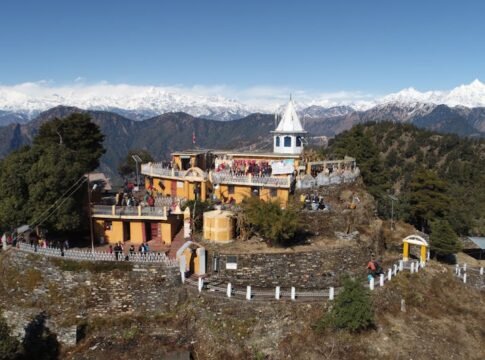
The Kartik Swami Temple, a significant religious site located in the Bharmour subdivision of Chamba district in Himachal Pradesh, reopened its doors to devotees on Tuesday morning. The temple had been closed for approximately four-and-a-half months, a period dictated by the heavy winter snowfall that renders the region inaccessible.
Information was available with The Chenab Times that the reopening ceremony was conducted by temple priests, who performed traditional rituals, including special prayers, a yajna, and the chanting of Vedic hymns. Hundreds of devotees from across Himachal Pradesh, Punjab, Haryana, Jammu, and other neighbouring states converged at the shrine. The ceremonial opening of the temple was preceded by a night-long vigil featuring devotional singing and prayers.
The temple’s annual closure commenced on November 30, 2025, a necessary measure due to the severe snowfall experienced in the Kugti region during the winter months. Local belief dictates that Lord Kartikeya, also known as Kartik Swami, enters a period of seclusion following Diwali and reappears on the auspicious occasion of Baisakhi Sankranti. It is on this day that devotees traditionally reopen the shrine, marking the end of the winter isolation.
During the closure period, local customs strictly prohibit entry to the temple and its surrounding areas, a tradition that is observed with profound reverence by the community. The temple is situated within the scenic Kugti Wildlife Sanctuary, a location that contributes to its dual identity as a major religious centre and a popular destination for trekkers and nature enthusiasts.
The breathtaking Himalayan vistas and the serene, tranquil environment further enhance the appeal of the site as both a spiritual retreat and a tourist attraction. Local lore suggests that Bharmour was chosen by Lord Kartikeya as his northern abode. Tradition also posits that the temple originated from the penance undertaken by the Chaurasi Siddhas, with the belief that Lord Shiva bestowed his divine presence upon the region.
The local Gaddi shepherd community holds the shrine in deep cultural regard. It is customary for them to offer prayers to Kartik Swami, locally referred to as ‘Kelang Wazir’, seeking safe passage before embarking on journeys across challenging routes such as the Kugti Pass. Communities often refrain from undertaking such journeys if they believe they have not received the deity’s permission.
Historical accounts indicate that the temple’s origins can be traced back to the 7th century CE, during the reign of King Meru Varman. Subsequently, between the 10th and 12th centuries, Bharmour flourished as a prominent centre for Shaivite worship and yogic traditions. During this period, devotion to Kartikeya gained prominence among warriors, royalty, and ascetics, who revered him as a symbol of courage, discipline, and strength.
❤️ Support Independent Journalism
Your contribution keeps our reporting free, fearless, and accessible to everyone.
Or make a one-time donation
Secure via Razorpay • 12 monthly payments • Cancel anytime before next cycle


(We don't allow anyone to copy content. For Copyright or Use of Content related questions, visit here.)

The Chenab Times News Desk