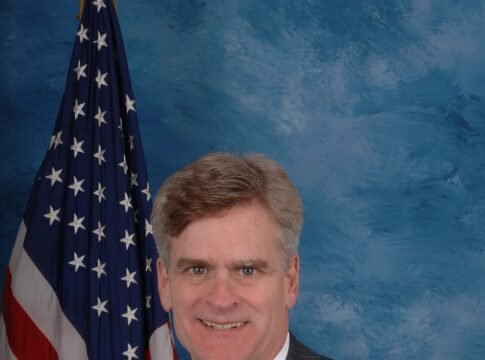
Incumbent U.S. Senator Bill Cassidy has been eliminated from the Republican primary in Louisiana, failing to advance to the runoff election. The contest, held on May 16, 2026, saw Representative Julia Letlow and State Treasurer John Fleming secure the top two spots, pushing Cassidy to a third-place finish.
The outcome represents a significant defeat for Cassidy, who was seeking a third term in the U.S. Senate. His elimination is largely attributed to his vote to convict former President Donald Trump in his second impeachment trial following the January 6, 2021, Capitol attack. Trump actively campaigned against Cassidy, endorsing Letlow and calling for the incumbent’s ouster.
Letlow secured a leading position in the primary with 45.2% of the vote, while Fleming followed with 28.3%. Cassidy garnered 24.4% of the votes, insufficient to proceed to the runoff. The race now moves to a runoff election scheduled for June 27, 2026, between Letlow and Fleming. The winner of that contest will face the Democratic nominee in the general election on November 3, 2026.
Cassidy’s vote to convict Trump was a pivotal moment that alienated a significant portion of the Republican base in Louisiana. The state’s Republican Party had censured Cassidy following his vote, and Trump’s influence was evident in his direct endorsement of Letlow, who he described as a “winner who will NEVER let you down.” This intervention by the former president was a critical factor in Cassidy’s defeat, marking him as the most prominent Republican senator targeted by Trump for primary defeat in this cycle.
The election dynamics were further shaped by changes to Louisiana’s primary system, with Governor Jeff Landry, a Trump ally, instrumental in implementing a semi-closed primary system. This change, in contrast to the previous open “jungle” primary, aimed to prevent Cassidy from drawing votes from non-GOP voters, thus bolstering the prospects of Trump-aligned candidates.
Letlow, a freshman congresswoman, had accused Cassidy of disloyalty to the GOP, arguing that Louisiana voters deserved a senator who would consistently support the party. Cassidy, a physician by training and chairman of the Senate Health, Education, Labor, and Pensions (HELP) Committee, defended his record, pointing to legislative accomplishments while also engaging in public disagreements with Trump administration policies on occasion. His stance on certain vaccine-related issues and his opposition to some Trump-backed nominations had previously drawn criticism.
Cassidy’s loss marks a significant event in the Senate, being the first sitting senator to lose a primary election since 2017. His defeat underscores the continued strong influence of former President Trump within the Republican Party, particularly in primary contests where his endorsements and opposition carry substantial weight.
The general election in November will determine who ultimately fills the seat currently held by Cassidy, who first entered the U.S. Senate in 2015. The outcome of this race will also have implications for the partisan balance of the U.S. Senate in the 120th Congress.
❤️ Support Independent Journalism
Your contribution keeps our reporting free, fearless, and accessible to everyone.
Or make a one-time donation
Secure via Razorpay • 12 monthly payments • Cancel anytime before next cycle


(We don't allow anyone to copy content. For Copyright or Use of Content related questions, visit here.)

Global Affairs Desk at The Chenab Times covers international developments, global diplomacy, and foreign policy issues through fact-based reporting, explainers, and analytical pieces. The desk focuses on major geopolitical events, diplomatic engagements, and international trends, with an emphasis on verified information, multiple perspectives, and contextual understanding of global affairs.