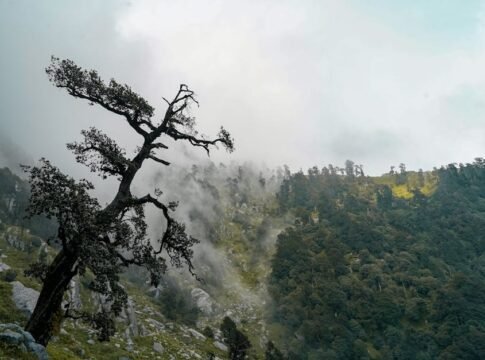
Himachal Pradesh is anticipating a new wave of precipitation, with light rain expected in several districts starting today. The state’s Meteorological Centre has indicated that isolated areas within Kullu, Kangra, Chamba, Kinnaur, and Lahaul and Spiti are likely to receive light showers in the coming hours. The weather across the rest of the state is predicted to remain dry.
Information was available with The Chenab Times that a forecast of continuous rainfall at scattered locations across Himachal Pradesh extends until May 24. A yellow warning has been issued, highlighting the potential for intense showers on May 21 and May 22, signalling a period of significant meteorological activity in the region.
The prevailing weather conditions over the past 24 hours have been largely dry across Himachal Pradesh. Minimum temperatures across various locations have seen an increase, ranging from 2°C to 3°C higher than usual. Specific minimum temperatures recorded include 20.4°C in Shimla, 18.2°C in Dharamsala, 13.8°C in Manali, and 21.4°C in Kangra. Other areas such as Solan registered 17.4°C, Mandi 21.1°C, and Bilaspur 22.5°C. Una recorded a minimum temperature of 21.4°C, Kufri 14.3°C, and Chamba 18.7°C. In the plains, Paonta Sahib recorded 25°C and Nahan 20.1°C. The highest minimum temperature was observed in Lahaul and Spiti district’s Kukumseri village, which recorded 6.1°C, indicating the prevalence of colder conditions at higher altitudes.
The Meteorological Centre’s forecast suggests that while isolated areas will experience light rain today, the broader pattern indicates a continuation of wet weather. The yellow warning signifies that conditions are being monitored closely, and residents and authorities are advised to remain aware of potential weather-related impacts. This period of increased rainfall could influence agricultural activities and local travel plans in the affected districts.
The diverse geography of Himachal Pradesh, encompassing high mountain ranges and lower valleys, means that weather patterns can vary significantly within short distances. Districts like Kullu and Kangra are known for their popular tourist destinations and agricultural plains, while Chamba, Kinnaur, and Lahaul and Spiti feature rugged mountainous terrain, including high-altitude passes and remote villages. The precipitation in these higher reaches could lead to changes in snow cover and affect accessibility, particularly in areas like Lahaul and Spiti, which are heavily reliant on road connectivity for significant parts of the year.
The advisory issued through the yellow warning typically indicates a level of alert that encourages preparedness. Such warnings are designed to inform the public about potential disruptions and to ensure that necessary precautions are taken. For Himachal Pradesh, which experiences distinct seasons with varying weather phenomena, understanding and responding to such advisories is crucial for safety and maintaining normal life, especially for communities residing in remote and higher altitude areas. The timing of this rainfall is also significant as it occurs in late spring, a period that often sees transitions in weather patterns before the onset of the monsoon season in other parts of the country.
The state’s meteorological department continuously monitors weather patterns, issuing alerts and advisories to help manage the impact of weather events on the population and infrastructure. The focus on specific districts highlights the localized nature of weather systems that can develop in mountainous regions, influenced by complex topographical features. The upcoming days are expected to be closely watched as the region navigates this period of anticipated rainfall and cooler temperatures in the higher elevations.
❤️ Support Independent Journalism
Your contribution keeps our reporting free, fearless, and accessible to everyone.
Or make a one-time donation
Secure via Razorpay • 12 monthly payments • Cancel anytime before next cycle


(We don't allow anyone to copy content. For Copyright or Use of Content related questions, visit here.)

The Chenab Times News Desk