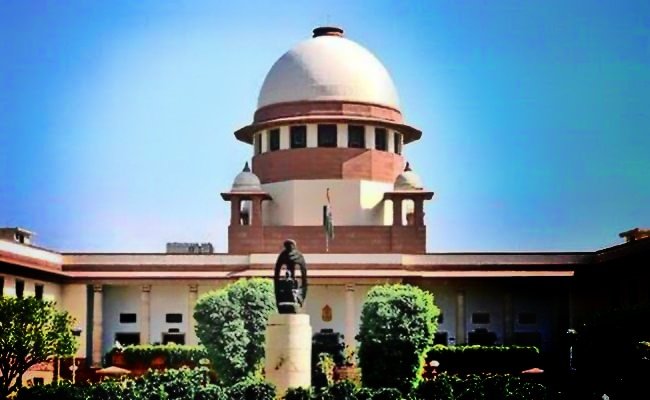
The Supreme Court has taken serious note of an extraordinary 40-year delay in the disposal of a murder case by the Allahabad High Court, highlighting the persistent issue of judicial backlog in India. The court’s observation came during the hearing of an appeal filed by Vijay Singh, who has been under the shadow of a criminal conviction for four decades.
Information was available with The Chenab Times indicating that the apex court’s concern stems from the appellant’s plight, who stated he is now 72 years old and has spent his entire adult life, from youth through middle age and into old age, awaiting the final resolution of his case. This extended judicial process underscores a critical challenge facing the Indian judiciary, where inordinate delays can undermine the very principles of justice.
The Supreme Court’s intervention is expected to put pressure on the Allahabad High Court to expedite the pending matter. While the specific details of the murder case were not elaborated upon in the Supreme Court’s remarks, the sheer duration of the legal proceedings has raised significant questions about the efficiency and effectiveness of the judicial system in handling serious criminal appeals. Such delays can have profound psychological and social impacts on the individuals involved, as well as erode public trust in the administration of justice.
Judicial backlog is a multifaceted problem in India, stemming from various factors including a high volume of cases, a shortage of judges, inadequate infrastructure, and procedural complexities. The apex court has on numerous occasions expressed its deep concern over the accumulation of pending cases, which often lead to undue hardship for litigants and can result in acquittals due to the inability to prove charges beyond a reasonable doubt after such a long period.
The Chief Justice of India and other senior judges have previously called for reforms aimed at speeding up the judicial process. These proposed reforms often include measures such as increasing the number of judges, simplifying procedural laws, leveraging technology for case management, and promoting alternative dispute resolution mechanisms. The Supreme Court’s observation in this particular case serves as a stark reminder of the urgency required to address these systemic issues.
The Allahabad High Court, being one of the oldest and largest high courts in India, handles a substantial number of cases. Delays in such a prominent institution can have a ripple effect across the judicial hierarchy. The court’s directive to seek solutions implies an expectation for tangible steps to be taken to clear the existing backlog and prevent future accumulation.
The case of Vijay Singh, now in his seventies, brings into sharp focus the human cost of delayed justice. Spending decades under a cloud of conviction can significantly impact an individual’s life, affecting their reputation, employment opportunities, and personal well-being. The Supreme Court’s engagement with this issue suggests a commitment to ensuring that justice is not only delivered but is also delivered in a timely manner, in line with constitutional principles.
Legal experts have often pointed out that while the right to a speedy trial is a fundamental right, the reality on the ground often falls short. The Supreme Court’s decision to flag such a significant delay is seen as a positive step towards accountability and reform within the judicial system. It is anticipated that this high-level intervention will prompt a thorough review of case management practices at the Allahabad High Court and potentially inspire similar reviews in other judicial bodies across the country.
The apex court’s call for solutions is likely to involve not just the Allahabad High Court administration but also potentially the Union and State governments, as judicial reforms often require legislative and administrative support. Addressing the judicial backlog is crucial for maintaining the rule of law and ensuring access to justice for all citizens. The focus now will be on how effectively the judiciary and executive branches collaborate to implement measures that can drastically reduce case pendency and restore faith in the expeditious delivery of justice.
The ongoing efforts to streamline judicial processes are aimed at making the system more efficient and responsive to the needs of the public. The Supreme Court’s emphasis on this particular case is expected to accelerate the pace of reform discussions and actions. The ultimate goal is to ensure that no citizen has to endure a lifetime of legal uncertainty due to the slow wheels of justice.
❤️ Support Independent Journalism
Your contribution keeps our reporting free, fearless, and accessible to everyone.
Or make a one-time donation
Secure via Razorpay • 12 monthly payments • Cancel anytime before next cycle


(We don't allow anyone to copy content. For Copyright or Use of Content related questions, visit here.)

The Chenab Times News Desk