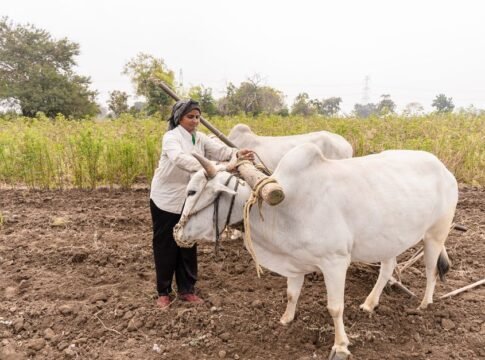
Mumbai: With the monsoon’s delayed onset across Maharashtra, agricultural experts and government bodies are advising farmers to adopt revised sowing strategies to mitigate potential losses. Recommendations include increasing seed usage, adjusting cultivation areas, and opting for shorter-duration crop varieties in response to the erratic rainfall patterns.
Several agricultural universities have put forth contingency measures as part of the state’s Kharif Preparedness Report for 2026-27. These advisories aim to help farmers navigate prolonged delays in rainfall, extended dry spells, and the possibility of drought-like conditions. Farmers have been cautioned against sowing crops like cotton and soybeans beyond the third week of July, as delayed planting could significantly impact yields and escalate financial risks.
Revised Sowing Recommendations
The Dr Punjabrao Deshmukh Krishi Vidyapeeth in Akola has suggested increasing cottonseed usage by up to 20 percent if the monsoon is delayed by two to three weeks. For sowing between July 2 and July 15, they recommend suitable American and indigenous cotton varieties, along with intercropping with jowar and tur. For jowar, an increase in seed usage by 20-25 percent is advised. Similarly, for soybeans, the recommendation is to complete sowing by July 25 and to avoid fresh sowing beyond this period. Crops like moong and urad are not advised for cultivation during these late sowing windows.
If the monsoon delay extends beyond five weeks, more stringent measures are suggested. Farmers are advised to avoid cotton sowing altogether. If sowing is undertaken between July 23 and July 29, opting for indigenous cotton varieties, increasing seed use by 25 to 30 percent, reducing the area under cotton, and prioritizing tur cultivation are recommended. For soybeans, sowing must be completed by July 25, with no fresh sowing advised thereafter.
The Vasantrao Naik Marathwada Krishi Vidyapeeth has developed crop-specific recommendations based on various rainfall scenarios. Their assessment indicates that most kharif crops can be sown if adequate rainfall is received between June 15 and July 7. However, if rains are delayed beyond July 8, farmers are advised to adjust their plans.
Impact on Sowing Progress
The delayed monsoon has already led to a significant slowdown in kharif sowing across Maharashtra. As of mid-June, Maharashtra had received only about 26 percent of its normal rainfall for the first half of June, prompting the state government to advise farmers against rushing into sowing operations. Preparatory agricultural activities, such as nursery raising for paddy and finger millet, are ongoing, but sufficient rainfall is crucial for widespread sowing to commence.
Nationally, Kharif sowing has also begun on a slower note. By early June, approximately 7.25 million hectares had been planted, which is about 200,000 hectares less than the same period last year. This slowdown is occurring amidst concerns over the progress of the southwest monsoon, with El Niño conditions raising the possibility of deficient rainfall in about 200 districts flagged by the agriculture ministry.
Broader Agricultural Context
The Union Agriculture Minister, Shivraj Singh Chouhan, has emphasized the need for proactive measures to address potential impacts of El Niño on rainfall patterns. He has called for advance planning and the development of crop-specific contingency plans in districts likely to experience deficient or uneven rainfall. These plans aim to ensure that farmers receive timely guidance, alternative crop options, and necessary support should weather conditions become challenging.
The government is also focusing on increasing the production of cotton and pulses as part of a broader strategy to enhance agricultural resilience and reduce import dependence. Measures such as improved seed varieties, scientific cultivation methods, moisture conservation techniques, and intercropping are being promoted to boost productivity and farm incomes. The focus on climate resilience is crucial, as rainfall variability can significantly impact sowing decisions, crop output, food prices, and rural incomes.
In Karnataka, sowing has covered only around 20 percent of the targeted area, with some districts showing significantly lower progress. Agriculture Department officials have noted that a prolonged delay could force farmers to shift from longer-duration crops to shorter-duration varieties, potentially affecting overall yield.
❤️ Support Independent Journalism
Your contribution keeps our reporting free, fearless, and accessible to everyone.
Or make a one-time donation
Secure via Razorpay • 12 monthly payments • Cancel anytime before next cycle


(We don't allow anyone to copy content. For Copyright or Use of Content related questions, visit here.)

The Chenab Times News Desk