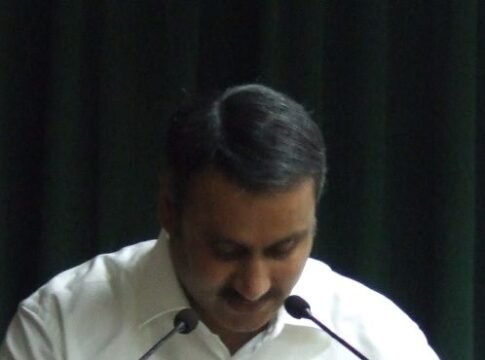
PMK leader Anbumani Ramadoss has advised Tamil Nadu Chief Minister M.K. Stalin against engaging in direct discussions with his Karnataka counterpart regarding the contentious Mekedatu dam project. Instead, Ramadoss suggested that a unified approach involving all political parties in Tamil Nadu would be more effective in addressing the issue.
The Chenab Times has learned that Ramadoss, speaking at a public forum, articulated his stance on the inter-state water dispute, emphasizing the need for a consolidated position from Tamil Nadu. He proposed that the Chief Minister should not proceed with bilateral talks with Karnataka on the Mekedatu dam issue.
Ramadoss elaborated on his proposed alternative strategy, stating that an all-party meeting should be convened within Tamil Nadu. The objective of such a meeting, according to the PMK leader, would be to forge a unanimous decision that reflects the collective will of the state. This unified stance, once decided, should then be presented or pursued in subsequent engagements, whether with the central government or the riparian state.
The Mekedatu dam project has been a persistent point of contention between Tamil Nadu and Karnataka. The project, envisioned by Karnataka, aims to build a balancing reservoir across the river Cauvery near the Mekedatu pylon, with the stated objectives of ensuring drinking water supply to Bengaluru and other nearby areas, as well as generating hydropower. However, Tamil Nadu has consistently opposed the project, citing concerns that it would adversely affect the flow of Cauvery water downstream into its territory, impacting agriculture and water availability in the delta regions.
The dispute has frequently led to heightened political rhetoric and legal challenges. Both states have approached the Supreme Court and the Cauvery Water Management Authority (CWMA) on various occasions concerning water sharing and the Mekedatu project. Tamil Nadu has argued that any such project requires the consent of the neighbouring state and adherence to the established water-sharing awards and decrees.
Ramadoss’s suggestion for an all-party meeting aims to present a united front for Tamil Nadu, potentially strengthening its negotiating position. By involving all major political factions, the move could signify that the state’s stance on the Mekedatu dam is not merely a partisan issue but a matter of common concern for all its people. This approach is often employed in Indian federal politics to demonstrate consensus on sensitive inter-state matters.
The proposed meeting would likely involve discussions on the legal merits of Tamil Nadu’s objections, the potential impact on its water resources, and the broader implications for the state’s agricultural economy. Following a unanimous decision, the state government would then be expected to communicate this collective resolution to the Karnataka government and relevant central authorities, including the Ministry of Jal Shakti and the Cauvery Water Management Authority.
While the Chief Minister of Tamil Nadu has yet to formally respond to Ramadoss’s suggestion, the PMK leader’s intervention highlights the ongoing political dynamics surrounding inter-state water disputes in India. Such disagreements often require delicate diplomatic negotiations, underpinned by strong internal consensus and legal backing, to reach a sustainable resolution.
❤️ Support Independent Journalism
Your contribution keeps our reporting free, fearless, and accessible to everyone.
Or make a one-time donation
Secure via Razorpay • 12 monthly payments • Cancel anytime before next cycle


(We don't allow anyone to copy content. For Copyright or Use of Content related questions, visit here.)

The Chenab Times News Desk