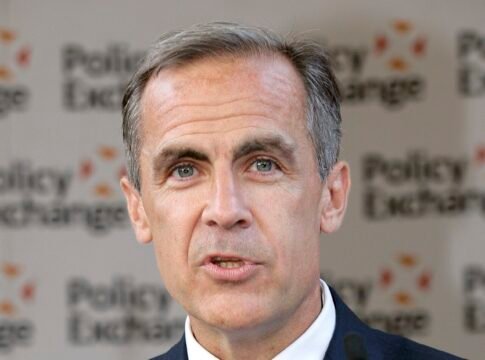
Canadian Prime Minister Mark Carney is embarking on a significant diplomatic mission to Europe, aiming to forge a “unique alliance” with the European Union and deepen strategic ties amidst a volatile global landscape marked by trade disputes and geopolitical shifts. The Prime Minister’s visit, which includes addressing the European Parliament in Strasbourg, comes as Canada seeks to reduce its substantial reliance on trade with the United States.
The initiative to strengthen Canada-EU relations has gained momentum in recent weeks, with European Commission President Ursula von der Leyen publicly inviting Canada to explore becoming the EU’s first “associate member.” This unprecedented proposal, while not a legal status within current EU treaties, signifies a desire to elevate the partnership beyond the existing Comprehensive Economic and Trade Agreement (CETA) and explore deeper cooperation across various sectors.
According to details received by The Chenab Times, the discussions revolve around strengthening economic, technological, and security cooperation. Areas of focus include critical minerals, defense production, artificial intelligence, energy security, and potentially facilitating easier movement for youth to live, work, and study between Canada and EU member states. A more integrated market for financial services is also on the table.
Prime Minister Carney has characterized the push for a closer alliance as a strategic pivot, driven by the need for greater sovereignty and resilience in an increasingly divided world where economic integration is sometimes weaponized. He noted that while the economic component is significant, the ultimate aim is to enhance Canada’s independence and ability to withstand external shocks. The ongoing trade friction with the United States, which has led to retaliatory tariffs and a breakdown in trade talks, has accelerated Canada’s efforts to diversify its international partnerships.
The EU-Canada Comprehensive Economic and Trade Agreement (CETA), which provisionally entered into force in 2017, has already eliminated duties on 99% of tariff lines and significantly boosted bilateral trade in goods and services. In 2025, EU-Canada bilateral trade in goods and services reached approximately €130 billion, an 80% increase since 2016. However, Canada’s trade deficit with the EU was around C$40 billion in the same year, with the EU selling substantially more to Canada than it imports. Despite the existing trade deal, ten EU member states, including France, Italy, and Poland, have yet to complete their national ratification processes for CETA, highlighting ongoing complexities in full implementation.
The proposal for an “associate member” status, while not a formal EU designation, suggests a desire for a partnership that goes beyond typical trade agreements. This could involve a closer alignment on regulatory frameworks, potentially including areas like data protection and artificial intelligence, though Canadian officials have stressed that any agreement must not compromise national sovereignty. German Chancellor Friedrich Merz had previously proposed similar associate membership for Ukraine and other prospective EU members, indicating a broader European discussion about flexible forms of association.
Prime Minister Carney is scheduled to address the European Parliament, where he is expected to articulate his vision for a “unique alliance” with the EU. This initiative is seen by some analysts as a strategic response to the unpredictable nature of international relations under leaders employing protectionist trade policies. The move aims to build stronger connections with a bloc that shares democratic values and a commitment to a rules-based international order, positioning Canada as a key partner in a multipolar world.
The EU-Canada relationship is one of the oldest formal relationships the EU has with an industrialized country, dating back to 1959. The two entities have a broad range of existing agreements, including a strategic partnership and a security and defense pact. Canada also became the first non-European country to join the EU’s Security Action for Europe (SAFE) initiative, a €150 billion loan facility for defense procurement, signaling a growing alignment in security matters.
Future discussions on the proposed alliance are slated for the upcoming EU-Canada summit in Montreal in late October. While the specific terms and implications of an “associate member” status remain to be defined, the diplomatic engagement underscores a mutual ambition to strengthen transatlantic ties and create a more resilient partnership in the face of evolving global challenges.
❤️ Support Independent Journalism
Your contribution keeps our reporting free, fearless, and accessible to everyone.
Or make a one-time donation
Secure via Razorpay • 12 monthly payments • Cancel anytime before next cycle


(We don't allow anyone to copy content. For Copyright or Use of Content related questions, visit here.)

Global Affairs Desk at The Chenab Times covers international developments, global diplomacy, and foreign policy issues through fact-based reporting, explainers, and analytical pieces. The desk focuses on major geopolitical events, diplomatic engagements, and international trends, with an emphasis on verified information, multiple perspectives, and contextual understanding of global affairs.