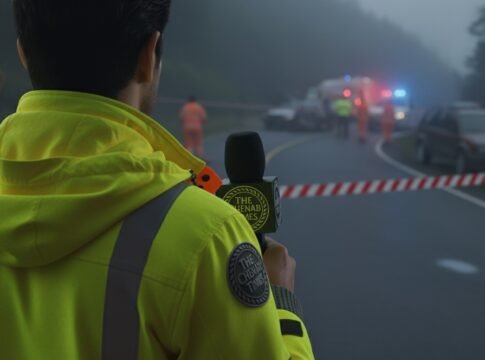
Tamil Nadu is stepping up its efforts to tackle the persistent challenge of road safety, a critical development priority for the state, which has consistently recorded the highest number of road crashes in India. The state government has announced the launch of the Chief Minister’s Road Safety Mission, a comprehensive initiative with an annual allocation of approximately ₹500 crore. This mission aims to unify existing road safety efforts, implement a data-driven State Road Safety Action Plan, and significantly reduce road accidents and fatalities.
The urgency for these enhanced measures is underscored by recent data indicating a high incidence of road crashes and fatalities across the state. According to a study by the Civic Action Group (CAG), Tamil Nadu recorded 67,526 road crashes and 18,441 fatalities in 2024, reinforcing its position as a state with a critical road safety challenge. This alarming trend necessitates a sustained, coordinated, and mission-mode response, moving beyond isolated interventions to a holistic strategy.
Multi-Stakeholder Approach for Enhanced Safety
The Chief Minister’s Road Safety Mission is poised to integrate various facets of road safety management. Key components include technology-enabled enforcement, such as the installation of Automatic Number Plate Recognition (ANPR) cameras along all State and National Highways to monitor vehicle speeds and registration numbers. This technological push aims to deter speeding, a primary cause of fatalities, and improve overall traffic compliance.
Furthermore, the mission will focus on strengthening emergency response systems. This involves upgrading government health facilities, particularly those located near accident-prone areas, into dedicated emergency response centers. The initiative also plans to link these upgraded facilities with accident hotspots and provide ambulances equipped with doctors and life-saving equipment. This strategic enhancement of post-crash care is crucial for reducing fatalities, as demonstrated by previous efforts that improved response times through dedicated helplines and proactive ambulance deployment.
Data-Driven Strategies and Policy Revision
A central tenet of Tamil Nadu’s road safety strategy is the adoption of a data-driven approach. The state has a history of utilizing scientific methods, including a web-enabled GIS-based Road Accident Database Management System (RADMS), which maps accidents, identifies black spots, and guides corrective actions. This system has served as a template for national replication, highlighting Tamil Nadu’s pioneering role in road safety data management.
However, stakeholders have called for an immediate revision of the Tamil Nadu Road Safety Policy, originally framed in 2007, which has not been updated despite evolving road safety concerns and crash dynamics. The demand for a revised policy, emphasized at a recent road safety conference in Tiruchi, highlights the need for contemporary strategies that address emerging challenges and align with national and global safety targets, such as the UN’s Second Decade of Action for Road Safety aiming to halve road fatalities by 2030.
Addressing Root Causes and Public Engagement
The ongoing efforts also focus on addressing fundamental causes of accidents, including speeding, wrong-side driving, and drunken driving. Enforcement activities have been intensified, with stricter measures on six major traffic violations: speeding, overloading, carrying passengers in goods carriages, drunken driving, red light jumping, and mobile phone usage while driving. Driving licenses are being suspended or cancelled for repeat violations, with significant numbers of licenses suspended for drunken driving and mobile phone use in recent years.
Public engagement and awareness campaigns are also integral to the road safety mission. Initiatives aim to educate road users on safe practices, normalize compliance with traffic rules, and foster a culture of safety. The state’s experience with previous awareness programs, including those targeting schools and two-wheeler showrooms, underscores the importance of continuous public outreach in achieving behavioral change.
Focus on Infrastructure and Enforcement
Improving road infrastructure remains a key priority. This includes the identification and rectification of accident-prone ‘black spots’, enhancing road signage, implementing traffic-calming measures such as speed breakers and rumble strips, and ensuring adequate footpaths. The role of independent, third-party technical agencies in inspecting road quality and safety is also being considered to ensure adherence to Indian Roads Congress standards.
The state’s commitment to a ‘safe systems approach’ is evident in its multi-pronged strategy, which combines engineering improvements, rigorous enforcement, enhanced emergency medical care, and continuous public education. This integrated approach is essential to combat the scale of the road safety challenge and work towards the ambitious goal of significantly reducing road crashes and fatalities in Tamil Nadu.
❤️ Support Independent Journalism
Your contribution keeps our reporting free, fearless, and accessible to everyone.
Or make a one-time donation
Secure via Razorpay • 12 monthly payments • Cancel anytime before next cycle


(We don't allow anyone to copy content. For Copyright or Use of Content related questions, visit here.)

The Chenab Times News Desk