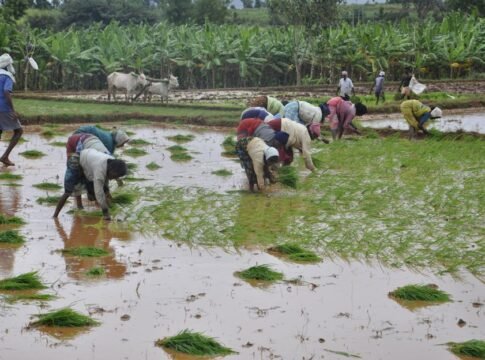
Farmers in Kalaburagi district, Karnataka, are facing a severe crisis as a prolonged dry spell and delayed monsoon threaten their livelihoods, particularly impacting the region’s significant sugarcane cultivation. The situation has worsened to the extent that some farmers have been forced to destroy their standing crops, unable to sustain them due to acute water scarcity. Reports indicate that sugarcane farmers are seeking substantial compensation for their losses, with some demanding as much as ₹50,000 per acre, as sugar mills grapple with an impending shortage of cane.
Drought Conditions Intensify in Kalaburagi
The Kalaburagi district has been grappling with a weak and delayed monsoon, leading to a drastic reduction in water availability. The Bhima River, a primary source of irrigation for the region, has reportedly run almost dry, exacerbating the water shortage across taluks such as Afzalpur, Jevargi, and Shahabad. Farmers who had invested heavily in seeds and cultivation are now watching their crops wither, with little hope of relief unless significant rainfall occurs soon.
In a poignant example of the distress, a sugarcane farmer from Allagi village in Afzalpur taluk was forced to plough his four-acre crop back into the soil after investing approximately ₹2 lakh. The farmer, Sharanappa Pujari, explained that the lack of rainfall made it impossible to sustain the crop, which he had planted in December. He cited the increasing cost of water from tankers and the uncertainty of rain as primary reasons for taking the drastic step, estimating that he would have incurred even greater losses had he continued to maintain the crop.
Impact on Sugarcane Cultivation and Economic Hardship
While the sugarcane acreage in Kalaburagi has seen an increase, reaching up to 40,000 hectares, the current drought conditions pose a significant threat to this expansion. Farmers are not only facing the loss of their current crops but also the financial burden of loans taken for cultivation. The failure of the southwest monsoon has left farmers who invested in seeds and agricultural inputs in distress, with sowing operations significantly delayed or abandoned in many areas.
Beyond sugarcane, other crops like red gram, black gram, green gram, and soybean are also showing signs of severe moisture stress, contributing to a broader agricultural crisis in the Kalyana Karnataka region. The falling groundwater levels and drying water bodies have also intensified the drinking water crisis for both people and livestock, compounding the challenges faced by the farming community.
Farmers’ organizations have been vocal in their demands for government intervention, including declaring the district drought-hit, providing substantial compensation per acre, waiving agricultural loans, and ensuring timely payments from sugar mills. There are also calls for water release from Maharashtra’s Ujjani reservoir to the Bhima river to alleviate the water shortage.
Government Response and Future Outlook
In response to the escalating crisis, state government officials, including the Urban Development Minister, have reviewed the drought situation in Kalaburagi. The government has emphasized that ensuring drinking water supply for people and livestock is the top priority, with water for crops to be considered subsequently based on reservoir levels. Measures such as drilling borewells in scarcity-hit areas and allocating funds for drought management have been initiated.
However, farmers’ groups have expressed dissatisfaction with the perceived lack of immediate action and continue to demand more robust relief measures. The situation highlights the vulnerability of agricultural production to climate variability and the pressing need for sustainable water management practices and supportive government policies to mitigate the impact of droughts on the farming sector in Karnataka.
❤️ Support Independent Journalism
Your contribution keeps our reporting free, fearless, and accessible to everyone.
Or make a one-time donation
Secure via Razorpay • 12 monthly payments • Cancel anytime before next cycle


(We don't allow anyone to copy content. For Copyright or Use of Content related questions, visit here.)

The Chenab Times News Desk