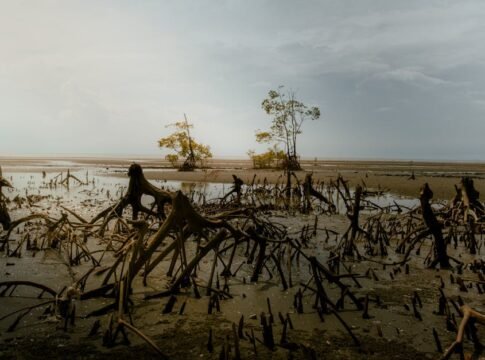
The ambitious Virar-Alibaug Multimodal Corridor project in Maharashtra is moving forward, with authorities indicating that while over 5,000 mangrove trees have been identified within the project’s affected zone, only a fraction are expected to be permanently lost. The Mumbai Metropolitan Region Development Authority (MMRDA) has stated that out of 5,043 mangrove trees situated across 75 hectares, merely 449 are anticipated to be permanently impacted by the construction of elevated road piers.
Environmental Safeguards and Mitigation Plans
Officials from the Maharashtra State Road Development Corporation (MSRDC), which has taken over the project management, have emphasized that most of the affected mangroves will either survive the construction phase or be replanted. The MSRDC plans to replant approximately 730 trees that may be affected by temporary access roads during the construction period. Nearly 3,800 trees are located within working and utility zones and are expected to remain largely unharmed.
To minimize ecological disruption, particularly in eco-sensitive areas such as the Sanjay Gandhi National Park, Tungareshwar Wildlife Sanctuary, and Karnala Wildlife Sanctuary, stretches of the corridor passing through these regions will be elevated. This design aims to facilitate the unimpeded movement of wildlife beneath the structure. The alignment of the corridor itself has undergone modifications in the past to address environmental concerns raised by various stakeholders.
Project Scope and Connectivity
The Virar-Alibaug Multimodal Corridor is a significant infrastructure undertaking designed to enhance connectivity across the Mumbai Metropolitan Region (MMR). The project, estimated to cost Rs 31,793 crore, aims to link Navghar in Virar to Chirner in Uran, spanning approximately 96.41 kilometers for its initial phase. This corridor is envisioned to integrate with several key transportation networks, including the Sewree Nhava Trans Harbour Link, National Highway 4B, the Mumbai-Goa Highway (NH 17), and the Mumbai-Pune Expressway. It is also expected to provide crucial links to the upcoming Navi Mumbai International Airport and the Jawaharlal Nehru Port Trust (JNPT) port.
The corridor is being developed by the MSRDC on a Build-Operate-Transfer (BOT) basis, with private investment funding the entire project. The project’s alignment was initially modified following environmental objections, underscoring the ongoing efforts to balance development needs with ecological preservation. The Maharashtra Coastal Zone Management Authority (MCZMA) has reportedly granted clearance for certain sections of the project, with further environmental clearances being pursued for the remaining portions.
Addressing Environmental Concerns and Past Delays
Environmental clearances have been a critical hurdle for the Virar-Alibaug corridor. Previously, the project faced delays due to concerns about its impact on protected wildlife areas and mangrove ecosystems. Activists and environmentalists have consistently raised alarms about the potential damage to these sensitive zones. In response to these concerns, the MSRDC has reiterated its commitment to implementing mitigation measures, including mangrove replantation and elevated structures in wildlife-heavy areas.
The project’s first phase, covering 96.41 km, has received state approval. The MSRDC is concurrently preparing to float tenders for the broader multimodal ring road project that will connect Mumbai, Thane, and Navi Mumbai. While reports indicate that over 5,000 mangrove trees are within the project’s footprint, the authorities maintain that the permanent loss will be limited to a small percentage, with comprehensive plans for replanting and conservation to offset the impact.
The development of this corridor is expected to significantly reduce travel time between Virar and Alibaug, potentially by up to 50 percent, and foster economic growth by improving connectivity to seven growth centers within the MMR. These include Virar, Bhiwandi, Kalyan, Dombivali, Uran, Taloja, and Panvel.
❤️ Support Independent Journalism
Your contribution keeps our reporting free, fearless, and accessible to everyone.
Or make a one-time donation
Secure via Razorpay • 12 monthly payments • Cancel anytime before next cycle


(We don't allow anyone to copy content. For Copyright or Use of Content related questions, visit here.)

The Chenab Times News Desk