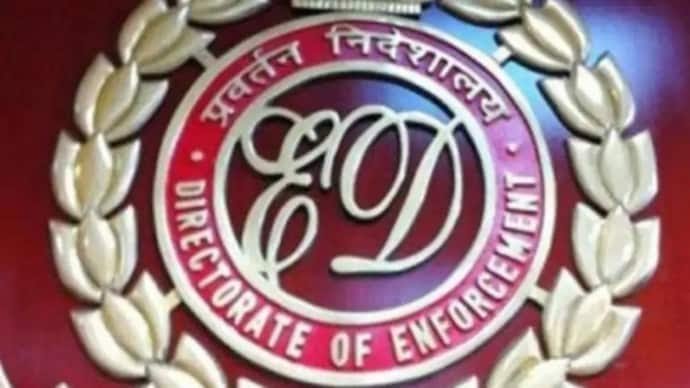
Punjab’s prominent steel hub, Mandi Gobindgarh, is once again under intense scrutiny as the Enforcement Directorate (ED) has uncovered a massive Goods and Services Tax (GST) fraud involving fake invoicing and illicit cash withdrawals totaling Rs 3,089.57 crore. The Directorate has registered a First Information Report (FIR) at the Jamalpur police station in Ludhiana against five businessmen hailing from Mandi Gobindgarh and Fatehgarh Sahib districts, marking a significant development in the ongoing investigation into financial irregularities.
Information was available with The Chenab Times that the FIR was lodged based on a complaint filed by Suraj Kumar Yadav, Assistant Director of the Enforcement Directorate, New Delhi. The accused identified in the case are Amit Kumar Goyal, Manish Kumar, Gaurav Aggarwal, and Balwant Singh, all residents of Mandi Gobindgarh, along with Gurdeep Singh from Amloh. These individuals are reportedly linked to the alleged fraudulent activities that have siphoned off substantial amounts from the government exchequer.
In his complaint to the Ludhiana Police, Mr. Yadav detailed that the ED was actively investigating a series of suspicious transactions suspected to be part of a money laundering scheme. The investigation pointed towards multiple entities allegedly controlled by a single group of individuals who shared common addresses, phone numbers, and email identifications. These entities were allegedly established to obscure high-value fund movements through fabricated GST invoices and substantial cash withdrawals drawn from Agriculture Produce Market Committee (APMC) bank accounts.
The Directorate’s investigation, conducted under the Foreign Exchange Management Act (FEMA), 1999, involved a thorough analysis of bank account statements belonging to various linked entities to trace the flow of funds. The findings revealed a sophisticated modus operandi where payments were received via Real-Time Gross Settlement (RTGS) transfers into the accounts of these purportedly fake firms. Subsequently, these funds were channeled to APMC bank accounts, often operated by proprietorship concerns. This intricate arrangement allegedly facilitated large-scale cash withdrawals, effectively circumventing tax deduction at source (TDS) liabilities mandated under Section 194N of the Income Tax Act, 1961.
The substantial cash withdrawals were reportedly executed through 25 bank accounts maintained across various branches of a private sector bank. Further details within the FIR indicate that the Directorate General of Goods and Services Tax Intelligence (DGGI), Ludhiana Zonal Unit, had previously conducted investigations into fraudulent transactions allegedly perpetrated by Amit Kumar Goyal and his brother and associate, Manish Kumar. The DGGI’s earlier probe had uncovered that Amit Kumar Goyal, Manish Kumar, and Gaurav Aggarwal were instrumental in the creation of 27 fake or bogus firms.
These shell entities were allegedly used as a conduit to siphon off funds and generate fraudulent Input Tax Credit (ITC). Investigators estimate that the network generated and passed on fraudulent ITC amounting to approximately Rs 108.49 crore against total billings of Rs 720.97 crore, resulting in significant wrongful losses to the government. During search operations conducted by the DGGI in Ludhiana, a large cache of incriminating materials was seized, including 54 cheque books, 46 ATM cards, five voter identity cards, 11 PAN cards, seven stamps, multiple mobile phones, hard disks, laptops, and numerous loose documents associated with other firms and individuals.
According to the investigation, the seized evidence strongly suggested that the two brothers were operating dummy firms using the identification documents of other individuals. Both Amit Kumar Goyal and Manish Kumar were arrested by the DGGI on October 9, 2024. They were later granted regular bail on July 28, 2025. The FIR further states that data extracted from mobile phones and digital devices, obtained from the DGGI, was meticulously analyzed alongside Know Your Customer (KYC) records collected from various banks.
The analysis revealed that Amit Kumar Goyal had allegedly created 27 fake firms. Notably, two of these firms, identified as N.R. Steels and Goyal Steel Industries, were registered using his personal PAN number (AIBPG9505H). The remaining 25 firms were allegedly established by misusing the KYC documents of other individuals, many of whom were reportedly in vulnerable financial situations. Investigators also found evidence of multiple entities sharing the same registered email address and mobile number, underscoring a coordinated approach to the fraudulent operation. Further examination of digital devices belonging to Amit Kumar Goyal and Manish Kumar allegedly uncovered KYC documents of numerous individuals used to set up these firms, along with invoices linked to these entities.
Officials familiar with the matter noted that fraudulent billing rackets have been a persistent issue in Mandi Gobindgarh for several years. Various agencies, including GST authorities, CGST, and other central agencies, have previously detected cases of GST evasion involving shell companies within Punjab’s steel town. The modus operandi detailed by investigators involves the use of these 27 bogus firms to issue fake invoices, thereby generating fraudulent ITC. Payments received through RTGS transfers into the accounts of these firms were then diverted to APMC bank accounts, from where cash was withdrawn. The use of APMC accounts was allegedly a strategy to bypass withdrawal limits and avoid TDS compliance. The withdrawn cash was reportedly returned to the beneficiary firms after deducting a commission, a practice that investigators allege resulted in significant revenue loss to the government.
Editor’s Note (June 22, 2026)
An earlier version of this report identified a specific private sector bank while describing bank accounts referred to in the FIR and investigation records. The bank is not named as an accused in the case, and the report did not intend to suggest any wrongdoing by the bank. The reference has been updated to “a private sector bank” for clarity. The facts and allegations contained in the FIR and investigation remain otherwise unchanged.
❤️ Support Independent Journalism
Your contribution keeps our reporting free, fearless, and accessible to everyone.
Or make a one-time donation
Secure via Razorpay • 12 monthly payments • Cancel anytime before next cycle


(We don't allow anyone to copy content. For Copyright or Use of Content related questions, visit here.)

The Chenab Times News Desk