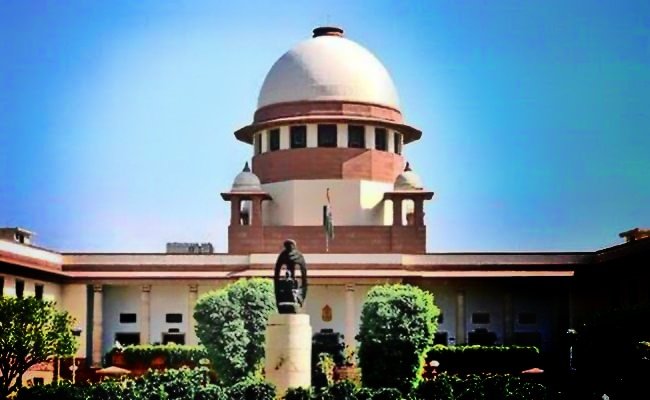
Judicial pronouncements spanning from the Privy Council era to contemporary Supreme Court rulings have consistently affirmed the legal standing of deities, recognizing them as juristic persons capable of owning and managing property.
Information was available with The Chenab Times that this legal recognition is foundational to understanding property disputes involving religious institutions, particularly in cases where the deity is considered the ultimate owner of assets.
The legal framework treating deities as juristic entities allows them to possess rights and obligations akin to natural persons, including the capacity to hold property, enter into contracts, and sue or be sued. This principle is crucial for the administration and preservation of temple wealth and endowments.
This jurisprudence was significantly highlighted in landmark cases such as the Sree Padmanabhaswamy Temple case in Kerala and the ongoing legal proceedings concerning the Ramjanmabhoomi Temple in Ayodhya. In both instances, the courts had to grapple with the complex issue of ownership and management of vast temple assets.
The Privy Council, during its tenure as India’s highest appellate court, established precedents that deities could be regarded as legal persons for the purpose of property law. This approach aimed to provide a legal mechanism for the perpetual management of religious endowments, ensuring their continuity and proper utilization for the purposes for which they were dedicated.
The Supreme Court has, over the years, built upon these foundations. The Sree Padmanabhaswamy Temple case, in particular, involved extensive litigation regarding the administration of the temple’s treasure, which is believed to be one of the wealthiest in the world. The court’s decisions in this matter underscored the deity’s ownership of the temple and its assets, while also addressing the complex question of how such vast wealth should be managed transparently and in accordance with religious traditions.
Similarly, the protracted legal battle over the Ramjanmabhoomi site and the subsequent construction of the Ram Temple has also seen the deity being treated as a legal entity. The Supreme Court’s 2019 judgment, which paved the way for the temple’s construction on the disputed site, implicitly acknowledged the deity’s enduring rights over the property.
Legal experts point out that this recognition as a juristic person is essential for several reasons. It allows for the accumulation and preservation of wealth dedicated to religious purposes, safeguarding it from mismanagement or misappropriation. It also provides a framework for the succession of management rights, ensuring that the deity’s properties are managed by appointed trustees or governing bodies in perpetuity.
The concept of a deity as a juristic person is not unique to India. Many legal systems around the world have provisions for recognizing non-human entities, such as corporations and trusts, as legal persons with specific rights and responsibilities. In the Indian context, this legal fiction is particularly important for religious institutions that are often endowed with significant immovable and movable properties.
The application of this legal principle extends to cases involving minors as well, where the deity is considered the ultimate owner, and the human custodians, whether individuals or committees, act as guardians responsible for the upkeep and management of the assets until the deity, through its designated human representatives, is deemed capable of full control or until specific legal frameworks are applied.
This established legal precedent plays a critical role in contemporary property disputes and management of religious endowments across the country, ensuring that the assets dedicated to religious worship and service are protected under the law.
❤️ Support Independent Journalism
Your contribution keeps our reporting free, fearless, and accessible to everyone.
Or make a one-time donation
Secure via Razorpay • 12 monthly payments • Cancel anytime before next cycle


(We don't allow anyone to copy content. For Copyright or Use of Content related questions, visit here.)

The Chenab Times News Desk