


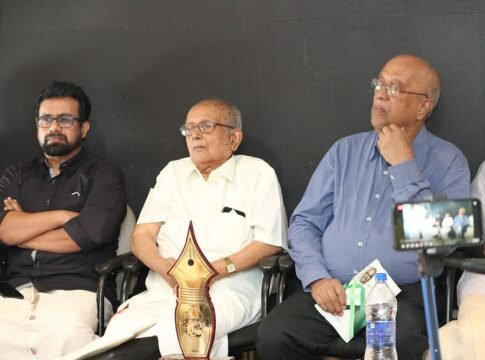
New Delhi: CPI(M) Rajya Sabha MP John Brittas has urged the Union Home Minister Amit Shah to reconsider the Ministry of Home Affairs’ stance on bringing the Shri Ram Janmabhoomi Teerth Kshetra Trust under the purview of the Right to Information (RTI) Act. Brittas contended that the trust, despite being described as autonomous, has been constituted through a government-approved scheme, vested with land acquired under parliamentary law, and includes serving IAS officers as government representatives. He argued that religious autonomy and public accountability are not mutually exclusive, drawing a comparison with the Shri Mata Vaishno Devi Shrine Board.
Call for Transparency Amidst Allegations
The CPI(M) leader’s appeal comes in the wake of recent allegations of embezzlement of donations at the Ram Temple. Brittas highlighted that the Central Information Commission (CIC) had previously ruled, on June 6, 2025, that the trust was not a ‘public authority’ under Section 2(h) of the RTI Act. However, he noted that this decision substantially relied on the stand taken by the Ministry of Home Affairs, prompting his request for a review. Brittas emphasized that trusts enjoying significant public faith should uphold the highest standards of transparency and accountability.
Background of the Trust’s Formation and RTI Challenges
The Shri Ram Janmabhoomi Teerth Kshetra Trust was formed following the Supreme Court’s Ayodhya verdict of November 9, 2019. The Centre framed the governing scheme under the Acquisition of Certain Area at Ayodhya Act, 1993, and vested the acquired land with the trust. An RTI applicant, Neeraj Sharma, had initially sought information regarding the trust’s Public Information Officers, but his request was rejected by the Ministry of Home Affairs (MHA). The MHA had argued that the scheme documents were confidential and their disclosure could endanger the lives of concerned individuals, invoking Section 8(1)(g) of the RTI Act. The matter eventually reached the CIC, which, based on the MHA’s submissions, concluded that the trust was an independent organization and not a public authority under the RTI Act. The MHA had stated that the trust is neither owned, controlled, nor substantially financed by the government, and its role was limited to implementing the Supreme Court’s directions.
Brittas further questioned the need for governmental representation in the trust’s governing structure if it were entirely private. He pointed out that the trust administers land acquired through a parliamentary law and receives donations from devotees globally, underscoring the need for transparency in its financial administration and the utilization of funds. The CPI(M) leader urged the Home Ministry to conduct a comprehensive review of its position and present a revised stance to the appropriate court for a judicial determination on the matter.
❤️ Support Independent Journalism
Your contribution keeps our reporting free, fearless, and accessible to everyone.
Or make a one-time donation
Secure via Razorpay • 12 monthly payments • Cancel anytime before next cycle


(We don't allow anyone to copy content. For Copyright or Use of Content related questions, visit here.)

The Chenab Times News Desk



 MP John Brittas urges Home Minister Amit Shah to bring Ram Janmabhoomi Trust under RTI purview, citing transparency concerns amidst donation allegations.)