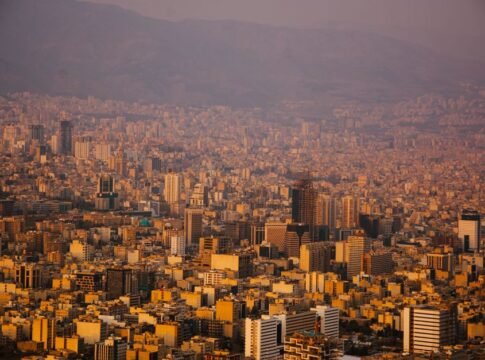
A United States airstrike on Iran’s Qeshm Island has resulted in the deaths of three members of a family, including a two-year-old child, and left two other children injured. The strike, which hit a residential building in the Chah Tangu neighborhood, occurred early on Thursday, according to Iran’s official IRNA news agency. Search and rescue operations at the site have concluded, with the recovered victims identified as a father, mother, and one of their children. The two surviving children were transported to a medical facility for treatment.
The attack on Qeshm Island was part of a broader series of strikes conducted by the U.S. military against targets in Iran. The U.S. Central Command (CENTCOM) stated that it had “successfully completed a heavy wave of strikes” in response to recent attempted missile attacks on U.S. forces in the region. However, CENTCOM did not specify the strategic objectives for the strikes on Qeshm or directly acknowledge the reported civilian casualties.
The incident has heightened regional tensions, with Iran’s state media reporting hits on several cities in the southwestern Khuzestan province, as well as on Qeshm Island. The Islamic Revolutionary Guard Corps (IRGC) has vowed to respond to the U.S. actions. In response to the strikes, Iran has reportedly launched retaliatory attacks targeting sites in Kuwait and Jordan, with reports indicating a worker was killed in Kuwait in an attack on a Chinese-owned building. Iran also claimed to have destroyed U.S. aircraft in Jordan, a claim that has not been independently verified.
This latest escalation follows U.S. President Donald Trump’s vow to strike Iran forcefully after Tehran launched missiles toward Jordan. The U.S. military has described its operations as targeting dozens of Islamic Revolutionary Guard Corps (IRGC) sites, including military command centers. The MK 84 bomb, a 2,000-pound general-purpose bomb used by U.S. forces in various conflicts, has been implicated in recent wartime actions, including in the ongoing conflict in Iran. Historical usage of MK 84 bombs by U.S. forces dates back to the Vietnam War and includes deployments in the Gulf War, Iraq War, and Afghanistan War. Reports suggest these bombs have also been used by Israel in recent conflicts, including the Gaza War.
The U.S. military’s Central Command (CENTCOM) announced the completion of a significant military operation targeting dozens of IRGC sites within Iran. According to CENTCOM, the strikes, which took place overnight on July 29, were directed at IRGC military command centers, missile and drone facilities, coastal surveillance and defense systems, and naval military installations. The command also asserted that U.S. forces had successfully intercepted all ballistic missiles launched by the Iranian army toward U.S. assets in the Middle East on July 28. More than 50,000 U.S. soldiers are reportedly on high alert across the Middle East.
In response, Iran claims to have retaliated for the alleged U.S. attack on Qeshm Island by firing missiles at the U.S. military base at Al-Azraq airbase in Jordan. Iranian state media indicated that the IRGC’s Aerospace Force launched ballistic missiles targeting the area where U.S. F-35 fighter jets were reportedly stationed, along with a maintenance center. These claims of destroyed F-35 jets and casualties among U.S. soldiers and technicians could not be independently verified.
Iranian Parliament Speaker Mohammad Bagher Ghalibaf strongly condemned the alleged U.S. strike on Qeshm Island, characterizing it as a “terrorist attack” on civilians and warning of consequences for the United States. Ghalibaf accused the U.S. of attempting to compensate for battlefield setbacks by targeting innocent civilians. The Speaker also suggested that the Qeshm incident was a continuation of previous events in Minab and Lamerd.
The exchange of strikes and retaliatory actions underscore the volatile geopolitical situation in the region. The U.S. military has stated its operations were in direct response to Iran’s attempted missile attacks on U.S. forces, indicating a cycle of escalation. The strategic reasons behind the specific targeting of residential areas, if confirmed, remain unclear from official U.S. statements.
The ongoing conflict has also seen reports of other related military activities. Jordan reported that its air defense systems intercepted and shot down five missiles launched from Iran. Concurrently, Israel has continued its military operations in Gaza, south Lebanon, and southern Syria. In a separate development, approximately 100 Israeli soldiers reportedly left a base in the Negev Desert in protest over their commanders’ orders regarding the removal of symbols associated with the battalion’s traditions.
The repercussions of these escalations extend to global markets, with oil prices fluctuating amidst growing regional tensions. The reported strikes and counter-strikes highlight the precarious security environment and the potential for wider conflict in the Middle East.
❤️ Support Independent Journalism
Your contribution keeps our reporting free, fearless, and accessible to everyone.
Or make a one-time donation
Secure via Razorpay • 12 monthly payments • Cancel anytime before next cycle


(We don't allow anyone to copy content. For Copyright or Use of Content related questions, visit here.)

Global Affairs Desk at The Chenab Times covers international developments, global diplomacy, and foreign policy issues through fact-based reporting, explainers, and analytical pieces. The desk focuses on major geopolitical events, diplomatic engagements, and international trends, with an emphasis on verified information, multiple perspectives, and contextual understanding of global affairs.