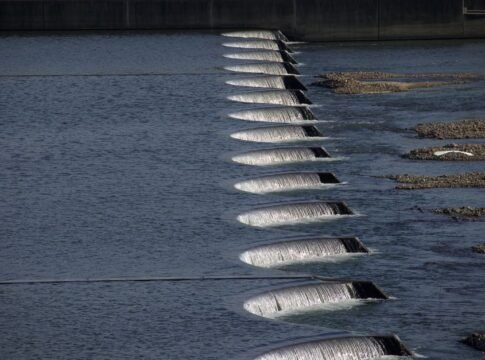
In a significant display of protest, Bharatiya Janata Party (BJP) leaders and farmers in Karnataka staged a march culminating at the Tungabhadra Dam, demanding the immediate release of water for irrigation. The demonstration, which saw participation from prominent party figures, highlights the growing distress among farmers in the command areas of the dam, who are facing significant challenges due to the perceived inaction of the state government.
Farmers’ Grievances Escalate Amidst Drought Concerns
The protest was spearheaded by the Leader of the Opposition in the Legislative Assembly, R. Ashok, who accused the state government of failing to adequately address the worsening drought situation. Mr. Ashok alleged that despite sufficient water storage in the Tungabhadra reservoir, water had not been released for irrigation, leaving standing crops to wither. Farmers in the Tungabhadra command area, including those in Koppal, Raichur, Vijayanagara, and Ballari districts, have expressed deep concern over potential crop losses. Many have reportedly sown their crops but are now unable to irrigate them, leading to mounting financial distress.
The BJP leaders claimed that the Tungabhadra reservoir currently held approximately 36 TMC of water, a quantity they argued was adequate for irrigation purposes. They drew a comparison to previous years when water was released for irrigation even with lower storage levels, such as around 26 TMC during a previous BJP government’s tenure. This comparison serves to underscore their argument that the current administration’s reluctance to release water is not due to a lack of resources but a lack of political will or effective governance.
Allegations of Government Apathy and Financial Neglect
The protest also encompassed broader allegations against the state government, including a failure to officially declare drought-affected areas, thereby delaying essential compensation for farmers. Mr. Ashok criticized the government’s response, suggesting that a delay in declaring drought was motivated by a desire to avoid the financial burden of relief measures. He further alleged that government officials had been unresponsive, with many affected villages not receiving visits from district or taluk level officials until after his own inspection tour was announced.
The BJP has also voiced concerns over the state’s financial health, with R. Ashok alleging that the state treasury was “empty.” This claim was used to question the government’s capacity to provide drought relief and even to disburse essential payments like pensions, which he claimed had been delayed. The party suggested that agricultural, horticulture, and animal husbandry sectors had been neglected under the current administration.
Demands and Proposed Solutions
The BJP’s demands extend beyond the immediate release of water. They are calling for an immediate declaration of drought across the state, substantial compensation for farmers who have suffered crop losses, and the initiation of scientific cloud-seeding operations. Additionally, the party has advocated for a waiver of crop loans up to ₹1 lakh per farmer. The party warned of intensifying its agitation, including statewide protests if these demands are not met by a specified deadline.
The protest march itself, described as a ‘padayatra’ from Anjanadri Hills in Koppal district to the Tungabhadra Dam headquarters in Munirabad, was intended to draw public attention to the plight of the farmers and to exert pressure on the government. Participants included not only party leaders but also a significant number of farmers, underscoring the widespread nature of the concern.
Context of Inter-State Water Disputes
The Tungabhadra Dam is a crucial inter-state project, jointly serving Karnataka, Andhra Pradesh, and Telangana. While recent efforts have been made to foster cooperative federalism in resolving water-sharing disputes, as evidenced by the joint inauguration of new spillway gates and proposals for high-level committees, local irrigation issues can still spark significant political friction. The Tungabhadra river system has a history of water-sharing complexities, adjudicated through tribunals and managed by the Tungabhadra Board, but ground-level implementation and local needs, particularly during drought conditions, remain sensitive points of contention between states and within them.
❤️ Support Independent Journalism
Your contribution keeps our reporting free, fearless, and accessible to everyone.
Or make a one-time donation
Secure via Razorpay • 12 monthly payments • Cancel anytime before next cycle


(We don't allow anyone to copy content. For Copyright or Use of Content related questions, visit here.)

The Chenab Times News Desk