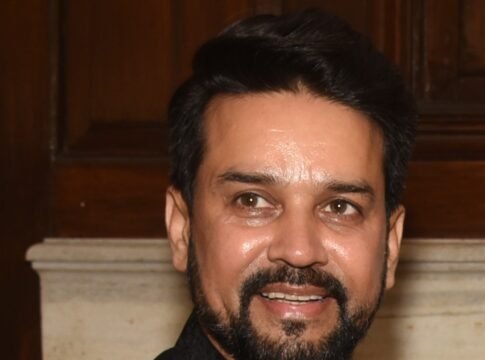
Former Union Minister Anurag Thakur has urged Himachal Pradesh Chief Minister Sukhvinder Singh Sukhu to immediately withdraw a tender issued by the Finance Department for the reintroduction of state-run lotteries.
Information was available with The Chenab Times that the state government on August 19 had floated an e-tender to appoint a sole agent for the sale of lotteries, a move aimed at re-establishing the state lottery system after a hiatus of approximately 25 years. Mr. Thakur, in a letter addressed to Chief Minister Sukhu, implored him to set aside the proposal, citing public interest as the primary reason for his appeal.
The reintroduction of state lotteries in Himachal Pradesh follows a decision by the state government to revive this revenue stream. The Finance Department’s move to issue an e-tender for a sole selling agent marks a significant step in the process. The tendering process aims to identify and contract a private entity to manage the sale and distribution of lottery tickets across the state and potentially beyond, depending on the agreement’s scope.
Mr. Thakur’s intervention highlights a political debate emerging around the proposed revival of the lottery system. As a prominent former Union Minister and a key political figure in Himachal Pradesh, his appeal carries weight and signals potential opposition to the government’s initiative. The Finance Department’s tender document details the requirements for the sole selling agent, including their experience in lottery management, financial stability, and proposed marketing strategies. The revival of lotteries was reportedly considered a measure to bolster the state’s financial resources, which have been under pressure due to various economic factors.
The state government’s rationale behind reintroducing lotteries is understood to be rooted in its potential to generate substantial revenue without imposing new taxes on citizens. Lotteries, when managed effectively, can contribute significantly to state exchequers, funding essential public services and development projects. However, the reintroduction of such schemes also often brings forth discussions regarding social impact, regulatory oversight, and potential for misuse, which are likely concerns underlying Mr. Thakur’s demand for withdrawal.
The history of state lotteries in Himachal Pradesh dates back several decades. The system was discontinued previously, and the current government’s decision to revive it suggests a re-evaluation of its economic benefits versus any perceived drawbacks. The tender process, initiated by the Finance Department, is a procedural step to ensure transparency and competitiveness in selecting the agency that will operate the lottery on behalf of the state. The department would have laid down specific criteria for bidders to meet, ensuring that the appointed agent is capable of managing a large-scale operation effectively and ethically.
Mr. Thakur’s letter to the Chief Minister, therefore, brings into sharp focus the governance aspect of this reintroduction. His plea to withdraw the tender suggests that he believes the current approach or the intention behind it may not be in the best interest of Himachal Pradesh’s populace. This political engagement is indicative of the scrutiny that government policies, especially those with potential economic and social ramifications, are subjected to, particularly from opposition figures and former ministers.
The Chief Minister’s office is expected to review Mr. Thakur’s concerns. The decision to proceed with or halt the tender process will likely depend on the government’s assessment of the legal, economic, and political implications. The Finance Department, which issued the tender, would be involved in providing clarifications or responding to the objections raised, if any. The successful bidder, once appointed, would be entrusted with the responsibility of launching and managing the lottery, adhering to the regulations set forth by the state government.
The reintroduction of lotteries aims to tap into a sector that can generate consistent revenue for the state. Such schemes are operational in many Indian states, contributing significantly to their respective budgets. The Himachal Pradesh government’s initiative is thus part of a broader trend observed across the country, where states look for innovative ways to enhance their financial independence and fund public welfare programmes. The success of this venture will hinge on robust management, effective marketing, and stringent regulatory oversight to ensure fair play and prevent any exploitation.
Mr. Thakur’s specific points of concern, as articulated in his letter, are not detailed in the initial reports, but his call for withdrawal implies a belief that the current tender process or the overall scheme might be flawed. His position as a former Union Minister in the central government lends his statement a certain gravitas, suggesting that the issue might be elevated in the political discourse within the state.
❤️ Support Independent Journalism
Your contribution keeps our reporting free, fearless, and accessible to everyone.
Or make a one-time donation
Secure via Razorpay • 12 monthly payments • Cancel anytime before next cycle


(We don't allow anyone to copy content. For Copyright or Use of Content related questions, visit here.)

The Chenab Times News Desk