September 15, 2026: Four years after Jammu and Kashmir witnessed its first major outbreak of Lumpy Skin Disease (LSD), the viral disease has resurfaced in the Union Territory, with fresh cases reported from parts of Central Kashmir and authorities stepping up surveillance, vaccination, and veterinary intervention.
The latest developments have put livestock owners on alert, particularly in areas where dairy farming serves as a major source of livelihood.
Ganderbal Emerges as the Major Hotspot
The most significant cluster reported so far is in Ganderbal district, where several epicentres of LSD have been identified.
According to a review of the situation by the J&K Agriculture Production Department, nine active LSD epicentres have been reported in Kashmir, involving 59 cattle, including 55 active cases. No deaths had been officially reported in that assessment.
Ganderbal was reported as the worst-affected district, accounting for 52 cases across seven epicentres, followed by Bandipora with three cases, while additional cases were reported from Srinagar.
However, the situation on the ground has generated greater concern among livestock owners.
In the Shallabugh-Sherpathri belt of Ganderbal, residents have claimed that more than 350 cattle have developed symptoms and that around 20 animals have died. These figures have not been independently verified, and local reports initially stated that veterinary teams were being deployed to assess the situation.
The discrepancy between local claims and officially reported figures highlights the importance of rapid field-level surveillance, diagnostic testing, and transparent reporting.
A Disease J&K Had Declared Under Control
The current resurgence comes after Jammu and Kashmir had moved beyond the severe LSD situation witnessed in 2022.
In January 2023, the J&K Government declared the entire Union Territory a “Free Area” for Lumpy Skin Disease after no cases were being reported from the districts at the time.
The declaration followed the major outbreak of 2022, when several districts of Jammu and Kashmir had been placed under disease-control measures.
Notably, the disease first drew widespread attention in Jammu and Kashmir during the 2022 outbreak. At the time, The Chenab Times reported on the spread of the disease in an article by Ifhaam Jigar Dar titled “Cows in Pain! It’s Lumpy Skin Disease which reaches Jammu and Kashmir after killing at least 82,000 cattle across India.” The report documented the arrival of the disease in the Union Territory amid a nationwide crisis that had severely affected the livestock sector.
The reappearance of cases therefore raises questions about continued surveillance, vaccination coverage, animal movement, and vector control, particularly in areas with dense cattle populations.
What Makes LSD a Serious Threat?
Lumpy Skin Disease is a viral disease caused by the Lumpy Skin Disease Virus (LSDV), a member of the Capripoxvirus genus.
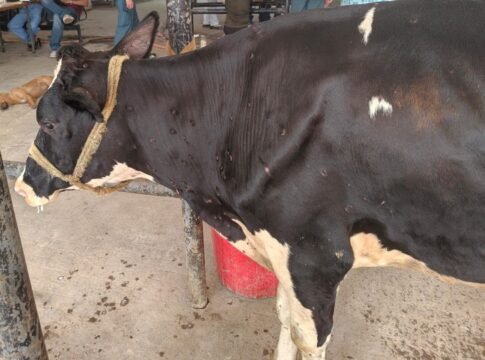
The disease primarily affects cattle and can cause fever, painful skin nodules, enlarged lymph nodes, weakness, reduced feed intake, and a significant decline in milk production. In severe cases, animals can develop secondary infections and other complications.
The disease is mainly spread by blood-feeding insects such as mosquitoes, biting flies, and ticks, making vector control particularly important during periods favourable for insect activity.
For dairy farmers, even when an animal survives, the economic impact can be substantial due to reduced milk production, weight loss, reproductive problems, treatment costs, and, in severe cases, death.
Jammu Division Remains an Area Requiring Vigilance
While current confirmed reports are concentrated in Kashmir, the disease’s history in Jammu makes surveillance especially important.
During the 2022 outbreak, Jammu, Kathua, Samba, Reasi, Rajouri, Udhampur, and Poonch were among the districts declared controlled areas after LSD was detected in the Union Territory.
R.S. Pura, one of Jammu’s major dairy and livestock-producing belts and home to the Faculty of Veterinary Sciences and Animal Husbandry at SKUAST-Jammu, was closely associated with the veterinary response during the 2022 outbreak.
At present, however, there are some reports confirming a fresh LSD outbreak specifically in R.S. Pura in September 2026. That means surveillance is necessary. Given the area’s livestock density and its proximity to the international border and inter-state livestock movement routes, veterinary surveillance remains essential.
India Faces a Wider Resurgence
The concern is not limited to Jammu and Kashmir.
A September 2026 National Animal Disease Referral Expert System (NADRES) alert identified 219 districts across 28 States and Union Territories as being at risk of LSD. The alert represents a forecast of potential disease risk and does not mean every identified district has confirmed infections.
The resurgence has also reignited debate over vaccination strategy.
India now has an indigenous LSD-specific homologous vaccine, but many states continue to rely on the goatpox vaccine that was widely used during the 2021–22 outbreak. Recent reports indicate that the Union Government’s 2026 advisory recommended a gradual shift toward the LSD-specific vaccine, although cost and availability remain factors influencing adoption.
Farmers Seek Early Intervention
For livestock owners, the priority is straightforward: identify suspected animals early, isolate them from healthy cattle, and immediately contact veterinary authorities.
Veterinary teams have been directed to intensify surveillance, vaccination drives, field visits, and farmer awareness campaigns in affected areas. The J&K Agriculture Minister has also called for adequate supplies of medicines and vaccines, stronger field coordination, and door-to-door awareness initiatives.
Experts emphasise that farmers should not attempt indiscriminate treatment of suspected LSD cases on their own. Symptomatic treatment, wound care, control of secondary bacterial infections, vector management, and proper isolation remain key components of disease management.
From 2022 to 2026: Has J&K Learned the Lesson?
The latest cases serve as a reminder that declaring an area disease-free does not eliminate the need for long-term surveillance.
The 2022 outbreak demonstrated how quickly LSD can spread through cattle populations. Four years later, the return of the disease in Central Kashmir shows that livestock-health preparedness cannot end once an outbreak subsides.
For Jammu’s major cattle-producing areas, including R.S. Pura and surrounding villages, the message is one of vigilance rather than panic.
The immediate priority is accurate diagnosis, transparent reporting of cases, timely vaccination of eligible animals, effective vector control, and rapid veterinary intervention before isolated infections develop into wider outbreaks.
For now, Central Kashmir remains at the centre of the latest LSD concern in Jammu and Kashmir. Whether the disease remains confined to a few clusters or spreads further will depend heavily on how quickly suspected cases are detected, reported, and contained in the coming days.
❤️ Support Independent Journalism
Your contribution keeps our reporting free, fearless, and accessible to everyone.
Or make a one-time donation
Secure via Razorpay • 12 monthly payments • Cancel anytime before next cycle


(We don't allow anyone to copy content. For Copyright or Use of Content related questions, visit here.)

Ifhaam Jigar Dar is a staff reporter at The Chenab Times. He is a BVSc & AH Student.