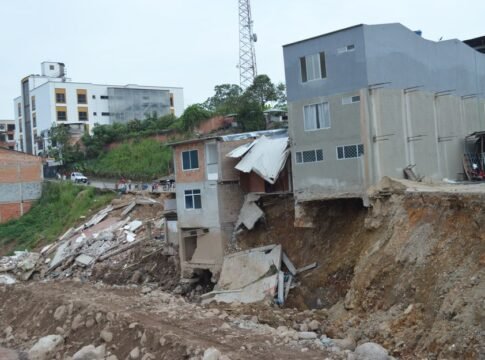
A United Nations event, “Resilient Foundations: Accountability, Finance, and Inclusive Housing,” is set to explore critical aspects of strengthening community resilience through improved housing systems. The session, organized by the United Nations Office for Disaster Risk Reduction (UNDRR) in collaboration with the European Scientific and Technical Advisory Group, aims to position housing as a cornerstone of disaster risk reduction and climate adaptation efforts.
Addressing Systemic Gaps in Housing for Resilience
The initiative aligns with the 2026 International Day for Disaster Risk Reduction (IDDRR) theme, “Resilience Starts at Home.” It seeks to address systemic gaps in how housing is planned, built, financed, and maintained, with the goal of fostering secure and risk-informed communities. The session will delve into how a lack of accountability, inadequate finance, and exclusionary practices can exacerbate vulnerabilities, particularly for low-income households, persons with disabilities, and aging populations.
According to details received by The Chenab Times, the event emphasizes a holistic approach, integrating gender, disability inclusion, and community voices into technical planning, financial structures, and governance mechanisms. This contrasts with fragmented approaches that may isolate vulnerability without addressing its root causes.
Key Pillars of Resilient Housing
The event’s core objectives include reframing housing as an essential asset for disaster risk reduction (DRR) rather than solely a welfare outcome. It aims to align financial and regulatory incentives to hold all stakeholders—from municipal governments to private developers and financial institutions—mutually accountable for long-term housing resilience. This includes addressing the human consequences of protracted displacement, where temporary solutions can become permanent issues.
A significant focus will be on embedding risk-informed standards, universal design principles, and inclusive community participation throughout the entire housing lifecycle. The organizers aim to highlight practical experiences and identify gaps in current practices, exploring how successful local approaches can be scaled nationally and regionally. The session also underscores that risk should be viewed as a continuum of interconnected challenges, such as poor urban planning, exclusionary financing, unsafe construction, weak enforcement, and deferred maintenance, rather than isolated failures.
The Role of Finance and Accessibility
A key component of the discussion will revolve around accessible capital and risk-informed finance. The session will explore how financial and regulatory incentives can be structured to promote resilience. This includes ensuring that safer housing is not only durable and accessible but also affordable, enabling vulnerable groups to be included in resilience-building efforts. The challenge of ensuring that adaptation projects, which may be perceived as riskier due to uncertainties in climate impacts, are financially viable and yield public benefits will be a central theme.
Global and Regional Relevance
While the event is a global initiative spearheaded by UNDRR, its outcomes are relevant to regions facing similar housing and disaster risk challenges. The framework discussed—integrating accountability, finance, and inclusive design—can serve as a model for improving housing resilience in diverse urban and rural settings worldwide. The sessions aim to foster a shared responsibility among governments, financial institutions, developers, practitioners, and communities to coordinate actions for enhanced resilience.
UNDRR’s Broader Work on Resilience
This event forms part of UNDRR’s broader commitment to supporting member states in implementing the Sendai Framework for Disaster Risk Reduction. UNDRR works to develop and implement DRR strategies and related aspects of UN Sustainable Development Cooperation Frameworks. The organization also supports regional platforms for disaster risk reduction, which serve as key opportunities to tackle trans-boundary issues and build community and national resilience. Recent publications from UNDRR highlight the economic benefits of investing in DRR, with estimates suggesting that every dollar invested in more resilient infrastructure can yield four dollars in benefits in low- and middle-income countries.
❤️ Support Independent Journalism
Your contribution keeps our reporting free, fearless, and accessible to everyone.
Or make a one-time donation
Secure via Razorpay • 12 monthly payments • Cancel anytime before next cycle


(We don't allow anyone to copy content. For Copyright or Use of Content related questions, visit here.)

The Chenab Times News Desk