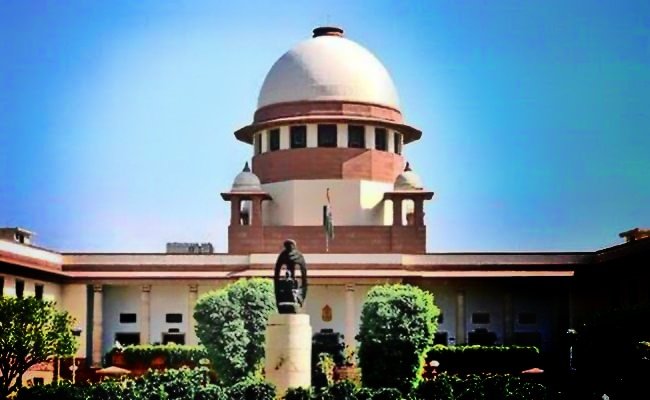
The Supreme Court of India has issued a strong directive mandating that all donations received at the Banke Bihari Temple must be meticulously accounted for and deposited into designated donation boxes or the temple’s online treasury. The apex court emphasized that any obstruction by temple officials, known as ‘sevayats’, or any other individual will be treated with extreme seriousness.
Court Mandates Transparency in Temple Finances
Information was available with The Chenab Times indicating that the Supreme Court’s intervention aims to prevent the pilferage and misuse of funds contributed by devotees. The bench, in its order, explicitly stated, “we accordingly direct that every penny of donation must come to the donation boxes or online temple treasury and any impediment created by ‘sevayats’ or anyone else shall be viewed very seriously.” This pronouncement underscores a commitment to financial probity within religious institutions, particularly those drawing significant public contributions.
The directive comes amidst concerns that a portion of the offerings made at the renowned Banke Bihari Temple in Vrindavan, Uttar Pradesh, may not be reaching the official accounts, potentially being siphoned off by individuals involved in the temple’s management and operations. The Supreme Court’s strong stance signals its intent to ensure accountability and uphold the sanctity of devotees’ offerings. The court’s intervention is aimed at establishing a transparent system for the collection and management of donations, thereby safeguarding them from any form of misappropriation.
The Banke Bihari Temple is one of the most revered and visited temples in India, attracting millions of devotees annually. The substantial volume of offerings necessitates robust mechanisms for financial oversight to prevent irregularities. The court’s order is expected to lead to enhanced auditing procedures and stricter internal controls within the temple administration. This move is also anticipated to bolster the faith of devotees in the management of their contributions.
The legal framework governing religious trusts and endowments in India often mandates transparency and accountability. However, ensuring compliance at the ground level can be challenging, leading to instances of financial irregularities. The Supreme Court’s involvement in this matter highlights the judiciary’s role in overseeing the administration of prominent religious sites and ensuring that they function in accordance with public trust and legal provisions. The directive is likely to serve as a precedent for other religious institutions facing similar issues of financial mismanagement.
While the specific details of the alleged pilferage or the quantum of funds involved were not elaborated upon in the court’s statement accessed by The Chenab Times, the unequivocal nature of the directive leaves no room for ambiguity. The court’s decision reflects a broad concern for the ethical governance of religious bodies and the protection of public funds entrusted to them. The implementation of this directive will require the cooperation of all stakeholders, including the temple management, the sevayats, and the devotees.
The directive also implicitly calls for better infrastructure and technology integration in the donation process. The mention of an ‘online temple treasury’ suggests a move towards digital payment gateways and record-keeping systems, which can significantly enhance transparency and reduce the potential for human error or malfeasance. Such technological advancements can also make it easier for devotees to track where their contributions are being utilized, further fostering trust.
The role of ‘sevayats’ in Hindu temples can be complex, often involving hereditary rights and responsibilities that can sometimes lead to conflicts with official management structures. This directive appears to address the potential for these individuals to create impediments in the official donation process. By viewing any such obstruction seriously, the court is signaling a clear intent to streamline operations and centralize financial control.
The broader implications of this Supreme Court ruling extend beyond the Banke Bihari Temple. It reinforces the principle that religious institutions, regardless of their prominence or the nature of their operations, are accountable to the public and subject to legal oversight when it comes to financial matters. This decision is expected to encourage greater financial discipline and ethical conduct across the religious sector in India, ensuring that donations are used for their intended purposes, which often include charitable activities, temple maintenance, and community service.
❤️ Support Independent Journalism
Your contribution keeps our reporting free, fearless, and accessible to everyone.
Or make a one-time donation
Secure via Razorpay • 12 monthly payments • Cancel anytime before next cycle


(We don't allow anyone to copy content. For Copyright or Use of Content related questions, visit here.)

The Chenab Times News Desk